

R8.9 billion to repair 50-year-old railway line in South Africa


The government has committed R8.9 billion to the Ore Line Restoration Programme, aiming to repair the 861-kilometre freight corridor connecting Sishen and the Port of Saldanha by 2030.
The Iron Ore Export Line is an 861-kilometre heavy-haul rail corridor that directly connects the iron ore mines in Sishen in the Northern Cape to the Port of Saldanha in the Western Cape.
Iron ore, the primary raw material used to make steel, is one of South Africa’s top mineral export materials.
In 2025, South Africa exported R110 billion worth of iron ore, making it the fifth-most-exported product. In July of this year alone, the country exported R8.26 billion in iron ore.
Sishen Mine, operated by Kumba Iron Ore (a subsidiary of Anglo American), is one of the biggest open-pit mines in the world, measuring around 14 km long.
After years of heavy use on the Iron Ore Export Line, a buildup of maintenance issues with the tracks, signalling systems, locomotives, and freight wagons has undermined export reliability.
The Ore Line Restoration Programme includes renewing tracks, upgrading electrical and signalling systems, and repairing rolling stock to eliminate long-standing maintenance backlogs and enhance transport reliability.
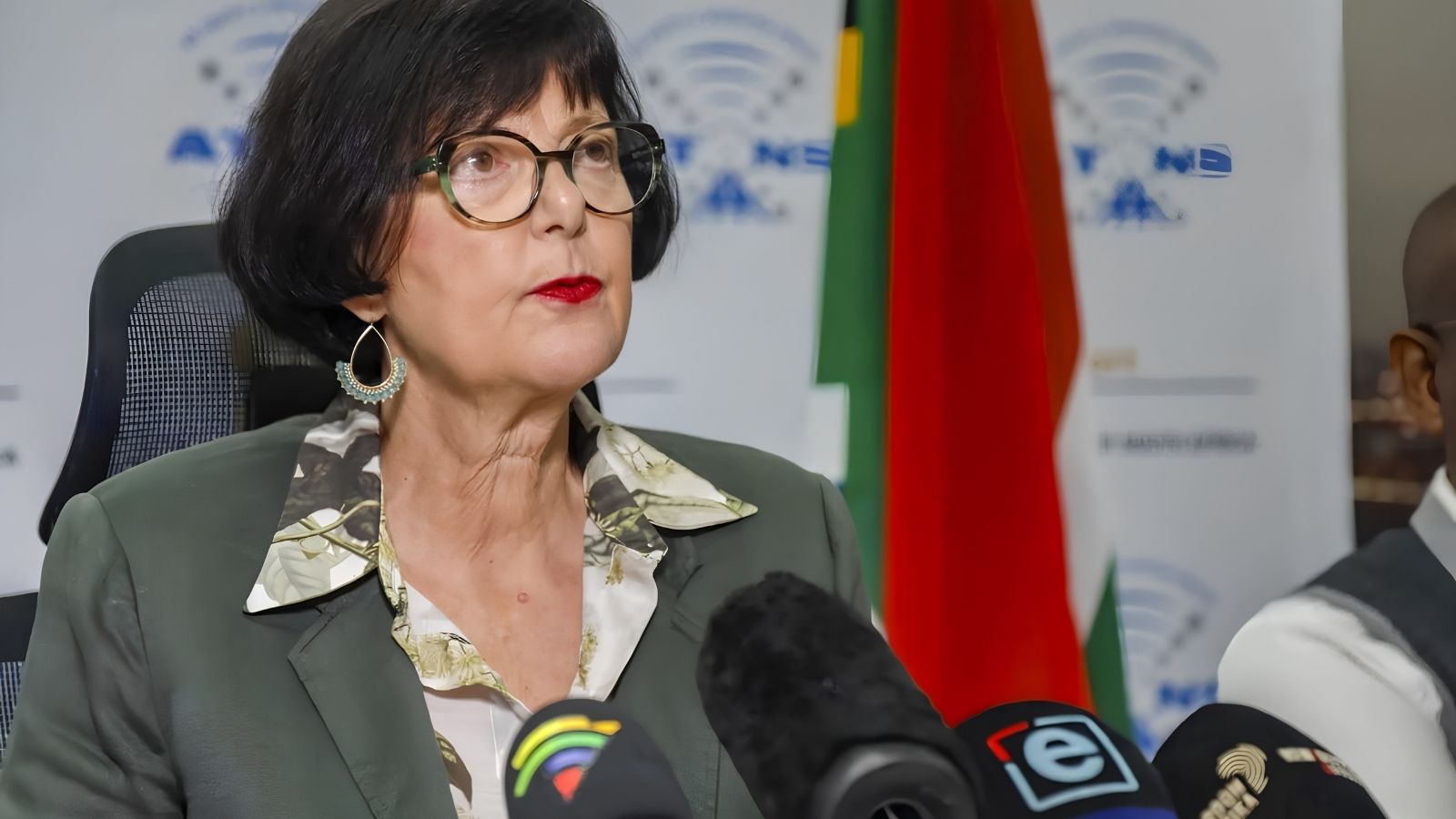
“When this corridor performs well, mines can move their commodities efficiently, exporters can reach international markets, ports can operate more effectively, and businesses across the logistics value chain can grow,” said Minister of Transport Barbara Creecy.
She said that it will also strengthen South Africa’s position as a reliable trading partner.
The Transnet National Ports Authority (TNPA) will also be initiating the Bulk Power Upgrade Project at the Port of Saldanha, with an investment of about R750 million.
Creecy said the project will enhance the port’s power supply, enable the operation of a third tippler, and support higher export volumes.
“The benefits of a programme of this scale should not only be measured in kilometres of rail replaced”
Beyond the logistical enhancements, the project is expected to stimulate regional economies by creating jobs and engaging local small businesses to provide a range of support services.
“For this October intervention, approximately 1,300 fixed-term contract opportunities have been created, with more than 600 indirect opportunities expected through associated economic activity,” the Minister said.
The government has allocated R3.4 billion through the Budget Facility for Infrastructure (BFI) over the current and next financial years.
The Transnet Rail Infrastructure Manager (TRIM) will invest about R2.2 billion in restorative maintenance on the Ore Corridor, including R1.5 billion funded through the BFI allocation.
Transnet has invested R1.47 billion in maintenance for ore line rolling stock, allocating R752.3 million for wagons and R721.9 million for locomotives.
Creecy said that similar amounts will be allocated to rolling stock maintenance in the next financial year.
“These investments will support critical maintenance and overhaul programmes, including the 15GO and 43DGO locomotive overhaul programmes, while addressing long-standing maintenance backlogs and improving fleet availability, reliability and operational stability.”
Creecy highlighted that an important component of this reform is opening the freight rail network to private train operating companies while retaining rail infrastructure in state ownership.
She said that the TRIM was created to manage and maintain the national rail network and to facilitate access for train operators.
The Network Statement describes how train companies can gain access to the network.
She explained that simply having policies and regulations isn’t enough for open access to work; we also need the right infrastructure to put those policies into practice.
Creecy said train operating companies must trust that their investments in locomotives, wagons, personnel, and operations are supported by infrastructure that is becoming progressively safer, more reliable, and more predictable.












 Loading ...