

Two small towns carrying South Africa’s economy under threat


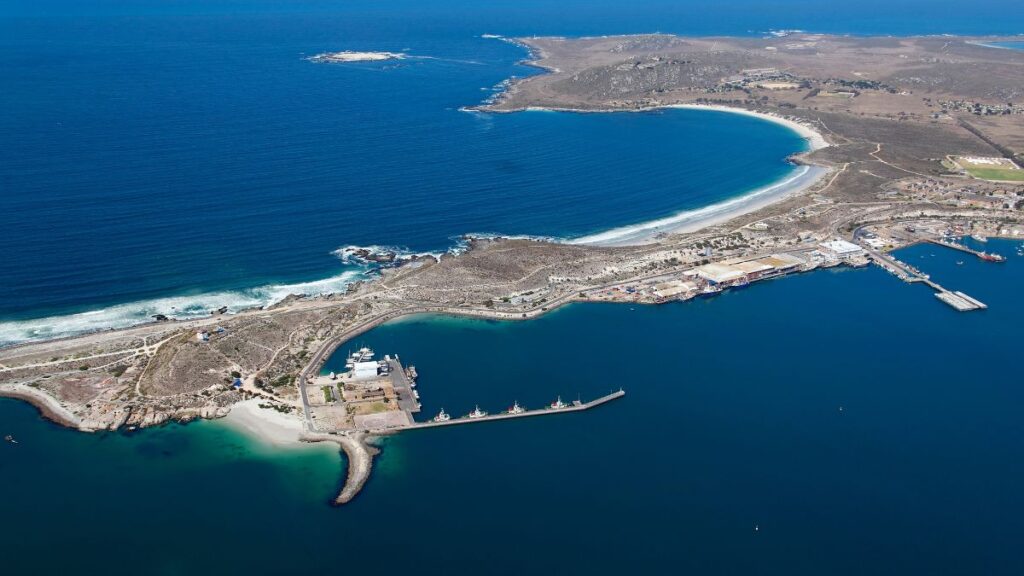
The conflict in the Middle East has caused major shipping and port delays, which is bad news for two of South Africa’s towns whose ports are vital hubs in the country’s logistics network and economy.
The escalating conflict in the Middle East is creating major disruptions for global shipping, and the ripple effects are already being felt in South Africa.
In an interview with Moneyweb Radio, Paul Vos, regional MD of the Chartered Institute of Procurement and Supply, said the conflict had already begun disrupting global trade routes and pushing up the cost of moving goods around the world.
“Our supply chains have already been disrupted, and we hear various reports of a number of ships that are currently stuck or have been delayed,” he said.
Vos explained that the disruption is closely tied to instability in the Red Sea—one of the world’s busiest maritime corridors connecting Asia and Europe via the Suez Canal.
Many vessels passing through the region are experiencing delays or congestion, which is slowing the movement of goods destined for markets around the world, including South Africa.
Vos said the issue is not only about ships rerouting around Africa. A significant number of vessels are already caught in delays in the region itself.
Vos explained that several additional charges have already been introduced by shipping companies as they try to manage rising risks.
“Those war-risk insurance premiums have already been applied, there will be fuel surcharges, and container price hikes have already been implemented,” he said.
These rising costs and delays are expected to ripple through South Africa’s economy. Businesses are likely to face tighter working capital cycles as they deal with longer delivery times and higher logistics costs.
“It’s going to have an impact on working capital cycles that will tighten as the delays and the cost escalations hit simultaneously,” said Vos.
Critical South African ports risk delays

Several sectors in South Africa are particularly exposed to the disruption. Vos said retailers that depend on seasonal or time-sensitive imports could face stock shortages as shipments are delayed.
Manufacturers are also at risk. South Africa’s automotive industry relies on carefully coordinated supply chains for specialised components.
Electronics supply chains could face additional pressure, while industries such as petrochemicals, mining, pharmaceuticals and fast-moving consumer goods are also vulnerable to delays.
“So this is a disruption that is multifaceted across multiple sectors of the economy,” he said.
These disruptions pose a particular threat to two small towns whose ports play an outsized role in South Africa’s export economy.
These are Richards Bay and Saldanha Bay. Together, these ports handle more than 80% of South Africa’s cargo.
Data from Statistics South Africa shows that Richards Bay moves about 44.3% of the country’s cargo, while Saldanha Bay handles roughly 38%.
By comparison, the ports of Durban and Cape Town—once the country’s busiest—now account for only about 8.3% of cargo combined, largely due to operational inefficiencies and persistent delays.
Richards Bay and Saldanha Bay are crucial because they handle bulk commodities for South Africa’s mining industry and generate vital foreign revenue.
Richards Bay, located in KwaZulu-Natal, is home to the Richards Bay Coal Terminal—the largest coal export facility in Africa.
Opened in 1976 with a capacity of 12 million tonnes per year, it has expanded dramatically over the decades and can now handle up to 91 million tonnes annually.
The terminal features a 2.2-kilometre quay, six berths, four shiploaders and storage capacity of 8.2 million tonnes.
It is widely recognised for its efficiency and once set a world record by exporting more than 409,000 tonnes of coal in a single day.
On the Western Cape coast, Saldanha Bay is one of the deepest natural ports in the world and the largest deep-water port in the Southern Hemisphere.
It was also opened in 1976 and originally built to export iron ore from mines in the Northern Cape.
According to Transnet, more than 1.1 billion tonnes of iron ore have been shipped from Saldanha since the port began operating, with roughly 25 vessels loaded each month.
Together, these ports support a large share of South Africa’s mining exports, which underpin more than 240,000 jobs and generate crucial tax revenue and foreign currency earnings for the country.
Looking ahead, Vos warned that the biggest risk is not just the current disruption but the possibility that the conflict could drag on for months or even years.
“Our concern is really around the protracted nature of this conflict and the medium- to long-term impact it could have on the region,” he said.

















 Loading ...