

The country primed to take some of South Africa’s most important companies



Botswana is becoming an increasingly attractive destination for some of South Africa’s most important companies.
According to immigration experts Xpatweb, Botswana has steadily built a reputation as one of Africa’s most stable and well-governed economies, with the mining sector at the centre of its economic success.
This has made it attractive to South African companies involved in mining services, engineering, and technical support.
“For South African companies, particularly those operating in mining services, Botswana represents a natural expansion market, offering both geographic proximity and a familiar regulatory environment,” said Xpatweb.
Much like South Africa, mining is the backbone of Botswana’s economy, with diamonds historically dominating the sector.
However, the country is looking to broaden its mineral base, opening new opportunities in copper, coal, and other resources.
This diversification is creating space for regional players, with South African companies at the top of the list, to participate in exploration, project development, and operational support.
Xpatweb said Botswana’s appeal lies in its mineral opportunities and the certainty it offers investors.
“What sets Botswana apart is its theoretically predictable regulatory environment and strong institutional framework,” said Xpatweb.
“This provides investors with a level of certainty highly prized in capital-intensive industries and essential for long-term risk management.”
It added that the Botswana government has also shown a willingness to work with the private sector, particularly on projects that support job creation and skills development.
However, there are still hurdles. Xpatweb noted that while Botswana ranks well in terms of ease of doing business, setting up operations is not always seamless.
“The process typically begins with company registration through the Companies and Intellectual Property Authority (CIPA), followed by tax registration and the acquisition of relevant trade licences,” it said.
“For mining-related activities, additional layers of compliance are introduced, including sector-specific licences and environmental approvals.”
South Africa’s mining stagnation
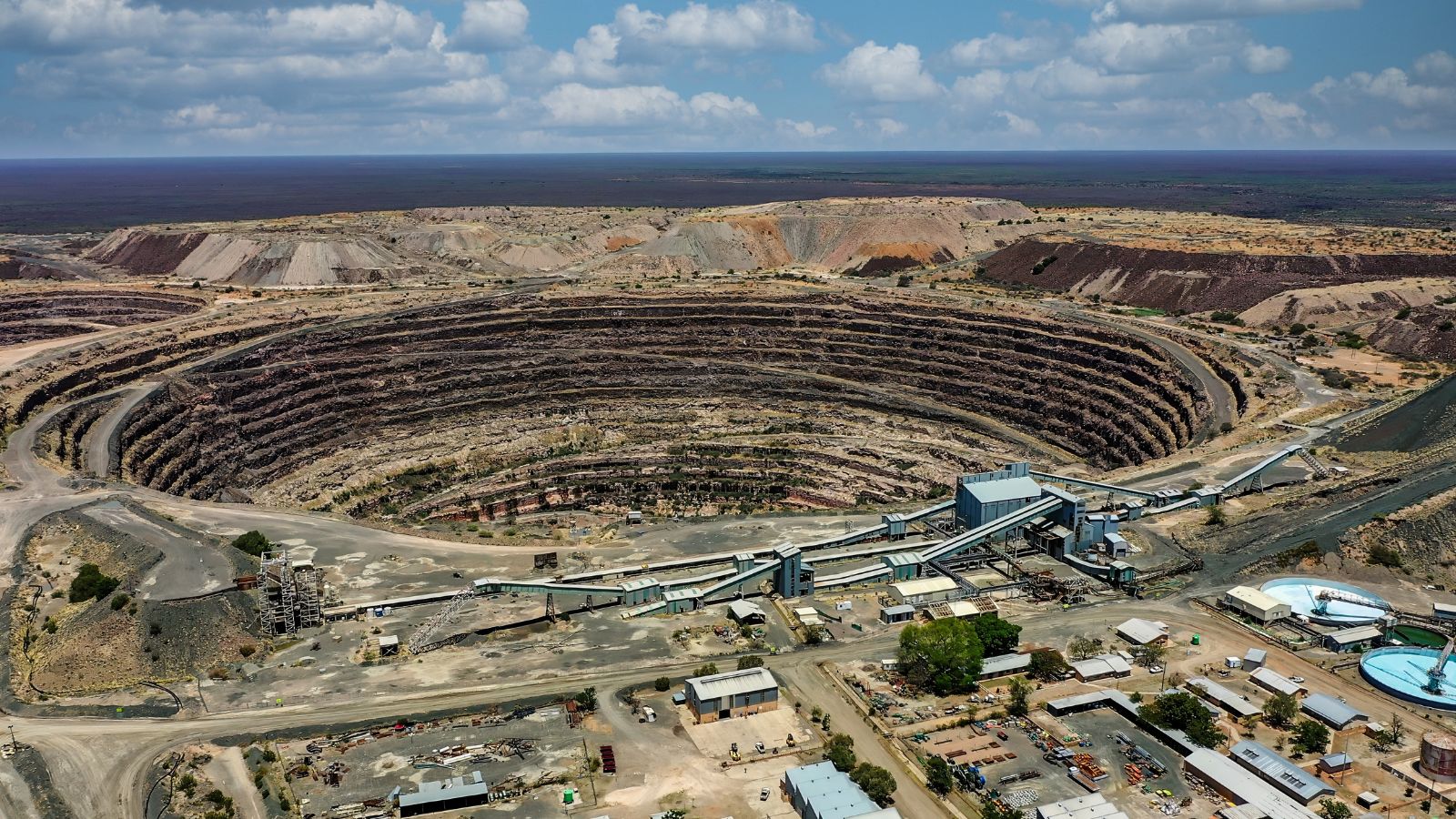
Even with these caveats, Botswana is increasingly being seen as an attractive alternative to South Africa, where mining companies continue to face a much tougher environment.
That is a major concern for South Africa, given the importance of the mining sector to the local economy.
According to the Minerals Council South Africa (MCSA), mining contributes around 5.8% of GDP, or roughly R439 billion, and
Stats SA also shows that it supports approximately half a million formal jobs, and is a major source of tax revenue and foreign exchange earnings.
Despite this, the industry has faced years of stagnation and decline due to both domestic and global pressures.
Critics have argued that policy missteps have played a central role in this decline, particularly the ANC government’s implementation of the Mineral and Petroleum Resources Development Act (MPRDA).
As a result, South Africa has seen little meaningful exploration for new mineral deposits over the past two decades, despite its rich geological potential.
Modern Corporate Solutions mining analyst Peter Major has pointed to policy uncertainty, deteriorating infrastructure, and recurring concerns around nationalisation as key reasons for the industry’s decline.
He said South Africa has gone from being one of the best mining jurisdictions in the world to one of the worst in just three decades.
The Fraser Institute’s 2025 survey ranked Africa as the world’s worst-performing mining region. South Africa continued its downward slide.
It now ranks 15th from the bottom overall. On the policy front alone, South Africa dropped to 70th out of 82, down from 66th last year.
“We were a leading country in the 80s and 90s—often top three in many minerals,” said KPMG South Africa lead economist Frank Blackmore.
He added that regulation has become a major deterrent. “Our score for regulation has more than halved, from 40 to 20,” he said.
He argued that this has been a major reason for South Africa’s deteriorating reputation as an investment destination. Infrastructure failures have also deepened the sector’s problems.
Rising electricity costs have hurt gold and platinum group metals producers, while rail and port bottlenecks continue to constrain bulk commodity exports such as iron ore and manganese.
















 Loading ...