

Reckoning for Ramaphosa as 500,000 jobs in South Africa now at risk


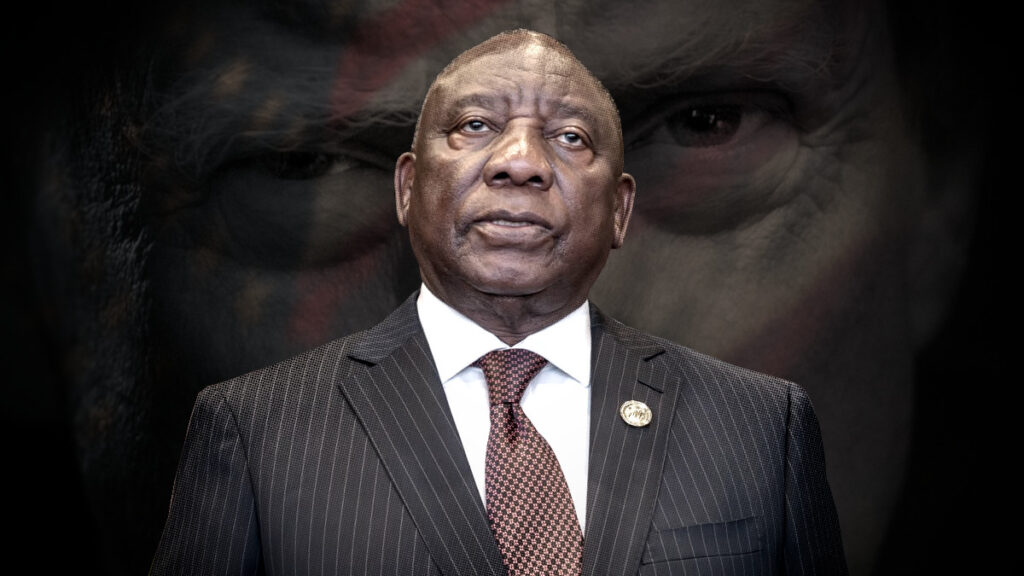
The Southern African Agri Initiative (SAAI) says that South Africa’s removal from the African Growth and Opportunity Act (AGOA) will put tens of thousands of jobs on the line, with some estimates shooting past 500,000.
The United States Trade Office announced late on Monday (SA time) that the world’s largest economy intends to remove South Africa and Rwanda from its AGOA programme.
The programme gives eligible countries duty-free access to US markets in selected sectors, covering more than 1,800 products.
Since its launch in 2000, South Africa has been the biggest beneficiary of AGOA, accounting for 54% of all AGOA-related exports to the US.
South Africa’s participation in the programme has long been in question, even before the current Trump administration.
The programme was intended to uplift small and developing economies in sub-Saharan Africa with preferential access to the United States.
Bipartisan concerns have been raised about South Africa’s eligibility, given the maturity and scale of its economy.
Concerns have also been raised about South Africa’s neutrality in foreign affairs and its proximity to the United States’ enemies.
Despite the years of discourse, South Africa has, until now, continued to enjoy the benefits of the programme, including billions of rands of duty-free exports.
Importantly, entire markets have been built around the programme, accounting for tens of thousands, if not hundreds of thousands, of jobs, which are now materially at risk.
According to SAAI, being kicked out of AGOA will put 62,000 direct jobs at risk.
Aluma Capital Chief Economist Frederick Mitchell estimates that the impact could be far greater, noting that between 125,000 and 576,000 direct and indirect jobs are now at risk.
Critical export engines in automotive manufacturing in the Eastern Cape, citrus and deciduous fruit farming in the Western Cape, and advanced metallurgy will be hit.
All of these materially depend on duty-free entry into the US market, he said.
SAAI said that litchi, citrus, wine, nut, and other fruit farmers, in particular, will bear the worst consequences.
Presidential Envoy on Agriculture and Land, Wandile Sihlobo, has stressed that the loss of AGOA does not mean these exports will disappear.
He noted before and after the announcement of South Africa’s impending expulsion, that exports to the US from these markets will continue.
However, they will face a higher tariff, with an additional 3.4% added to the current 12.5% tariff already in effect.
This is cold comfort, though, as the 12.5% tariff—resulting from the Section 301 ‘slave labour’ investigation into South Africa—is part of the same political and diplomatic problem that led to the AGOA expulsion.
Critics argue that it all could have been avoided.
The blame game has begun

In the wake of the AGOA announcement, commentators, analysts and politicians have already begun pointing fingers at those responsible for the outcome.
Groups like the trade union Solidarity and political parties such as the Democratic Alliance and Freedom Front Plus have placed the blame squarely at the feet of the government.
More specifically, they have placed the blame on President Cyril Ramaphosa, International Relations Minister Ronald Lamola and the African National Congress (ANC), whose foreign policy they push.
SAAI has also blamed the ANC in government for the outcome, specifically pointing to the ANC president and ANC minister’s refusal to meet the United States’ requests—the now-widely reported ‘five asks’.
“Many farmers blame the ANC’s stubborn refusal to condemn the ‘Kill the farmer, kill the Boer’ chant, declare farm attacks a priority crime, renounce expropriation without compensation,” it said.
The group added that the government has also refused to exempt US investors from its black economic empowerment (BEE) requirements.
In terms of foreign policy, it flagged the ANC’s close relationship with Iran.
Other groups and politicians have tried to push the blame elsewhere, pointing to unnamed “organisations”, which they claim have spread lies about South Africa in the United States.
However, the statement from the US Trade Representative, as well as the letter sent to President Cyril Ramaphosa by US President Donald Trump himself, explicitly lays out the cause.
Reasons for South Africa getting kicked from AGOA, according to Trump, are:
- South Africa maintains significant tariff and non-tariff barriers that affect United States trade and investment and is not making progress in eliminating them.
- South Africa has not established, or is not making continual progress toward establishing, a system to combat corruption and bribery.
- Certain actions by the Government of South Africa on matters of international security and its relations and cooperation with governments of concern to the United States risk undermining United States national security and foreign policy.
US Ambassador to South Africa Leo Brent Bozell said the outcome was regrettable but also predictable and preventable.
Bozell had presented the “five asks” on several occasions, and had faced significant pushback from Pretoria over “undiplomatic conduct” as a result.
He said the AGOA outcome was a result of “the rejection by South Africa’s government of real concerns raised by the US Government”.
South Africa has not yet officially responded to its expulsion from AGOA and has 60 days to make its case or address the United States’ concerns.
However, the government has responded to the “five asks”, maintaining that these have been adequately addressed. The responses are outlined below.
Five Asks: United States vs South Africa
| Ask | US Response | SA Response |
|---|---|---|
| That the South African government not interfere with the United States’ processing of Afrikaner refugees | This has been addressed. | This has been addressed. |
| That expropriation without compensation should not be allowed | Partly addressed, but not by the government. The matter is with the Constitutional Court, which will have final say. | The government supports land expropriation without compensation. The matter is with the Constitutional Court, which will have final say. |
| That President Ramaphosa and other senior government officials condemn the singing of “Kill the Farmer! Kill the Boer!” | Ramaphosa and the South African government refuse to condemn it. It has not been addressed. | “South Africa has enacted the Prevention and Combating of Hate Crimes and Hate Speech Act 16 of 2023. This legislation sets a stringent legal framework for the eradication of hate speech and the prosecution of hate crimes. This law is binding on both the State and non-state actors.” The “Kill the Boer” chant has been ruled not hate speech by the courts. |
| That rural crime (ie farm murders) be formally designated a priority crime, with a real, announced plan to address it | The United States has offered financial support, with several plans available, including one designed by the South African government itself. It has not been addressed. | “The South African government remains seized with the challenges of crime in South Africa, which affects everyone and not targeting anyone based on their race, colour, or social origin.” South Africa has already prioritised a Rural Safety Strategy. |
| That South Africa create alternatives, such as equity equivalent investment programmes (EEIP) to Broad-Based Black Economic Empowerment (BBBEE) ownership requirements | The South African government allows some business sectors to participate in EEIP but refuses to offer it to the telecoms or mining industries. | “It is our sovereign right to put in place laws that address the nation’s concern over centuries of racial injustice.” EEIP programmes in telecoms are in the works, and B-BBEE at large is under review. |
















 Loading ...