

Expect South Africa to get ‘back on track’ after the 2019 elections: analysts


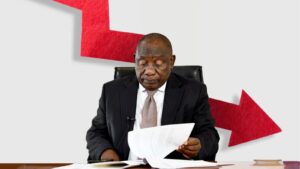
While Cyril Ramaphosa’s election as president and his subsequent moves to root out public sector corruption buoyed confidence in the country’s economic prospects, negative growth and perceived slow progress has reversed this confidence on an almost unprecedented level.
This is according to Old Mutual Investment Group presenters at a media briefing this week, who explained that there are signs that global growth will continue to be supportive for the South African economy, and that economic reforms could accelerate after the 2019 elections.
However, South Africa’s slow growth again highlights the serious need for substantial, meaningful structural reform, with the risk to fiscal sustainability and credit ratings having become elevated again, they warned.
Johann Els, head of economic research at Old Mutual Investment Group, said that while we have seen a shaky start to the year, the global economy is still supportive – despite worries about where it currently is in the cycle.
“The strong global recovery, which gained momentum from 2016, has reached peak territory,” said Els. “But while it is moderating and certainly less synchronised, it is still above trend and we expect growth to continue into 2019, which creates a supportive environment for SA growth.
“This global growth is underpinned by fiscal expansion in the US, China and possibly Germany and elsewhere in Europe, as well as being sustained by strong investment growth and improved productivity growth.
“In fact, global growth could become more synchronised again if the global trade war risk eases.
“The risks facing the global environment are likely to lead to further growth moderation, but they’re unlikely to derail growth altogether. Ultimately, we will see growth slowing further into 2019, but a recession is unlikely,” he said.
Upside potential
Els added that leading indicators suggest that there is upside potential when it comes to the SA economy.
He believes that local growth is likely to end this year very close to the 1.3% achieved during 2017, which is markedly lower than what was expected at the start of the year.
“Business confidence is still lagging, but consumer fundamentals are not as bad as people may think, despite the short-term pain caused by the VAT increase, petrol hike, etcetera,” said Els.
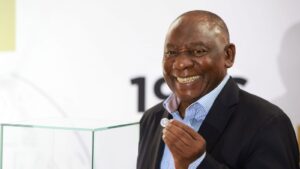
He added that Ramaphosa’s $100 billion target in new investments is also showing progress.
“We’ve seen recent investment commitments from Saudi Arabia, United Arab Emirates, China and the UK, as well as private sector investment from Mercedes Benz,” Els said.
“If this trajectory continues, we could be well on our way to meeting this ambitious target and the success of the investment drive could lift GDP to 3.5% to 4%, although it will need a sustained confidence boost,” he added.
Significant risks
But significant risks also remain, the analysts warned.
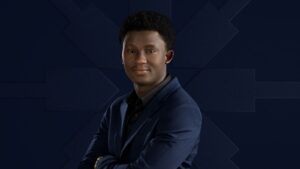
Old Mutual Investment Group MD, Khaya Gobodo, also presenting at the briefing, said that the president’s investment drive could take Gross Fixed-Capital Formation to 25% of GDP, but only if the requisite investment conditions are met, which includes policy clarity and certainty.
“This is even more relevant as the State doesn’t have the balance sheet capacity. SA’s Budget deficit combined with already high levels of debt make it difficult for the state to substantially increase its contribution to fixed-capital formation. SA’s savings,” he said.
“The private sector is therefore a key driver of gross fixed-capital formation, but is also constrained by the low savings rate in the country. This means heavy reliance on foreign capital, and exposes our vulnerability to capital flow reversal.”
Gobodo added that South Africa used to take a far greater share of the permanent foreign capital allocated to the African continent, but poor growth, policy and economic uncertainty has severely dented confidence.
“The key to investment revival is business confidence and SA businesses remain pessimistic about the country’s economy,” he said. “Policy clarity and execution are a key ingredient to driving improved business confidence.”
“Real structural reform and subsequent execution will create the evidence required to substantially improve business confidence.
“SA will have to improve the way it implements its policies in order to facilitate better investment conditions. This includes policy certainty relating to the mining charter and land reform, continued strong focus on anti-corruption measures and improved public sector governance specifically relating to state-owned entities.
“We are already seeing what seems to be increased commitment from the President and his Cabinet to the implementation of structural reform and we would expect the pace to accelerate after 2019 elections,” he said.
Read: How many jobs are created by small businesses in South Africa










 Loading ...