

End of an era for 123-year-old company in South Africa


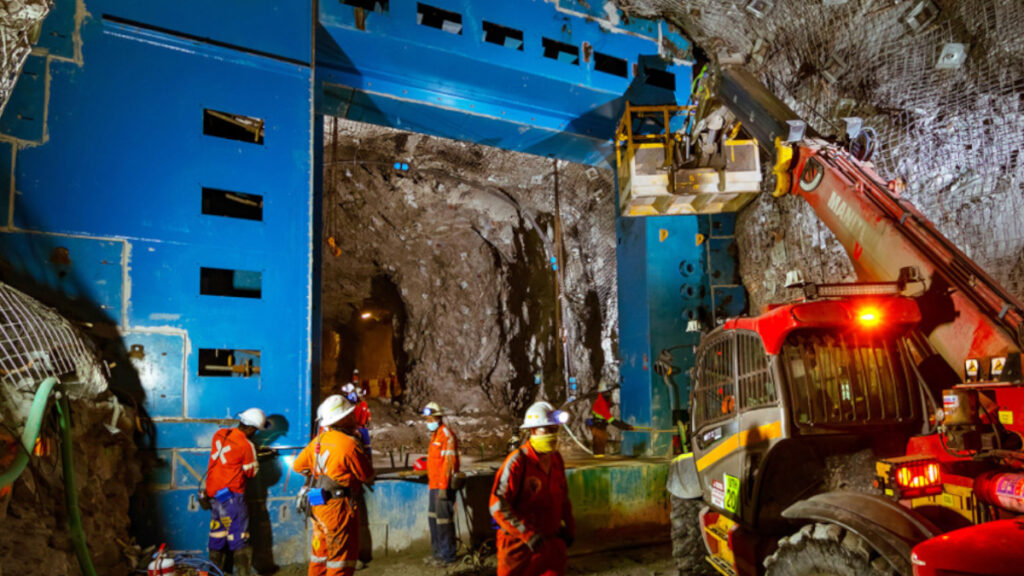
Murray & Roberts Holdings has received a final liquidation order from the Gauteng High Court, marking the end of the road for the 123-year-old company.
In an update to shareholders, the group said that Theo van den Heever has been appointed as the provisional liquidator.
With the trading of the company’s shares on the JSE suspended since November 2024, shareholders will soon receive details on the proposed delisting ahead of the winding-up order.
While this is the end for Murray & Roberts Holdings (MRH), it must be noted that its subsidiary, Murray & Roberts Limited (MRL), is unaffected and is proceeding with its business rescue.
MRH and MRL are separate entities. MRL is a downstream subsidiary of MRH with several intermediate entities in between. Notably, MRL is not associated with or affected by the MRH liquidation.
MRL entered into business rescue on 22 November 2024. A key part of the business rescue plan is the sale of its operations to Differential Capital, which is acquiring MRL’s subsidiary mining interests.
This includes the cementation businesses in Africa and the Americas, as well as TNT in the Americas.
It is this sale that ultimately led to the liquidation of MRH, as it removed any revenue-generating assets from the holding group, making it commercially insolvent.
Despite MRH’s liquidation, MRL said its rescue progress remains firmly on track under the supervision of its appointed Business Rescue Practitioners (BRPs).
MRL said that the BRPs and Differential Capital continue to make progress towards the conclusion of definitive agreements and the fulfilment of suspensive conditions.
Earlier this month, the Competition Commission approved the South African aspects of the proposed transaction.
The BRPs said ongoing business rescue proceedings represent the most sustainable and viable path forward.
Successful implementation is expected to protect around 2,800 jobs within the underlying businesses, particularly South African jobs in Cementation Africa.
What went wrong

Murray & Roberts’ history dates back to 1902, when it operated as a house builder in the Cape Colony under the name Murray & Stewart.
It was listed on the JSE in 1951 and became Murray & Roberts after merging with Roberts Construction in 1967.
However, in April, MRH announced that it would be left commercially insolvent due to the ongoing business rescue proceedings at MRL.
In its interim results for the six months ended 31 December 2024, the group showed a loss before interest and tax of R646 million, up from just R2 million in the year ended June 2024.
This loss was attributed to guarantees from MRL projects being called by clients to fund project completion.
As MRH provided surety to the guarantee provider, the associated loss was reflected in the results.
The group’s results also presented MRL’s finances listed as discontinued operations, as it was in business rescue.
MRL saw revenue of R4.6 billion and a loss before interest and tax of R960 million.
The group reported an attributable loss of R1.4 billion, with a basic loss per share of 167 cents for continuing operations, and a loss per share of 414 cents when including discontinued operations.
The group faced a major liquidity squeeze after De Beers descoped a large part of a contract with Murray & Roberts Cementation at its Ventia Mine.
The contact represented over 50% of the division’s revenue. The group was also hurt by delays in procurement and project progress, especially at its subsidiary OptiPower’s projects in the renewable energy sector.










 Loading ...