

The UK giant that makes billions thanks to South Africa


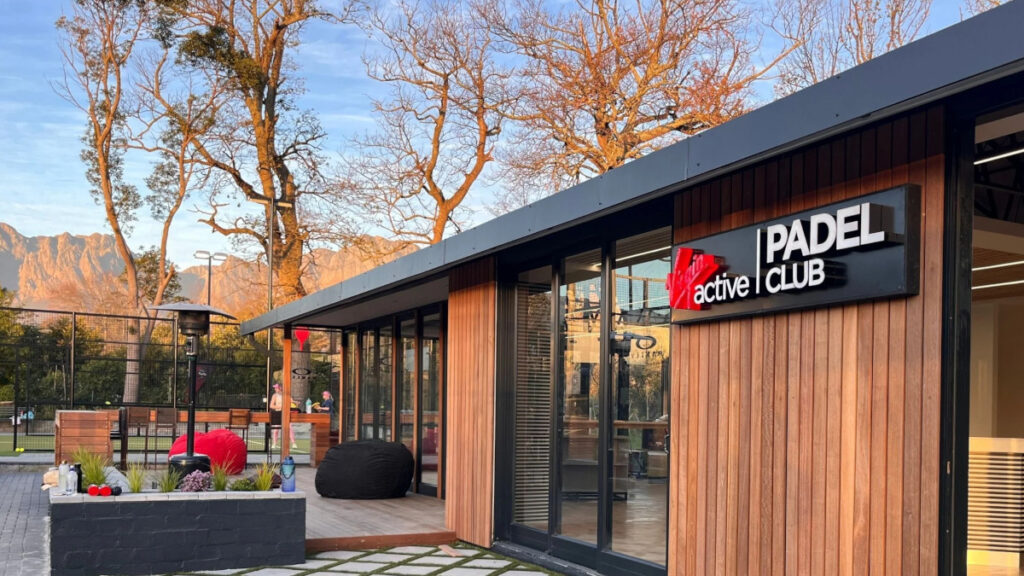
Virgin Active is South Africa’s largest gym brand, with a phone call from Nelson Mandela bringing the brand to the country.
Richard Branson, the billionaire founder of Virgin, stated that his business model is centred on taking big and bold risks.
One of the largest risks that the Virgin Group ever took was its expansion into South Africa.
Mandela phoned Branson directly, asking him to help save 4,000 jobs across the struggling Health & Racquet Club chain in South Africa.
While Virgin Active only had three health clubs in the UK at the time, the request from Mandela would create a network of over 100.
This was a large risk for a young and relatively untested brand like Virgin Active.
“It wasn’t a massive financial outlay, but it was during a tough period,” Matthew Bucknall, former Virgin Active CEO, said.
“There were a lot of voices within Virgin saying, ‘Should you really be investing in a capital-intensive business like this? I said, ‘I get all that, but we’ll show you, it’ll make money.’”
The investment was successful, with the acquisition of the clubs, saving jobs and turning it into a successful business.
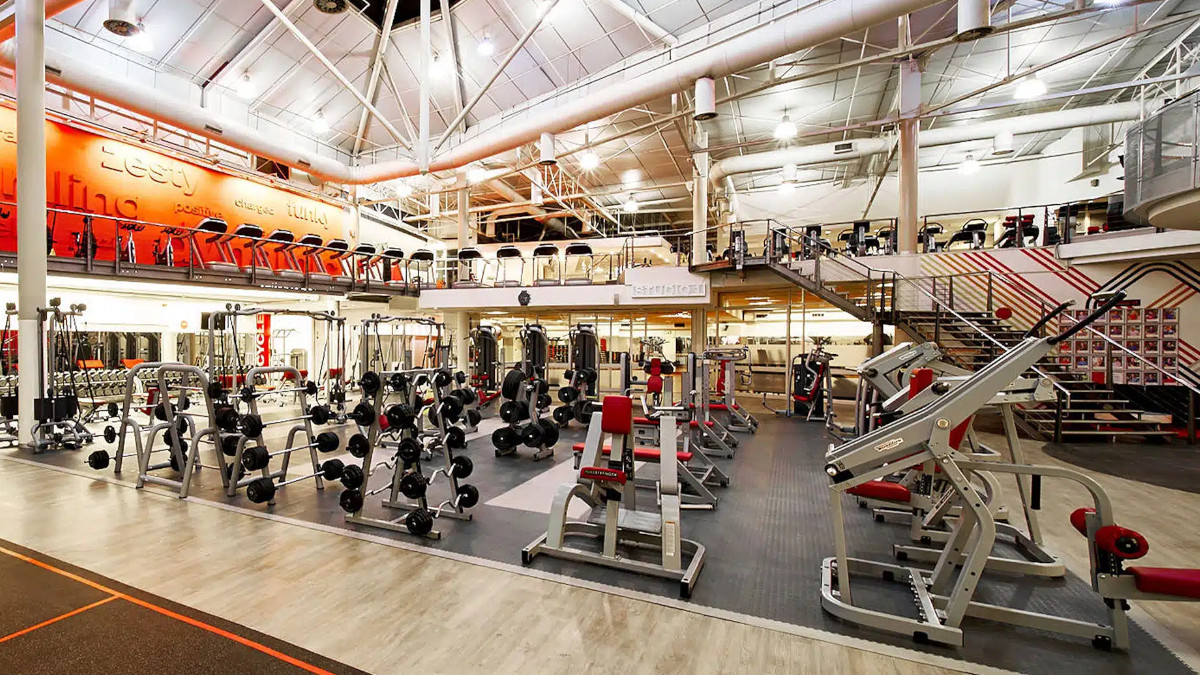
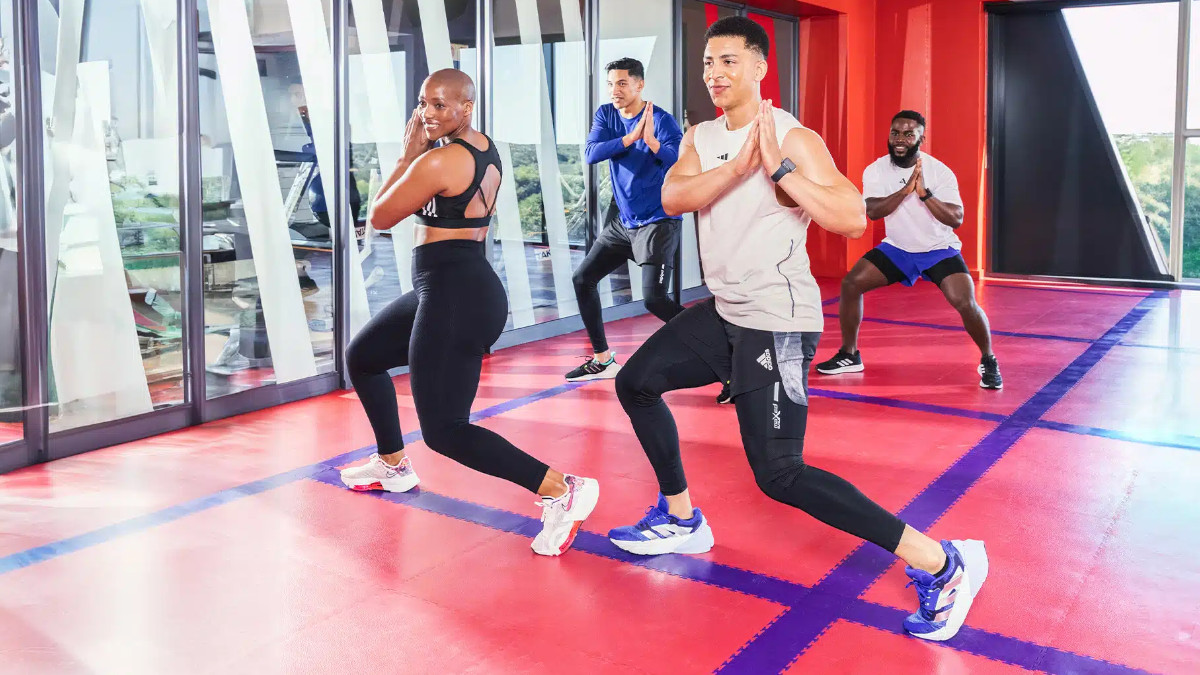
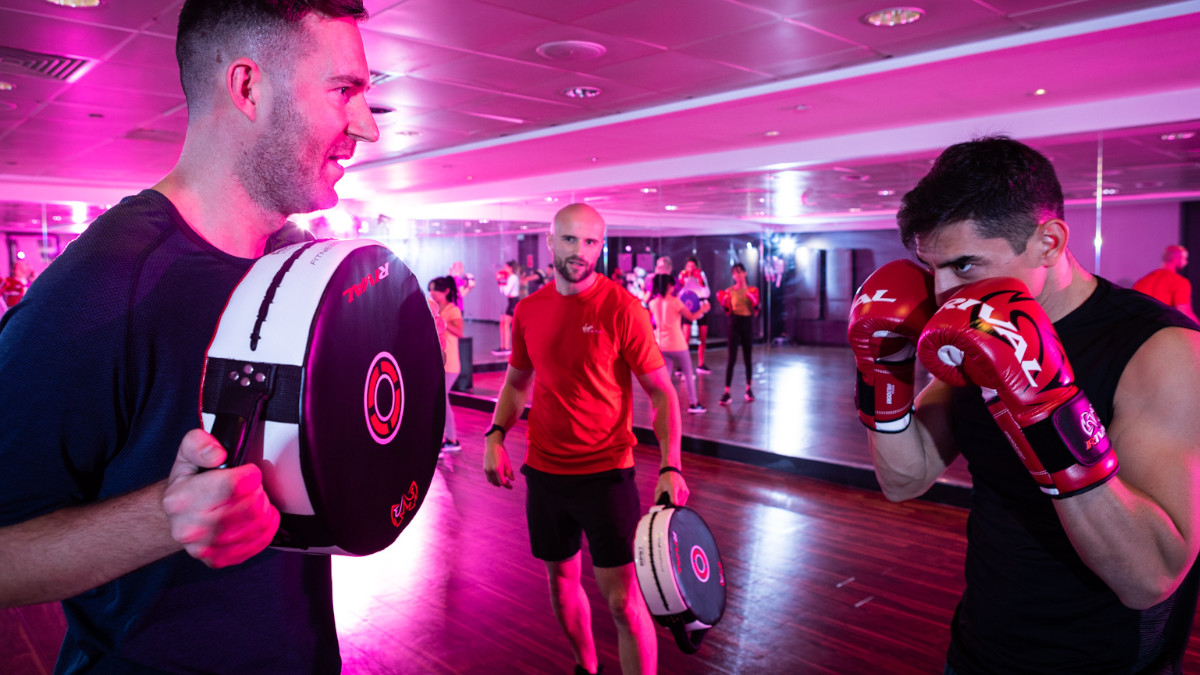
While the Health & Racquet Clubs had been pitched for exercise fanatics, with a focus on strength and weight training, Virgin Active South Africa introduced a softer product.
This would make health clubs more customer-friendly with a focus on group exercise classes.
They were thus less intimidating for casual exercisers and helped the brand thrive in the region.
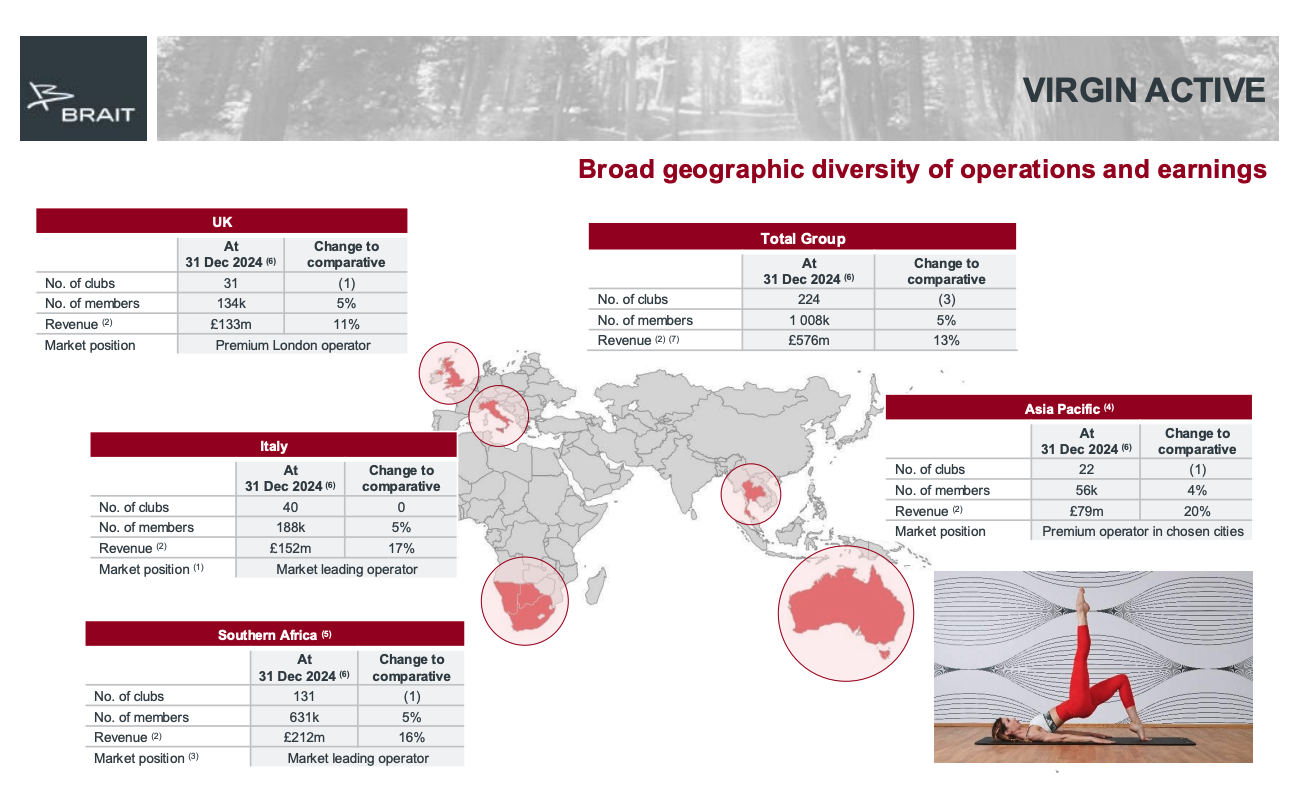
Virgin Active now has 131 locations across Southern Africa, making it easily its largest market.
Given that there are two Virgin Actives in Namibia and only one in Botswana, South Africa remains the largest single country for Virgin Active, with 128 locations.
This is far ahead of the UK’s 31, Italy’s 40 and Asia Pacific’s 22.
South Africa’s 631,000 members are also far higher than Italy’s 192,000, the UK’s 140,000 or Asia Pacific’s 62,000, as of 30 September 2025.
Southern Africa’s revenue of £212 million is also larger than Italy’s £152 million, the UK’s £133 million and Asia Pacific’s £79 million despite the rand’s weakness.
Virgin Active’s ownership structure changed in 2015, when Brait purchased an 80% stake in the company for 682 million.
Brait is a JSE-listed investment holding company backed by billionaire Christo Wiese. The Virgin Group retained a 20% share in the business following the deal.
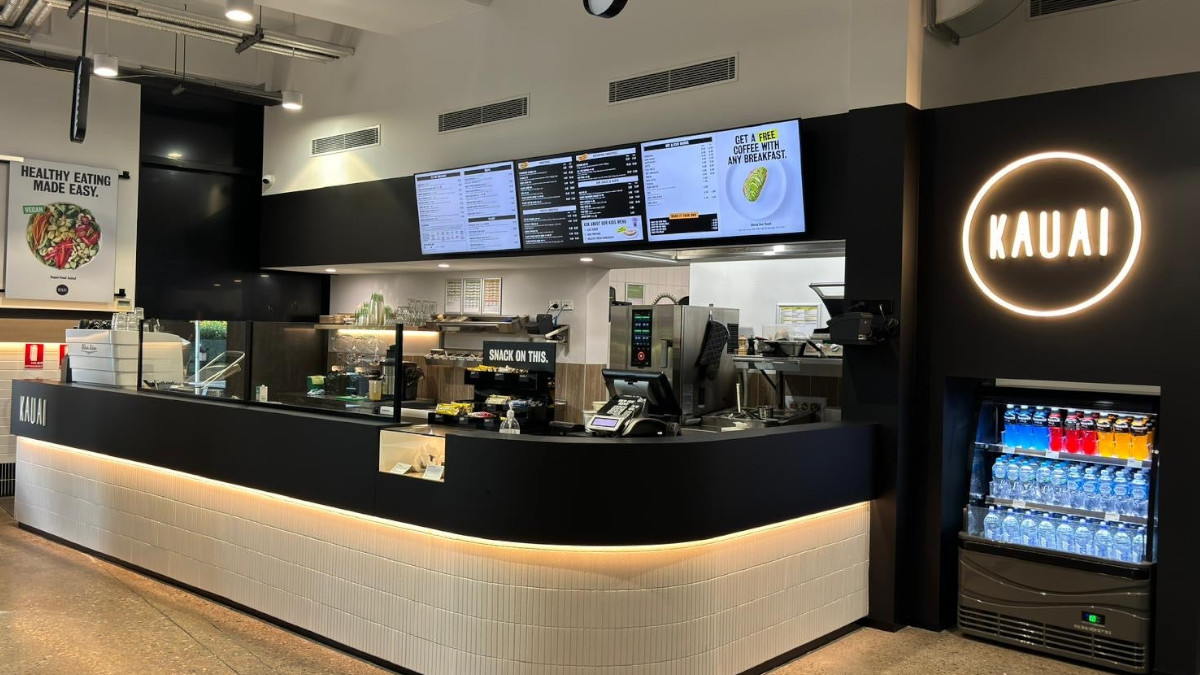
In South Africa, Virgin Active has expanded beyond exercise following the acquisition of Nu and Kauai in a deal worth £28.6 million (about R600 million) in March 2022.
Both health-focused retailers, which were part of The Real Foods Group, are now located across Virgin Active gyms nationwide.
As part of the deal, Dean Kowarski, founder of The Real Foods Group, became the Group CEO of Virgin Active in 2022.
Next chapter

Virgin Active is also now set for a new era, with Brait in the process of a complete wind-down.
The company aims to return capital to its shareholders via a structured exit of its significant investments.
This began in 2023 with Premier Foods, the maker of Blue Ribbon, Snowflake, and more, which was unbundled and listed on the JSE in 2023 through an IPO.
Brait is also unbundling its stake in UK fashion retailer New Look, while Ethos Capital has unblended its shares in Brait to its shareholders.
Virgin Active is now Brait’s largest investment company and is set to be unbundled in 2027.
Brait decided to wait until Virgin Active was able to see a full recovery from the Covid-19 pandemic, when health clubs could not even be accessed.
Brait’s latest financials have shown strong recovery across Virgin Active, which are now back to pre-COVID-19 levels.
Images









 Loading ...