

Another 50-year-old company could be forced to close in South Africa


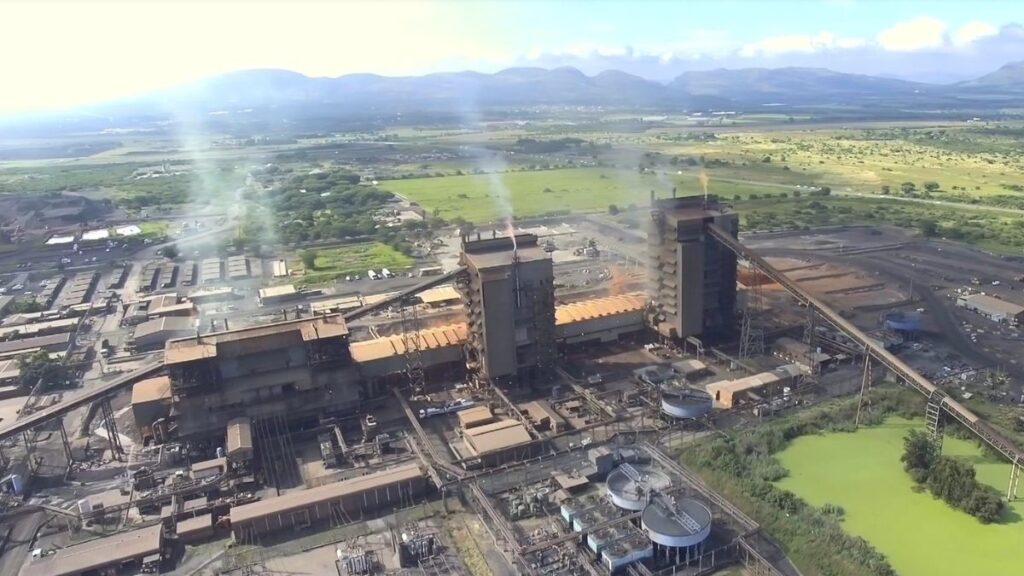
One of South Africa’s major mining and ferrochrome companies, Samancor Chrome, warned that it may have to consider significant operational changes—including the possible closure of its remaining furnaces.
The company has issued a notice to employees explaining that ongoing discussions with the government have not resulted in any concrete support, and that its cost pressures are no longer sustainable.
In the notice, Samancor reportedly explained that electricity costs comprise a significant portion of the expenses associated with running smelters.
Without some form of electricity tariff relief, the company said it will have to review how it operates going forward.
“Despite ongoing engagements and representations to the government, we have not received the concrete relief on electricity pricing that we had hoped for, and our operations desperately need to remain competitive,” it said.
The company added that it would now have to consider “drastic action” to remain viable. Samancor Chrome has been part of South Africa’s mining and metals sector for almost 50 years.
Formed in 1975 through the merger of SA Manganese Limited and African Metals Corporation (Amcor), the company was historically part of a larger structure jointly owned by BHP Billiton and Anglo American.
In 2005, those companies sold their chrome interests to the Kermas Group, and Samancor became a dedicated chrome-focused business.
Today, the company operates mining and smelting facilities mainly in Limpopo, Mpumalanga, and North West, and is considered a significant employer in these regions.
While Samancor declined to comment further, industry analysts noted that the company is operating the last two active ferrochrome furnaces in South Africa.
Around 45 other furnaces across the country are either idle or have been mothballed over the years as rising electricity tariffs and unreliable supply made smelting uncompetitive.
The National Union of Mineworkers (NUMSA) confirmed that it has received a formal notice from Samancor regarding the company’s concerns, and a meeting between the union and the company has been scheduled.
The pressures facing Samancor reflect broader challenges across the ferrochrome sector.
Industry-wide crisis

In September, Glencore announced job cuts at its ferrochrome and vanadium operations in Rustenburg, citing similar issues, including high electricity costs and weaker economic conditions.
Glencore has previously suspended production at multiple smelters, including Boshoek, Wonderkop, and Lion, and has fully shut others in Rustenburg and Lydenburg.
The company has said that sustained electricity price increases and supply instability have reduced the competitiveness of South African smelting.
South Africa holds around 80% of the world’s chrome ore reserves, giving it a natural advantage in ferrochrome production, which is important for stainless steel manufacturing.
However, this advantage has been weakened by steep increases in electricity prices over the past two decades. Since 2007, electricity tariffs have risen by more than 800%, significantly faster than inflation.
As a result, the cost of producing ferrochrome in South Africa has increased to the point where countries such as China can produce it more cheaply, even though they import much of their chrome ore.
The government has acknowledged the pressures facing the industry and, in June, the Cabinet approved a plan to introduce discounted electricity tariffs for smelters.
The intention is to provide some relief to energy-intensive industries and potentially allow idle furnaces to restart.
Announcements were initially expected in September and later in October, but no formal tariff structure has yet been released.
At the same time, there is an ongoing debate over a proposed chrome ore export tax. The government believes that such a tax could encourage producers to supply more ore to local smelters, supporting domestic ferrochrome production.
However, the Minerals Council South Africa, which represents most large mining houses, has argued that the core issue is the cost of electricity rather than ore availability.
According to the Council, imposing an export tax may create additional cost pressures without addressing the main obstacle preventing smelters from operating.
The Minerals Council notes that, despite South Africa’s natural advantage in having chrome ore available locally, the country remains less competitive in ferrochrome production than China.
Last year, the average cost of producing ferrochrome in South Africa was estimated at around $119 per tonne, compared to about $103 per tonne in China.
The Council says that until electricity becomes more affordable and reliable, South African smelters will continue to struggle.














 Loading ...