

The end of prime interest rates in South Africa


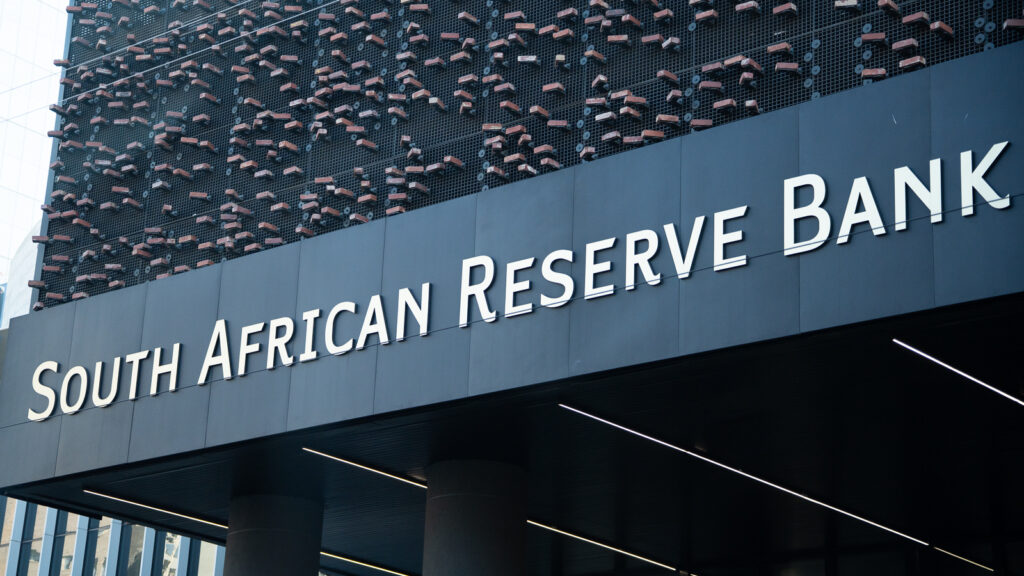
The South African Reserve Bank (SARB) has proposed the end of the prime interest rate, but there are potential risks in the transition.
The SARB sets the repo rate in South Africa, the rate at which the central bank lends money to external banks.
However, banks in South Africa will sell their credit products using the prime interest rate, which adds 3.5 percentage points onto the repo rate.
The SARB wants to replace the prime lending rate with the repo rate as the benchmark for all loans currently priced to prime.
This means that a loan priced at prime minus 1 would become repo plus 2.5. The total interest rate remains the same, but the reference point changes.
The SARB said that the decision would have no economic impact, with all interest payments remaining unchanged.
The system would see new loans be quoted as the repo rate plus a margin, making the pricing structure more transparent.
Tlhoni Komako, Fixed Income Portfolio Manager at Ashburton Investments, said that the appeal of this approach lies in its simplicity.
“Because the relationship between prime and the repo rate has been fixed for more than two decades, the transition can happen without introducing hidden gains or losses,” said Komako.
While the impact may seem inconsequential, he said that the real impact lies in how people understand their loans.
“Under the current system, consumers must interpret their borrowing costs relative to prime, a rate that does not directly reflect monetary policy,” he said.
“This makes it harder to assess whether a loan is competitively priced or to understand how changes in interest rates affect them.”
Linking loans to the repo rate, however, would allow borrowers to understand the margin charged by banks and how that margin compares across lenders.
It will seperate the cost of money from the cost of risk, which the current system does not reflect, and improve financial literacy.
A major shift

Komako said that the largest risk lies in how the transition is perceived. A borrower accustomed to seeing a prime-minus-1 loan may be surprised to see it expressed as repo plus 2.5, even if the risk is identical.
“This creates a real risk of confusion and potentially mistrust, particularly among retail borrowers,” he said.
“Banks will need to explain clearly and consistently that nothing has changed in terms of actual borrowing costs. The shift is purely one of transparency, not pricing.”
He added that international experience shows that while institutional market participants adapt quickly to benchmark changes, retail customers often struggle to understand the change.
On top of the communication issue, the operational side will also need to undergo a monumental transition.
Over 12 million contracts, including home and personal loans, currently use the prime lending rate, with total exposure exceeding R3 trillion.
“For banks, this means updating systems, recalibrating pricing models, revising legal documentation, and ensuring regulatory compliance while maintaining continuity for customers,” Komako noted.
“This is not a simple switch. It will require careful planning, coordination, and execution over several years.”
The SARB has recognised the complexity and is proposing a gradual transition, with implementation likely to start only from 2027.
This timeline allows institutions to adequately prepare while also managing other ongoing reforms, such as the transition from JIBAR to ZARONIA, which refers to the rates at which banks lend to each other.


















 Loading ...