

Important update about R30,000 fine for people with solar in South Africa


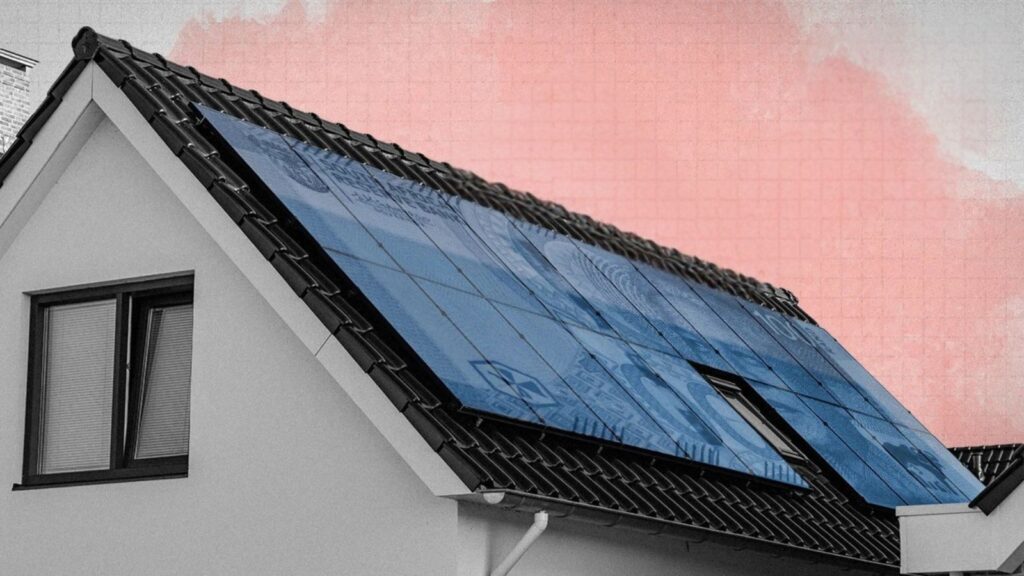
South African households with rooftop solar systems have been given an important update on the looming 30 September 2026 registration deadline.
Eskom reportedly confirmed that residential customers will not be fined or disconnected simply for failing to register their systems by the date.
This is the feedback from energy expert and EE Business Intelligence managing director Chris Yelland.
Yelland noted on X that Eskom spokesperson Daphne Mokwena confirmed to him and the Organisation Undoing Tax Abuse (OUTA) that the utility would not impose fines or cut electricity because a residential solar system had not been registered by the deadline.
The clarification follows months of warnings that households with unregistered solar installations could face penalties of up to R30,000 and possible electricity disconnections.
Yelland, an energy adviser to OUTA, has long disputed Eskom’s interpretation of the legal requirements for solar registration.
“Eskom has no authority to issue fines. It is not a court, it is not a statutory authority, it doesn’t write the law, and there is no provision for Eskom to issue fines,” Yelland said.
He also questioned whether Eskom could disconnect a customer simply because a solar system had not been registered.
“We believe that cut-offs are a threat, an empty threat, and that they have no basis in law,” he said. He added that OUTA would challenge such disconnections if they were implemented.
However, solar owners have been warned to distinguish between Eskom’s position, municipal requirements, and OUTA’s interpretation of the law.
Registration requirements can vary depending on the type of installation, its connection to the electricity network, and the applicable distributor’s rules.
Eskom has said registration is necessary for safety and to give the electricity system operator a better understanding of how much rooftop solar and battery storage is connected behind customers’ meters.
However, Yelland said that safety is governed by legislation and electrical installation requirements, including the Occupational Health and Safety Act, the Electrical Installation Regulations, and a valid Certificate of Compliance (CoC).
“If you have a lawful Certificate of Compliance, your system is safe,” he said.
Compliance with safety regulations is still required

The registration dispute comes after South Africa’s energy crisis prompted a rapid increase in rooftop solar installations.
During the severe load-shedding period between 2022 and 2024, households installed thousands of megawatts of solar capacity, with many systems remaining connected to the electricity grid so homes could draw power when solar generation was unavailable.
Eskom and municipalities subsequently increased efforts to identify and register these installations. Eskom has also warned that it could use geographic mapping and satellite imagery to identify rooftop solar systems.
The utility initially offered free registration for qualifying residential systems, with the original deadline set for 31 March 2026.
After low uptake and concerns about the registration process, Eskom extended the grace period to 30 September 2026.
Eskom has also changed some of its requirements, including dropping an earlier requirement for certain systems to be signed off by an Engineering Council of South Africa-registered professional.
A registered electrician can instead issue the required Certificate of Compliance where applicable.
The latest confirmation means homeowners should not assume that the widely reported R30,000 penalty will automatically be imposed by Eskom after 30 September.
Owners of grid-connected solar systems should determine which registration and compliance requirements apply to their particular installation and electricity distributor.
Homeowners and businesses have also been advised to ensure their systems have the required electrical certification and are installed safely.















 Loading ...