

R20 billion industry goes to war with the JSE


Grain SA is fighting back against the Johannesburg Stock Exchange’s (JSE) decision to revert to a single-reference-point system for soybean prices in the derivatives market.
The soybean industry is a major part of South African agriculture, with 2022 yields estimated at approximately R20 billion, and it has continued to grow since then.
The outrage follows the JSE’s adoption of a multi-reference-point model for the commodity on a trial basis, to be tested over two marketing seasons.
On the commodities exchange, traders can invest in futures contracts for commodities such as soybeans, with a specified price for a future date.
For farmers, the futures market is a way to protect themselves against sudden price drops, with a predetermined price set in advance of market fluctuations.
For traders, it is a way to guarantee a price for a commodity in advance, avoiding potential future price increases due to higher demand.
When calculating the futures price for a commodity, several factors are considered to ensure it accurately reflects the market price.
Previously, futures prices for soybeans were calculated based on the assumption that they had to be processed in Randfontein, with different areas incurring different transport costs.
Over time, several other processing facilities have opened, leading farmers to argue that the current method for calculating futures prices does not fairly represent the market.
This led GrainSA to propose a multi-reference-point model, in which futures prices would differ based on each area’s unique expenses.
The system was tested by the JSE, but the bourse eventually decided to revert to a single-reference-point model, removing the separate calculations for each area.
The exchange said its decision was based on the difficulty of accurately tracking and auditing soybean crushing plants’ operations, along with several other factors.
“The review highlighted several structural and operational limitations that undermined confidence in the MRP model,” the bourse said.
The JSE was also concerned that the futures calculations were based on confidential supply and demand data, which often could not be disclosed.
While the exchange conceded that trading volumes and open interest had increased, it argued that there was no concrete link between this and the new model.
The response from farmers
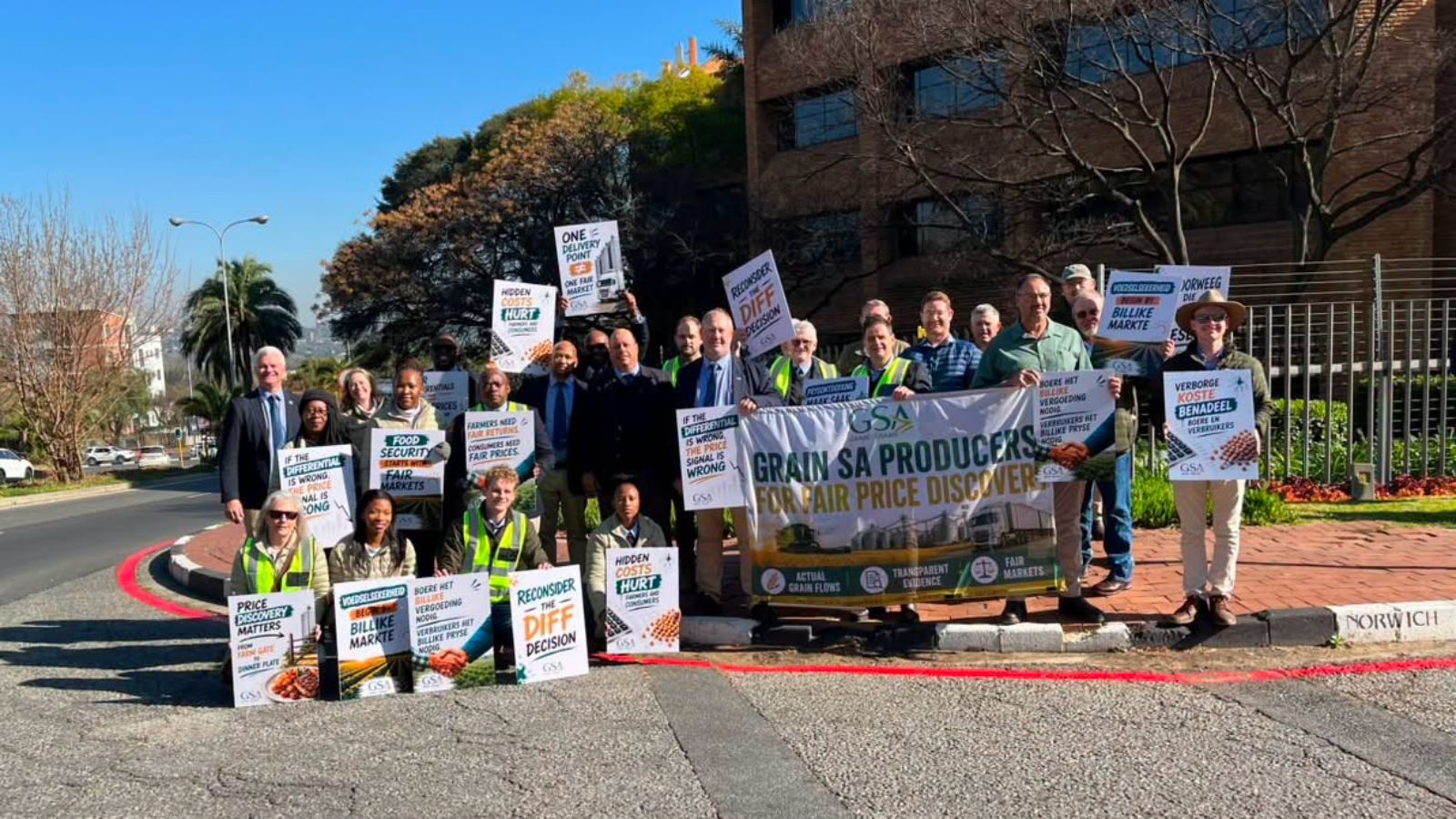
Initially, Grain SA proposed the multi-reference-point system to address the basis of futures contracts on the derivatives market.
The basis refers to the difference between the actual selling market price and the futures price of a commodity.
If the selling price is higher than the futures price, farmers on the derivatives market can lose out on potential earnings by being locked into a futures contract.
Grain SA has argued that using its proposed system helps prevent this and provides a minimal basis for soybeans.
In response to the JSE’s decision to revert to a single-reference-point model, Grain SA issued a statement disagreeing with the decision.
“Grain SA is deeply disappointed by, and disagrees with, the decision by the JSE not to retain the Multiple Reference Point model,” it said.
The group argued that the decision was not a fair assessment of the criteria which the exchange had previously laid out, which included:
- Trading activity, including volumes and open interest.
- The number of active market participants.
- The management and accumulation of stock in zero-differential areas.
- The redelivery of JSE silo receipts.
- Stakeholder feedback and market experience.
“Grain SA is concerned that the JSE’s final decision and motivation do not provide sufficient and transparent, criterion-by-criterion reasoning against the agreed evaluation framework,” it said
On Thursday, 13 August, the group organised a demonstration at the JSE to protest the decision and deliver a petition against the move.
Grain SA also launched a court interdict against the JSE’s decision, seeking to overturn it regarding the reference point models.


















 Loading ...