

The urgent measures needed to end the load shedding crisis in South Africa are simpler than we realised


Joanne Yawitch, commissioner of the National Planning Commission says that plans are already in place to end load shedding in South Africa, which if sped up could come sooner.
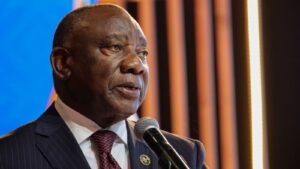
President Cyril Ramaphosa said on Monday in his weekly newsletter, that as load shedding appears to have worsened, the government is preparing steps to accelerate an increase in electricity supply. “The reality is that we have already taken several important actions to address the shortfall in electricity supply.
“Our immediate priority is to stabilise the electricity system. As the system recovers and generation capacity is restored, Eskom will be able to reduce load shedding to lower stages,” he said.
This mandate appears to have been fulfilled by the state power utility as it implemented stage 1 load shedding on Thursday morning for the first time in some time, having enforced stage 6 power cuts over much of July already.
“The bottom line is that we need to add more capacity to the grid,” said the president. “This will create space for Eskom to undertake critical maintenance and increase the reliability of its fleet. It will also create a buffer so that even if several units experience breakdowns at once, other sources can be used.”
Speaking to Moneyweb this week, commissioner Yawitch said that “there are already things that are in process that, if they were speeded up, if they were streamlined, [and] if it was made easier to get them implemented, those things would have a significant impact in alleviating the load shedding crisis that we are currently facing”.
The National Planning Commission said in a report last week that the most immediate priority is to ensure that new generation capacity is rapidly and urgently brought onto the grid, together with significant new storage capacity.
“Evidence suggests it is possible to do this within 24 months if 10,000 MW of new generation capacity is rapidly constructed and commissioned as well as 5,000 MW of storage capacity.”
The NPC said that solar and wind power projects can be built rapidly within two to three years. “Ending load shedding needs to become a unifying national goal for the whole country and all stakeholders,” it said.
For this to happen, it called for a declaration of an ‘energy emergency’ to make it possible to override some of the red tape preventing the acceleration of delivery of new generation capacity.
To achieve the overall goal of 10,000 MW of new generation capacity and 5,000 MW of storage, it will be necessary to remove key obstacles. To this end, the NPC is of the view that:
- The 100MW ceiling should be removed because Eskom’s grid code and grid connection authorization process is sufficient to regulate this growing market.
- Any NERSA registration process that delays the implementation of projects should be scrapped and replaced with an online registration procedure for database purposes only.
- Environmental and water use approvals must be streamlined, to take advantage of the Renewable Energy Development Zone framework that allows for fast-tracking of approvals.
- There must be a temporary exemption from local content requirements for the construction and commissioning of new generation and storage capacity due to come online in the next 36 months.
In parallel, The NPC said that key stakeholders should reach a formal agreement that strikes a balance between short-term importation of components with the need for phasing in upstream industrialization over the medium- to long-term.
Ramaphosasaid that the increase of the licensing threshold for new generation projects to 100 MW has unlocked a massive potential pipeline of investment. The reform means that private investors do not require a license to build generation facilities up to this size.
“Eskom has made land available next to existing power stations for private investment in renewable energy projects. Design modifications have been completed to improve the performance of Medupi units 1, 2 and 3 and are underway in units 5 and 6. While these actions are significant and will bear fruit over the coming months, they are clearly not enough to address the crisis that we face,” the president said.
Ramaphosa said that the government has spent the past two weeks working on a range of additional measures to accelerate all efforts to increase the country’s electricity supply. “The message is clear: this is no time for business as usual. We need to act boldly to make load shedding a thing of the past.”
“While the measures we have already taken will secure the supply of reliable and affordable electricity into the future, we have been looking at what additional measures we can take now to bring that goal closer.
“We will soon be completing the detailed work and consultations needed to finalise these further measures. We will then, in the coming days, be able to announce a comprehensive set of actions to achieve much faster progress in tackling load shedding.”
And with ‘the coming days’ already at an end to highlight the urgency of the country’s power crisis and a need for solutions, Yawitch said that the call by the NPC for the declaration of an energy emergency is to ensure that steps are taken to fast-track the creation of new capacity.
“Certainly in relation to this hundred-megawatt scheme, I know that it has done a lot of work in order to simplify the bureaucratic processes and the red-tape requirements that were preventing some of those schemes from getting off the ground. And they are going ahead at the moment,” she told Moneyweb.
“We’ve got to take all of the barriers out of the way of making new capacity come onto the grid really rapidly.”
Yawitch highlighted the different ways that renewable capacity is brought onto the grid. The independent power producer process has been rolled out over a number of years fairly slowly.
“Currently, the successful bidders are busy negotiating with the government, and there are a series of blockages in the way. [As] part of them, we have no control over the price of renewables [which] has gone up a bit since that bid started, and those things need to be addressed – the issues around localisation need to be addressed,” said the commissioner.
“We are suggesting that you cut through the blockages on that and try to get those developers to start building their plants as soon as possible. In addition, you’ve got this hundred-megawatt self-generation programme that is in place, and we are suggesting that where Eskom’s grid can stand it, in actual fact you should be able to lift that hundred megawatt limit in order to allow some bigger plants to link into the grid.”
Yawitch said that there is a big pipeline already in place for private-sector developments. “Those could get off the ground also within this two-year period.”
Read: South Africans are returning to the office – but with a list of demands













 Loading ...