

Ramaphosa’s energy plan catches China’s eye


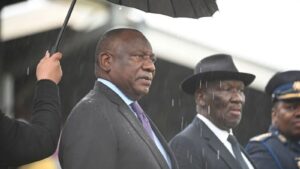
President Cyril Ramaphosa has concluded meetings with global superpowers at the G20 summit in Bali, Indonesia, cementing agreements on investment in energy security and South Africa’s just transition.
Recent moves by the government to push towards a greener energy supply through increased procurement drives and relaxing red tape have opened the door for foreign investment.
Saudia Arabia, for example, recently signed 17 memoranda of understanding with South Africa, of which many related to new renewable energy and green hydrogen projects. Germany and France, meanwhile, have each committed R10 billion in loans for the move away from coal – adding to deals of around R140 billion for the just energy transition from developed nations.
Going into the G20 meetings, Ramaphosa set out to further strengthen relations with key figureheads, including China’s general secretary of the Chinese Communist Party and President Xi Jinping and the prime minister of the Netherlands, Mark Rutte.
Ramaphosa -with his team, finance minister Enoch Godongwana and international relations minister Naledi Pandor – set out to go beyond purely financial discussions to issues of peace, global governance and the environment.
However, the bilateral meetings placed a strong emphasis on significant investment, particularly in South Africa’s infrastructure and energy transition.
Ramaphosa met with his Chinese counterpart Xi Jinping earlier in the week.
Xi Jinping noted that the two countries share a special friendship of ‘comrades plus brothers’ – in that they are both developing countries with common interests.
The Chinese president said that the central task of his political party and mandate as president is to build China into a great modern socialist country which will bring more opportunities to South Africa.
Ramaphosa and Xi Jinping agreed that the two countries would forge stronger ties and put more focus on:
- Cooperation in terms of energy, trade and investment;
- The Belt Road Initiative;
- The South African Economic Reconstruction and Recovery Plan;
- Advancing the implementation of the Forum on China-Africa Cooperation (FOCAC) in South Africa.
The South African Economic Reconstruction and Recovery Plan prioritises energy security and its importance in maintaining a stable economy that promotes growth.
Eskom and its crumbling network has, however, been a thorn in Ramaphosa’s side, holding back developments with rolling blackouts becoming the norm.
The recovery plan notes that South Africa’s industrialisation and manufacturing depend on its energy industry and aims to strive towards a greener energy supply that makes the shift in a just fashion.
Rich countries have now become crucial to the shift away from fossil fuels, particularly coal. Last year, Western nations, including the US, the UK, the European Union, Germany and France, pledged $8.5 billion to bolster domestic energy supply.








 Loading ...