

R4.50 per litre shock coming for South Africa


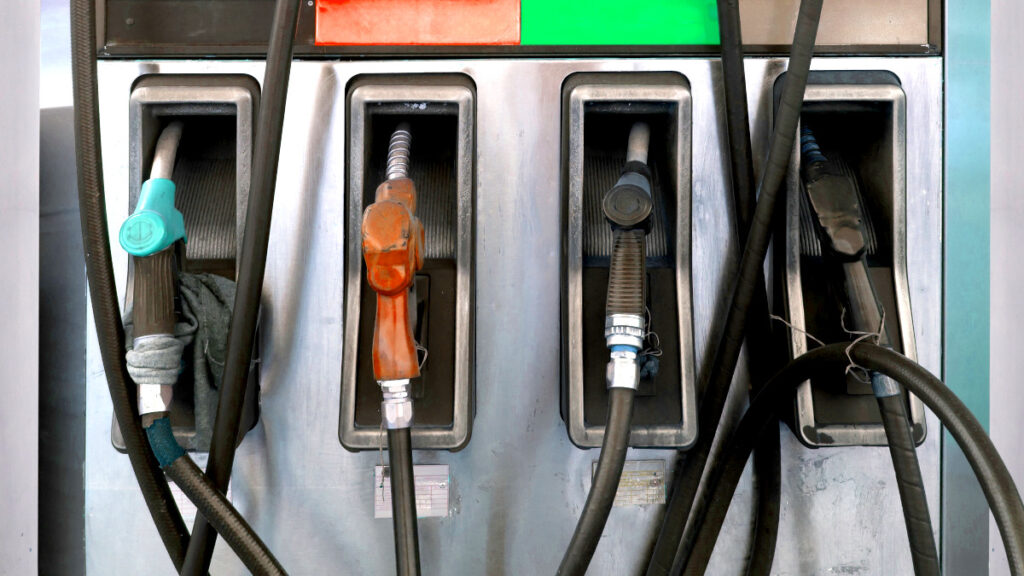
South African motorists are in for major price pain in April, with the latest data from the Central Energy Fund (CEF) pointing to steep increases in petrol and diesel prices.
Data for the end of the first week of March shows a massive under-recovery in prices for both fuel types.
Petrol prices are showing an under-recovery of R2.40 per litre—much worse than just a few days ago—while diesel prices are in the red by about R4.50 per litre.
If these recoveries follow through to the end of the month, South African motorists will see a complete reversal of the sizeable price cuts seen at the start of the year.
Petrol prices dropped by 65 cents per litre in January and again in February 2026, offset by a 20-cent-per-litre hike in March. On a net basis, prices have come down by R1.10 per litre so far this year.
These are the projected levels at mid-month:
- Petrol 93: increase of R2.28 per litre
- Petrol 95: increase of R2.41 per litre
- Diesel 0.05% (wholesale): increase of R4.39 per litre
- Diesel 0.005% (wholesale): increase of R4.50 per litre
- Illuminating paraffin: increase of R6.60 per litre.
Recoveries have trended deeper into the negatives as the United States’ war on Iran continues.
The US and its ally Israel launched an attack on Iran on 28 February 2026, killing the country’s Supreme Leader and many other heads.
Iran retaliated, taking out US targets in neighbouring countries, resulting in even more bombardments.
Markets have been shaken by the escalation of conflict in the Middle East, with oil markets hit particularly hard.
The oil price has shot up from around $60 a barrel earlier in the year to $85 a barrel by Friday, 6 March.
Investors have also adopted a risk-off position, pulling out of riskier emerging markets and funnelling into safe havens.
As a result, the rand has also taken a significant hit, moving from under R16/$ before the war, to trading around R16.60/$ on Friday.
While the impact on local markets has been hard, the boost to commodities—especially gold—has helped offset some of the risk aversion.
Regardless, both the higher oil price and the weaker rand versus the dollar are putting recoveries in the red, lining South Africa up for steep fuel price hikes in April.
More pain coming

While the first week of the month is too early to make a solid call on where prices will be three weeks from now, it does show the current state of the market.
For fuel price recoveries to reverse and head back towards neutral, both the oil price and rand/dollar exchange would have to flip course.
Unfortunately, markets are not anticipating an end to the war in Iran any time soon, with the White House pointing to “four to five” weeks of military action, and the capacity to go for even longer.
While economists do not anticipate a prolonged war (ie, years), the short-term impact will be carried by the markets.
South Africans also have an added stressor in the equation, with fuel tax hikes also coming into effect from 1 April, adding another 21 cents per litre to fuel prices.
This means that, even if markets were to move towards neutrality, local pricing would still be tipped towards a hike.
Industries, such as the freight industry, have warned that the likely rise in fuel prices will have a knock-on effect throughout the supply chain, resulting in higher prices for goods and services and thus pushing up inflation.
Higher inflation would put the South African Reserve Bank (SARB) on edge, and likely nix any prospects for an interest rate cut in March.
Economists believe the SARB will see the war and inflationary impact as temporary, and thus won’t put the central bank on a path of rate hikes.
However, forecasters have started pricing in the possibility of rate hikes should the war prove more prolonged.
















 Loading ...