

Great news for petrol prices in South Africa


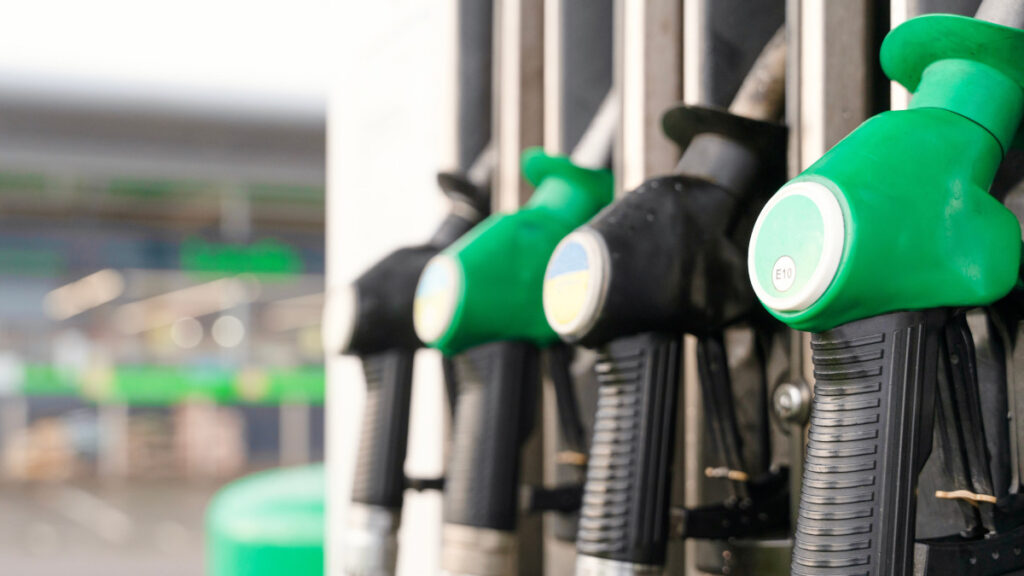
Early data from the Central Energy Fund indicate that petrol prices in South Africa are set to fall in December, even as National Treasury’s relief measures are reduced.
A significant swing in global oil markets following the United States mid-term elections and a stronger rand after the local municipal elections also mean things are looking more positive heading into the end of the year.
According to CEF data for the first week of November, petrol prices are currently showing an over-recovery of R2.02 and R2.32 per litre for 93 and 95, respectively.
This points to a much-needed price cut building for December.
Diesel, which started the month in the red, has also swung into a small over-recovery; however, it is not currently large enough to counter the impact of the reduction in Treasury’s temporary relief.
Here are the early projections from the CEF:
- Petrol 93: decrease of R2.02 per litre
- Petrol 95: decrease of R2.32 per litre
- Diesel 0.05% (wholesale): decrease of R0.01 per litre
- Diesel 0.005% (wholesale): decrease of R0.35 per litre
- Illuminating paraffin: decrease of R0.36 per litre
While the over-recoveries will be a welcome sight to many, they will be undercut by the reduction in the National Treasury’s relief package.
Finance Minister Enoch Godongwana announced R10 billion in fuel price relief in October, which resulted in fuel levies being cut by R1.50 per litre for petrol and R3.00 per litre for diesel in November.
However, the relief will be reduced to R1.00 per litre for petrol and R1.50 per litre for diesel in December.
This will have the net impact of adding 50 cents per litre back to petrol prices and R1.50 per litre back to diesel as the temporary measure is reversed.
At current recovery levels, petrol prices will still be lined up for a cut, but diesel prices will swing back into the red.
For the picture to change, the over-recovery in diesel will have to rise above R1.50 per litre to cancel out the tax being added back in.
The CEF data and Treasury adjustments also do not factor in the slate levy, which is currently around R1.50 per litre. These changes are only announced with the official adjustment at the end of the month.
The table below outlines how prices could be adjusted:
| Petrol 93 | Petrol 95 | Diesel 0.05% | Diesel 0.005% | |
|---|---|---|---|---|
| November price (inland) | R29.87 | R30.24 | R30.85 | R31.60 |
| Recovery | -R2.02 | -R2.32 | -R0.01 | -R0.35 |
| Fuel price relief | +R0.50 | +R0.50 | +R1.50 | +R1.50 |
| Difference | -R1.52 | -R1.82 | +R1.49 | +R1.15 |
| December projection | R28.35 | R28.42 | R32.34 | R32.75 |
While it appears to be a mixed bag for fuel prices this early on, a wave of positivity in global markets may lead to a much better end to the month.
Most notably, global oil prices have staged a significant recovery, dropping below $100 a barrel for the first time in months.
The rand, meanwhile, has also gained, though it remains around the R16.50/$ mark.
According to Investec Chief Economist Annabel Bishop, the results of the US mid-term elections had a resounding effect on the oil price and financial market sentiment.
In the election, the Democrats won both the US Senate and House of Representatives in a “blue wave”.
The resulting market reaction, largely focused on how a shift in political sentiment could ease pressure in the Middle East, saw Brent crude oil drop to around $95 a barrel.
The drop in oil prices from near $118 a barrel last week has provided a respite to global financial markets, Bishop said.
She added that the rand is also likely to strengthen further, with the US dollar having weakened on the subsidence of risk aversion in global financial markets.
“Expectations are for a quickening to the end of the Middle East war, with a steady wind down as Republicans enter a period of gridlock with new bills able to be blocked by the Democrats, and investigations into tariffs and other legislation,” she said.
While Donald Trump remains President, he will reportedly face increasing investigations into his family dealings and party donors, which will also dull the focus on the war in the Middle East, the economist noted.
“While expectations are that attempts to impeach the US president will increase, the Democrats have not gained 75% of the Senate, and a two-thirds majority of the Senate is needed to enact impeachment of a President,” she said.
There is now also a much higher chance of US government shutdowns, which will distract from the war in the Middle East.
For South Africa, Bishop said that AGOA can be renewed on significant motivation from supportive parties in the US, along with aid funding, particularly for HIV/AIDS.
However, she added that these will be fairly low priorities for the new leaders of the US House of Representatives and Senate.
Bishop added that the boost to fuel recoveries will be impacted by the reversal of the tax relief, as highlighted above.
“Typically, incoming fuel price cuts are used, where possible, to reverse fuel levy cuts to have the minimum effect on the consumer,” she said.
Regardless, as the war in the Middle East winds down, global commodity prices are expected to improve.
While this will come with “volatility and some hindrances”, Bishop said prices are expected to subside further, and “the general trend is expected to be of improvement”.

















 Loading ...