

Criminals targeting popular household brands in South Africa


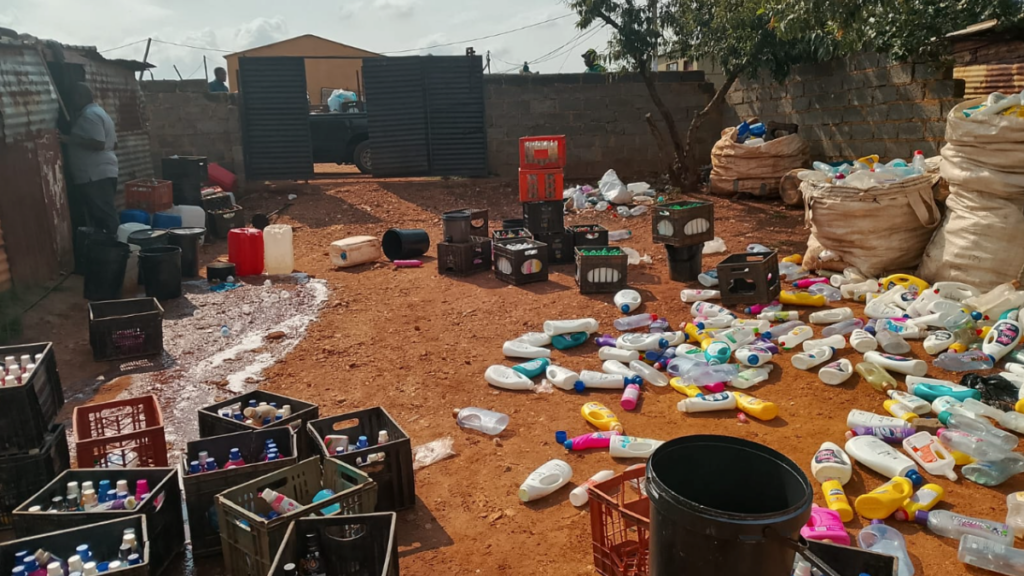
South Africa’s Directorate for Priority Crime Investigation (DPCI) unit, commonly known as the Hawks, recently seized chemicals and counterfeit household cleaning products from an illegal detergent manufacturing site in Boksburg.
The Hawks found a makeshift manufacturing facility in Windmill Park informal settlement, where cleaning detergents were being produced and repackaged into what is assumed to be recycled containers of well-known cleaning brands.
Hawks spokesperson Colonel Katlego Mogale said that when members arrived at the premises, they found large quantities of chemicals and finished products, including thick bleach, fabric softener, dishwashing liquid, foam bath, and ammonia-based cream cleaner.
“It is alleged that the chemicals are mixed in 200-litre barrels and subsequently repackaged into recycled containers bearing labels of well-known brands manufactured by Unilever and Colgate-Palmolive,” Mogale said.
“Chemicals recovered at the scene included caustic soda, kulubrite, soda ash light, sodium hypochlorite and sodium chloride, which are commonly used in the production of detergents and soaps.”
In addition, the police seized containers that had not yet been cleaned and reused for repackaging purposes.
Forensic analysis will be conducted on the seized products to establish their composition and verify whether they contravene the law and are confirmed to be counterfeit.
Legally used products can pose health risks because their chemical contents are unregulated.
Residents in Villa Liza told SABC News they are concerned about the health hazards posed by illegal manufacturing sites in their area.
“When people are using them [the counterfeit products], sometimes they get a rash because the people working here don’t know how to measure the chemicals when they manufacture Sunlight Liquid,” a resident of Villa Liza told SABC.
Another resident said that there are times when kids get sinusitis due to chemicals that are produced in their neighbourhoods.
How to identify counterfeit cleaning products
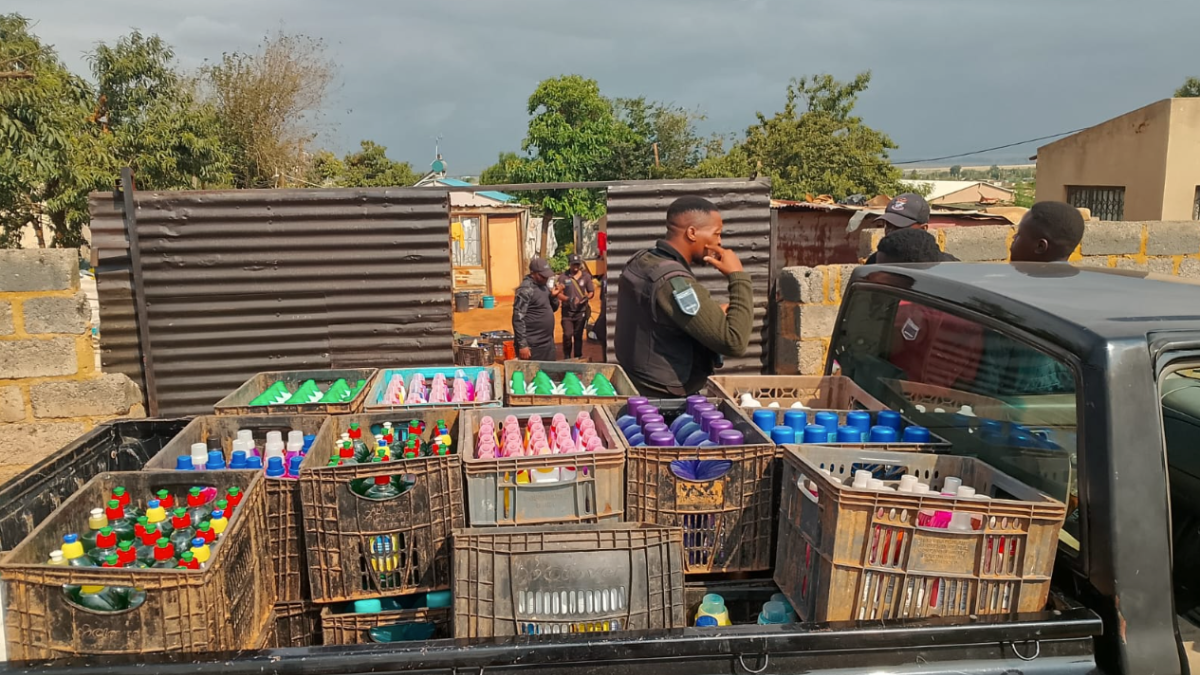
In 2024, the South African Police Service (SAPS) arrested a suspect in Germiston for distributing and producing contraband and counterfeit products, including Handy Andy, Sunlight Liquid, Omo detergent, and Comfort Fabric Softener.
The suspect was in contravention of the Counterfeit Goods Act (37 of 1997), which provides that persons found manufacturing, distributing, or possessing counterfeit goods are subject to fines, penalties, or imprisonment.
According to the Consumer Goods Council of South Africa (CGCSA), barcodes, which are unique to manufacturers or countries of origin, can be used to verify a product’s authenticity, as an authentic product should be registered with GS1.
GS1 is a global organisation that assigns country codes to barcodes to ensure companies adhere to common barcode standards worldwide.
South Africa’s barcode prefix is 600, and if an item is imported, it will reflect this on its barcode.
However, other countries have their own barcode prefixes; CGCSA said that if a barcode does not start with ‘600’, it does not necessarily mean it is fake or illegal.
To ensure a consumer is purchasing authentic products, CGSA advises looking out for the following:
- Check for complete labels that include the product name, ingredients, manufacturer details with a physical address, and expiration date.
- Shop at trusted formal stores, especially for food items.
- Confirm that the product has legitimate trademarks and branding if it claims to be from a specific brand.
Additionally, CGCSA has created the MYCGCSA app to help consumers verify products bought “from big stores, online, or informal markets.”
The app, which scans any barcode, can check for the following information:
- Product name or description
- Manufacturer/ packer, importer, and country of origin
- Net weight or volume (in metric units)
- Batch/ lot number
- Manufacture/ packaging date
- Best before date
- Label must indicate if the product is genetically modified
The app can determine if the barcode is fake, stolen or legitimate.












 Loading ...