

This is the best time South Africa has had in a decade: Absa analyst


International investors are really positive about South Africa’s local investment landscape, says Tsitsi Hatendi-Matika, head retail investment specialist at Absa.
According to the analyst, for once, global and local perspectives are aligned, where the headlines that frame things for international investors, and on-the-ground perspectives that colour local investors, are adding up to the same thing.
“The end of the Zuma era, and all that went with it, has lit a flame of optimism across the board. This is the best time South Africa has had in a decade,” Hatendi-Matika said.
Buoyant sentiments aside, the analyst cautioned that as South Africa sets about fixing itself, not everything will go the market’s way.
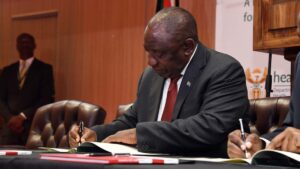
“There must and will be compromises,” she said, pointing to the fact that new President Cyril Ramaphosa is having to negotiate with a split National Executive Committee, and with a government that represents a compromise between the faction that came before and the new wave.
She added that that change is unlikely to come quickly as the the foundations of South Africa’s economy were badly compromised in the Zuma era.
“In the medium term, for instance, we can do little about the fact that South Africa has been reduced to junk status, at least as far as Standard & Poor’s and Fitch ratings go.
“Though South Africa may have averted a further ratings downgrade, in the same way the process of a downgrade takes a few years to work its way through the system, so will it take a few years to rectify the damage.”
“We know the ratings agencies have long-term parameters, and that they cannot reverse a decision made last year on the basis of a political change that has not yet unfolded.
“They will need to see us go through a cycle of two to three budgets to know whether the government is able to hit the numbers it commits to,” she said.
Hatendi-Matika said that this matters, because ratings help investors understand whether a country is creditworthy.
She highlighted that a country’s rating is effectively an assessment of its government’s willingness and ability to pay back its debt.
“Saying it’s sub-investment – or junk – is saying it may not be able to do so. That has implications for the government’s ability to raise funding and the cost of doing so; and it’s a big problem in particular for index investors, who are not allowed to invest in sub-investment countries,” she said.
“Unfortunately, we know that we can therefore expect a delay of between four and eight years before things improve on the formal ratings front,” she said.
But Hatendi-Matika said she is excited about the ‘here and now’ in South Africa – about the swing that has taken place, supported by the intentions expressed by the Ramaphosa government, and about how the South African sentiment reflects the global mood.
“It’s a good time,” she said.
Read: Consumer confidence makes a massive comeback after Ramaphosa’s rise

















 Loading ...