

Gauteng plots R1.2 billion move away from load shedding


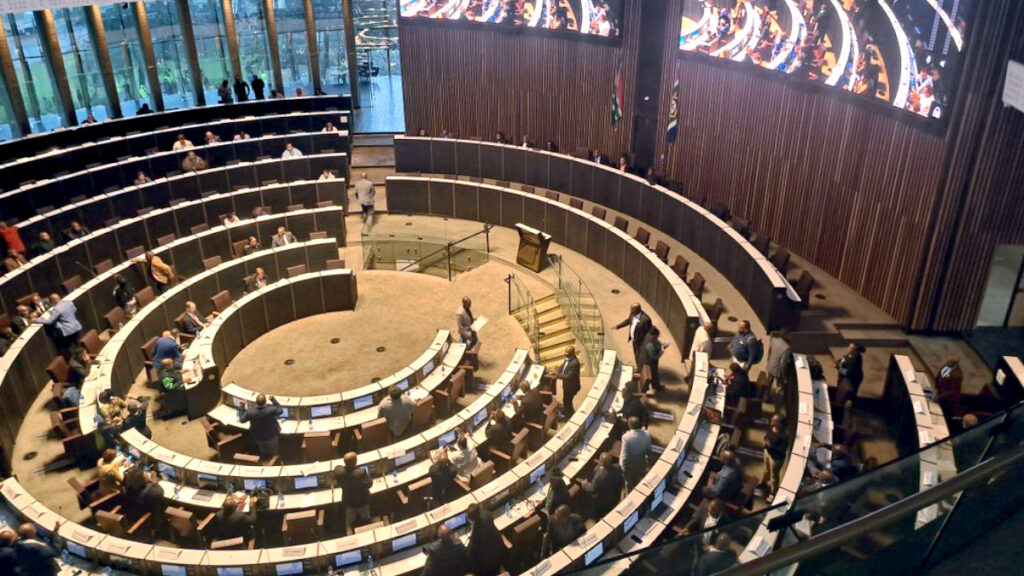
Gauteng MEC for finance Jacob Mamabolo says that the province will be budgeting R1.2 billion in “seed capital” for a host of projects to help the province escape load shedding and become more energy self-sufficient in the longer term.
Presenting the provincial budget on Thursday, Mamabolo said that energy supply challenges have become the single biggest threat to the province’s economic recovery and any potential future growth.
This is especially true if the crisis continues to deepen over the short to medium term, he said.
“This is not only because of its effects on the supply of electricity only, but also water and sewerage reticulation. That is why there is heightened activity in finding solutions to mitigate the effects of load shedding.”
Echoing the announcement by Gauteng Premier Panyaza Lesufi in February, Mamabolo said that R1.2 billion would be set aside by the Gauteng Provincial Treasury to fund energy projects in the province.
However, despite the need for haste in finding solutions to the power problems in the province, the MEC said that the provincial government is moving ahead with caution and will only resource only proposals that are sound and credible from a technical perspective, and which are affordable.
To this end, he said the office of the Premier is working together with the Corporative Governance and Traditional Affairs (CoGTA), Gauteng Provincial Treasury and Gauteng Infrastructure Financing Agency (GIFA) to build in-house energy capacity to support efforts that the province and municipalities are making in finding lasting solutions to the current energy crisis.
Several projects have already been identified, with a particular focus on solar.
GIFA is working to develop a post-mining economy in the West Rand region of Gauteng, which will see massive portions of land being made available to develop “catalytic” projects.
Mining group Sibanye Stillwater and Far West Rand Dolomitic Water Association donated 30,000 hectares of land for the development of agro-industrial projects and commercial catalytic projects, the MEC said.
In 2022, GIFA issued a Request for Proposal to the market to develop a Merafong Solar Farm Cluster. The solar farm cluster will be located on the donated land, Mamabolo said.
So far, GIFA has identified six Independent Power Producers to develop 1,500 hectares of this allocated land, and this has the potential of generating 800MW, he said.
“The process of allocating land parcels to the IPPs is underway and will be completed in March 2023 when lease agreements are signed,” he said.
Another initiative in the province’s push away from load shedding is the rollout of rooftop solar. This process is separate from the rooftop solar drive by National Treasury, where tax rebates are being offered to private households – although Mamabolo said the Gauteng Treasury supports this.
The Gauteng rooftop solar drive is being negotiated through GIFA with private parties, and is being rolled out in phases.
Phase 1 of the Rooftop Solar PV Project aims to generate close to 8MW through installations at selected hospitals. Phase 2 of the Rooftop Solar PV project will see solar rolled out to government owned-properties, especially education and health institutions.
“We will invite the developers as part of Gauteng’s response to the energy crisis,” he said.













 Loading ...