

Thousands of government housing projects blocked or stalled – with some left waiting for 25 years


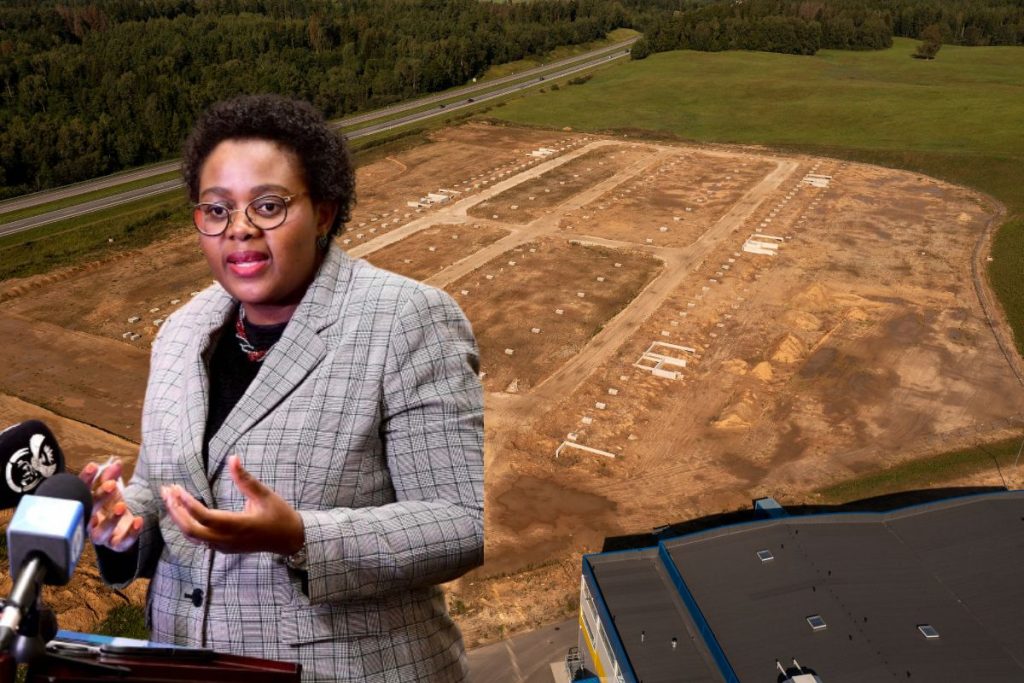
A major issue plaguing the Department of Human Settlements (DHS) is the pilling up of blocked or incomplete human settlement projects – with developments often seeing no end.
While the department declared war on these stagnant deals back in 2021 when Mmamoloko Kubayi took over the department and introduced a “National Unblocking Program,” tens of thousands of units remain a pipe dream for residents.
Some, like those in Rolihlahla, Gqeberha, are still waiting nearly 25 years to receive the keys to non-existent houses that they were promised.
A blocked or incomplete project is defined as a project where no delivery progress has been made for a period of 12 months following the first payment to the contractor.
According to the department’s 2022/2023 annual report, there are a total of 3,445 blocked and incomplete projects across the country’s nine provinces. Most of these projects have not incurred any expenditure for over 36 months (many being blocked since the 2005/2006), costing the state hundreds of millions (if not billions) of rands.
“It is unacceptable that a project cannot incur any expenditure for 36 month, especially in the context of the demand for quality shelter, as well as the squalor within which our people live,” said Machwene Semenya, the chairperson of parliament’s human settlements committee.
A province with one of the highest amounts of blocked and incomplete projects is the Free State, sitting at 770. During a visit to the province in August of 2023, Kubayi expressed her disappointment with the staggering number of incomplete projects and unscrupulous contractors burning a hole in the state’s wallet.
“We allocated resources, and those are meant to change the lives of the people. Poor performance by contractors is a slap in the face of those who live in squalor,” she said.
According to the department, (some of) the factors that usually lead to human settlements projects being blocked are;
- Illegal land occupations;
- Geotechnical variations;
- Construction mafias;
- Community unrest;
- Poor performance by contractors (some of whom would have abandoned sites);
- Lack of bulk infrastructure and link services.
However, these reasons do not include the possibility of corruption. Back in March of 2022, Kubayi asked the Special Investigating Unit (SIU) to look into a slew of allegations of corruption and illegal activity in the department’s entities.
For the financial year 2023/24, DHS has allocated R19.2 billion to provincial grants and R12.5 billion for municipal grants. The minister said in September 2023 that human settlements provincial and municipal departments have committed themselves to removing obstacles that may result in delays and blocked housing delivery projects.
With many politicians largely pointing the finger at the country’s construction mafia, legal expert Tyron Theessen said that the mafia “represent a mix of inequality, corruption, criminality, copycat behaviour, inflated expectations, and weak policing, overshadowing legitimate grievances.”
“Ultimately, it is costing the country a great deal, not only in delays to projects, with associated costs, inflated project costs and in some instances damages to both site equipment and public infrastructure but also in lost investment,” added Theessen.
Positively, R21.4 billion worth of projects for human settlements and road structures are reported by minister of public works and infrastructure, Sihle Zikalala, to have been completed.
Additionally, Kubayi said that DHS has unblocked 320 previously blocked projects. “All provinces collectively identified a total of 320 blocked and incomplete projects which were placed in their 2023-24 business plans and later approved by the minister with the requisite budget,” she said.
Read: South Africa to get new Human Settlements Development Bank













 Loading ...