

Important state-owned entity which has been technically insolvent for years


The Road Accident Fund (RAF) has been technically insolvent for decades, with the fund itself saying it was always doomed for failure.
This is because the fund’s business and operating model are fundamentally broken. It has to cover escalating claims and costs from a limited and government-restricted source of income.
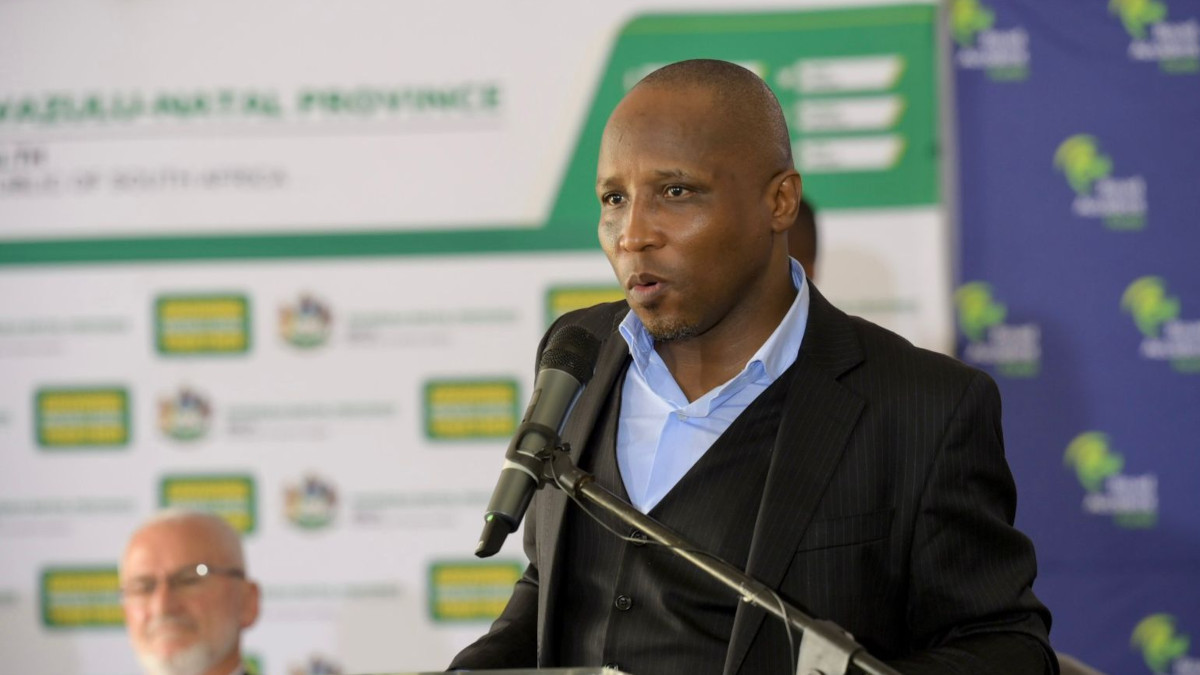
The group’s CEO, Collins Letsoalo, highlighted this fundamental flaw in the RAF’s most recent annual report for 2023/24.
The group’s main revenue source is the tax collected on fuel purchases, while its expenses are tied to the number of road accidents and resultant claims and litigation.
While more cars on the road should lead to higher tax revenue and more income, it also increases the risk of more accidents and claims from the fund.
This is a fundamental mismatch in the RAF’s risk profile, because accidents and claims are tied to driver behaviour, not how much fuel they put in.
Letsoalo said this isn’t something that just suddenly happened; it has been a fundamental flaw in the fund since it was conceptualised in 1942.
He said the fund’s legislative framework has been amended six times, and seven commissions of inquiry have been established to address the defects in the model, but no solution has been found.
Making matters worse, the RAF has also had to contend with government-induced revenue tightening through a three-year freeze on RAF levy hikes while dealing with escalating claim values and third-party administrative costs.
Letsoalo has left no room for doubt that he views those making claims—specifically the medico-legal fraternity and third parties—as being responsible for the fund’s solvency issues.
He has repeatedly accused unscrupulous lawyers of draining the fund with exorbitant claims while also feeding the backlog of non-payments on claims due to non-compliance in submitting all the necessary support documents to the RAF.
He noted that out of the R43 billion the fund receives from the fuel levy, R17 billion goes to administration costs, including almost R11 billion in legal fees.
Solvency crisis
When it comes to solvency, Letsoalo quoted a 2024 court ruling in which the presiding judge said the fund was “saddled with an inheritas damnosa“, or “a cursed inheritance that would be doomed to failure”.
In effect, because of the fundamental defect in how the fund operates, it has never been able to remain solvent and is unlikely to get there without changes.
The RAF was established in 1996 through the Road Accident Fund Act and began operating on 1 May 1997.
The new structure took over from the Multilateral Motor Vehicle Accidents Fund (1989-1996), which was preceded by the Motor Vehicle Accident Fund (1986-1988), the Compulsory Motor Vehicle Insurance Fund (1972-1985), and the Motor Vehicle Insurance Fund (1942-1971).
The earliest annual report made available by the RAF dates back to 2002, which shows that, even then, the fund was technically insolvent, with negative equity sitting at -R11.1 billion.
The group’s liabilities continued to surge over the years, hitting as high as R327 billion in 2019/2020.
However, this dropped significantly to just R34 billion the following year after the fund changed its accounting standards to IPSAS 42 from IFRS 4.
IFRS 4 is a common accounting standard used for insurance contracts. However, the RAF argues it is not an insurer but rather a social benefit fund—hence the switch to IPSAS 42, which is specifically for social benefit schemes.
The main difference is how claim liabilities are considered, with IPSAS 42 only considering liabilities where the claim has been assessed as valid and an offer made or court order issued.
This differs from the practice of considering assessed liabilities from the date of an accident in the other standards.
Since the change, the fund has received adverse audit outcomes, with the Auditor General of South Africa (AGSA) flagging that the IPSAS 42 standard goes against the Generally Recognised Accounting Practice (GRAP) prescribed by the Public Finance Management Act (PFMA).
There is ongoing litigation and a dispute with the AGSA over the accounting policies used.
Regardless, even with the IPSAS 42 standard, the RAF still has higher recognised liabilities than assets, which gives it negative equity and makes it technically insolvent.
The table below outlines the balances between 2002 and 2024.
| Year | Assets | (Liabilities) | (Negative) Equity |
|---|---|---|---|
| 2002 | 1,631 | (12,756) | (11,125) |
| 2003 | 1,249 | (16,679) | (15,429) |
| 2004 | 768 | (19,333) | (18,565) |
| 2005 | 1,707 | (21,572) | (19,865) |
| 2006 | 4,357 | (22,727) | (18,370) |
| 2007 | 4,207 | (24,448) | (20,241) |
| 2008 | 3,297 | (31,125) | (27,828) |
| 2009 | 3,396 | (43,231) | (39,835) |
| 2010 | 3,878 | (32,308) | (28,429) |
| 2011 | 4,566 | (48,583) | (44,017) |
| 2012 | 8,572 | (73,660) | (65,088) |
| 2013 | 10,717 | (84,219) | (73,502) |
| 2014 | 7,694 | (98,492) | (90,797) |
| 2015 | 7,367 | (117,613) | (110,246) |
| 2016 | 9,795 | (155,047) | (145,252) |
| 2017 | 9,198 | (189,191) | (179,992) |
| 2018 | 9,806 | (216,146) | (206,340) |
| 2019 | 11,219 | (273,334) | (262,114) |
| 2019 (restated) | 11,332 | (22,700) | (11,368) |
| 2020 | 11,117 | (28,738) | (17,622) |
| 2021 | 15,663 | (31,497) | (15,834) |
| 2022 | 12,314 | (27,713) | (15,399) |
| 2023 | 11,878 | (35,701) | (23,823) |
| 2024 | 12,774 | (36,320) | (23,545) |
Legal expert Kirstie Haslam, partner at DSC Attorneys, said that the solvency of the RAF needs to be understood in the context of its ‘pay as you go’ structure.
She noted that when looking at the funds raised by way of the fuel levy versus outgoing expenditure, there have been several years where the RAF was cashflow positive.
The RAF itself has moved to make this more attainable by extending payout windows to 180 days. However, this comes with the consequence of claimants having to wait even longer—possibly years—for resolution.
According to the RAF’s 2023/24 report, the average claim value increased by 9.54% in the 2023/2024 financial year, compared to the previous year.
The average settlement value reported was R287,000 per claim. Total claims received by the RAF decreased slightly from the preceding year to R45.1 billion.
The average values of specific RAF claim types were as follows:
- Medical claims: R29,700
- General damages: R565,055
- Loss of earnings claims: R1,110,815
- Loss of support claims: R632,671
- Funeral costs claims: R15,380
For the year ending 31 March 2024, the RAF declared a deficit of R1.59 billion. This is significantly lower than the deficit of R8.43 billion reported for the 2022/2023 period.
However, Haslam stressed that the deficit reduction came partly at the cost of lower payouts to road accident victims, especially for medical claims.

Fixing the RAF
Haslam said that maladministration, a lack of early investigation and settlement of legitimate claims and, as a consequence, high litigation costs are the biggest problems the RAF has.
She said that several viable models and strategies have been submitted to the RAF and Department of Transport by knowledgeable industry stakeholders over the years, but these require an overhaul of the entire system.
“These proposals could be implemented within the framework of the current RAF Act, by way of a legislative amendment following the required process of public consultation and review by the transport portfolio committee,” she said.
“(But) these would need to be coupled with an overhaul of the RAF’s internal administration and management.”
Letsoalo, speaking to the Black Lawyers Association (BLA) said the only way to turn the fund around is to either increase revenue or cut costs—and increasing revenue has never been an option.
The fund has attempted to contain costs by curbing litigation through agreed settlements, and by cutting out what it calls fraudulent or non-compliant claims through restructured forms and submissions.
This has helped the RAF reduce its legal costs by about R6 billion a year over the last four years.
However, legal experts have pushed back against these changes, accusing the fund of unlawfully dismissing legitimate claims and ignoring its obligations set up in its governing Act.
There is no end in sight for the pressures on the fund.
In the now-shelved 2025 budget, the National Treasury intended to once again freeze the RAF levy for another year as part of its relief measures to soften a proposed VAT hike to 17%.
This would have resulted in a fourth consecutive year of no increases for the RAF, adding to its solvency woes.
With a new budget being processed, some analysts have suggested that the RAF be scrapped altogether and the burden of coverage moved to the private sector.
This would see circa R50 billion saved, but with requirements like mandatory insurance, etc., needing to be implemented.
The RAF backlog would also still have to be settled, but there would be more room to do so over time.
BusinessTech asked the RAF for its views on the fund and what can be done to turn it around, but did not received feedback by the time of publication.


















 Loading ...