

The worst-run province in South Africa


The Free State is arguably the worst-run province in South Africa, with deep-rooted failures in governance, financial accountability, and service delivery.
This is according to the Auditor-General’s (AG) latest Consolidated General Report on Local Government Audit Outcomes for 2023/24 and supported by independent experts like Professor Daniel Meyer from the University of Johannesburg.
The AG’s report painted a bleak picture of municipal performance in the Free State. Of the municipalities assessed, not one received a clean audit.
The report highlighted that the province is plagued by poor financial reporting, widespread non-compliance with legislation, and deteriorating infrastructure.
“The poor-quality performance reports were most prevalent in the Free State, Northern Cape and North West,” the report said.
“Municipalities with unfunded budgets, unauthorised expenditure and deficits were most prevalent in the Free State, Gauteng and North West.”
The AG noted that the situation has worsened over time. In 2023/24, six municipalities in the Free State failed to submit their financial statements, up from four the year before.
“Most of the municipalities that repeatedly did not submit their financial statements for auditing, or submitted them late, were in the Free State,” the AG noted.
The AG added that this delays accountability, making it nearly impossible for municipal managers to be held responsible and oversight bodies to act effectively.
Thirteen municipalities, representing 76% of those in the province, submitted performance reports that were deemed not useful or reliable.
The AG report noted that many municipalities lack proper planning, clear performance indicators, and basic recordkeeping. This undermines any effort to assess progress or make informed decisions on service delivery.
Infrastructure delivery has also collapsed. The audit highlighted incomplete and mismanaged projects, such as the Thaba Nchu wastewater treatment plant in Mangaung Metro, which remained non-operational.
As a result, untreated sewage continues to flow into the environment. Inadequate maintenance spending is also a key problem, with municipalities spending an average of only 1.9% of their budgets on infrastructure maintenance, far below the 8% Treasury benchmark.
Financially, the Free State municipalities are in dire straits. The province incurred net losses of R744.98 million, and 81% of its municipalities had enough cash to sustain operations for only one month or less.
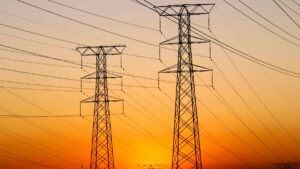
The Eskom debt crisis remains unresolved. Although total arrears dropped slightly, from R6.47 billion to R6.22 billion, this was due mainly to participation in Eskom’s debt-relief programme.
However, non-compliance with programme conditions means municipalities risk losing the benefit.
All municipalities and metro showing signs of collapse

In addition to financial mismanagement, there has been a surge in unauthorised, irregular, and wasteful expenditure. Unauthorised expenditure alone hit R4.22 billion, and irregular expenditure jumped to R12.52 billion.
Fruitless and wasteful expenditures also increased, much of which was due to interest on late payments to suppliers.
However, investigations into these financial violations remain slow, and few consequences follow. “We have reported material non-compliance at all municipalities every year since 2020-21,” the AG said.
Professor Daniel Meyer, from the University of Johannesburg’s School of Public Management, believes the Free State serves as a stark example of a wider municipal crisis in South Africa.
“In the 2025 Auditor-General report, only 15% of municipalities received clean audits. We already know there’s a huge financial issue at the local government level,” he said.
“We need to investigate not only the Free State, but all provinces and municipalities going forward.”
Commenting on the Free State, Meyer noted that it comprises 19 local municipalities, four district municipalities, and one metro, all showing signs of collapse.
“None of the municipalities received a clean audit. Sixteen had unfunded budgets, meaning they budgeted without having the income to back it up. That’s a recipe for overspending and deepening debt,” he explained.
He also pointed to staggering levels of debt. “The Matjhabeng municipality, for instance, owes more than R8 billion. They’ll never recover from that.”
In Mangaung, service delivery has effectively broken down, with many residents living without reliable water, sewerage, or electricity.
“There’s overtime being paid well above what labour regulations allow. In Mafube, the municipality collects pension contributions but doesn’t pay them out to workers who retire. That’s financial misconduct on another level.”
He said the root cause of the crisis lies in the absence of accountability. “If you transgress, nothing happens. Even though the Municipal Finance Management Act is strict, it’s not enforced.
“People are just moved around; someone gets caught in one municipality and ends up with a job in provincial government.”
According to Meyer, a key part of the problem is political interference and the appointment of unqualified individuals.
“Very few municipalities today have even one qualified engineer, yet they need several. They also need skilled town planners, architects, and other professionals who simply aren’t there anymore.”
Meyer has called for urgent reforms, including downsizing bloated staff structures, ending overreliance on consultants, and hiring the most qualified individuals.
“Too many government officials are doing business with the government, and nothing is being done to stop it.”
“We’ve shown remarkable patience, but time has run out. If we want a growing economy, we need healthy, functional municipalities. And that starts with real accountability and real expertise.”











 Loading ...