

The small town where poor service delivery is forcing businesses to shut down


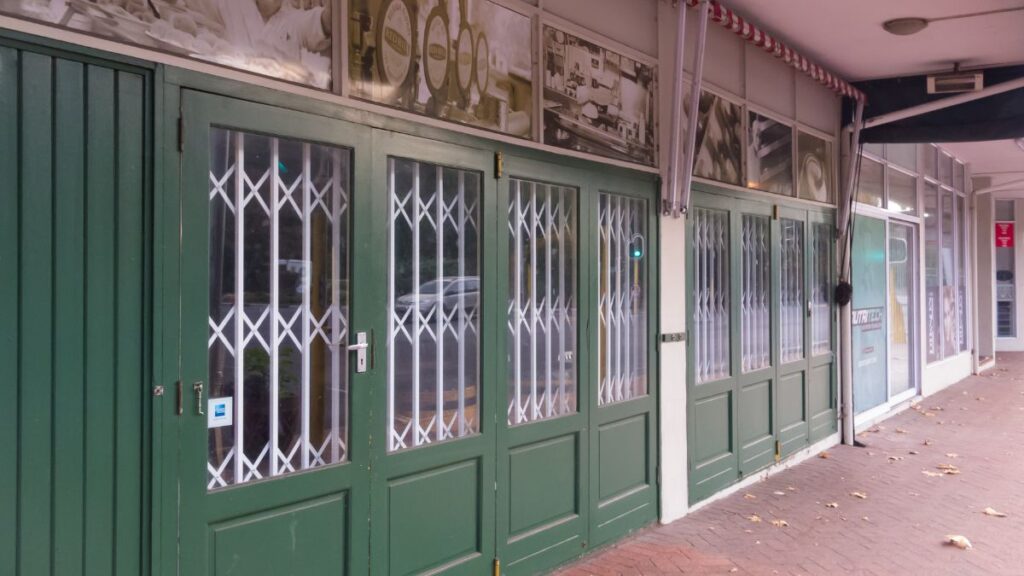
Poor service delivery and governance at Merafong City has meant residents of Welverdiend were without essential services like electricity for over a month.
Businesses in the area had to shoulder significant costs to stay open, while those that couldn’t afford it had to shut down.
Welverdiend is a small and quiet town in Carletonville, which is part of the local municipality of Merafong City in the West Rand District Municipality in the Gauteng province of South Africa.
Merafong City Municipality has long struggled with financial mismanagement and deteriorating services.
In November 2024, the Portfolio Committee on Cooperative Governance and Traditional Affairs visited the municipality and found significant problems with governance, financial management, and service provision.
The committee noted repeated negative audit outcomes from the Auditor-General, declining revenue, and ongoing issues with water and sanitation. Some residents have also turned to the courts over service delivery concerns.
The municipality’s own performance report revealed that it only met 34% of its basic service delivery targets.
Officials claimed that the electrical department spends much of its time dealing with theft and vandalism, diverting resources away from planned maintenance.
Additionally, they added that when infrastructure is replaced due to theft, it often falls outside the approved maintenance plan, further disrupting operations.
This poor governance has had devastating consequences for towns like Welverdiend. Despite contributing almost half of the municipality’s revenue, the town was left without electricity for 33 days.
The water shortage during this period was caused by Rand Water reducing supply because the municipality owed R1.4 billion. After the municipality partially paid R50 million, Rand Water increased the supply to 80%.
Businesses faced crippling costs to keep operating, while those unable to bear the expense were forced to temporarily close.
Sakkie Pieterse, who runs a petrol station and liquor store in Welverdiend, said he has spent R40,000 on fuel to keep the lights on at his businesses through two generators.
“My normal monthly expenditure on electricity is R25,000 for the two businesses, but I’ve now used about R40,000. The cost of using the generators is too high,” he said.
On 5 August, power was restored to most of Welverdiend and nearby areas, although some streets remained without supply.
This was the longest outage in the area, and local businesses and residents experienced the financial and practical impact of being without electricity for an extended period.
Municipalities that cannot deliver must go

The crisis in Welverdiend mirrors broader issues affecting municipalities across South Africa, prompting Cooperative Governance and Traditional Affairs Minister Velenkosini Hlabisa to call for urgent reforms.
Speaking following the launch of the review of the White Paper on Local Government in Kempton Park, Hlabisa said political interference, outdated funding models, and unsuitable municipal structures were crippling service delivery.
“Political interference is harming service delivery and weakening municipalities across the country,” he warned.
He also questioned the rationale for keeping municipalities that are incapable of delivering services, regardless of funding or support.
While communities would still have councillor representation, he suggested that the overall number of municipalities be reduced, with changes implemented by the 2031 local elections.
“We must ask the question: if a municipality is not fit to deliver services, why should we keep that municipality?” he said.
He said the review process will conclude in March 2026 and will prioritise recommendations for a new funding model and measures to depoliticise senior appointments.
Hlabisa stressed that municipal managers and executives must be professionals who can be disciplined without political interference.
He also acknowledged the difficulty of attracting skilled professionals to rural municipalities, where salaries are low and infrastructure, such as schools and services, is limited.
He proposed better pay and additional benefits for those willing to work in remote areas. He also identified coordination between government spheres as a weakness.
“You find four departments intervening in one municipality, and they are not talking to each other,” Hlabisa said.
The review will explore ways to regulate communication and interventions while simplifying the “overregulated” legislative environment that sometimes forces municipalities to break one law to comply with another.
For Hlabisa, the end goal is a system of local government that is financially sustainable, professionally managed, and capable of consistently delivering services. “When we move to the next 27 or 30 years, we must go with municipalities that can deliver,” he said.














 Loading ...