

Big changes for surnames in South Africa


The Constitutional Court has ruled that sections of the Births and Deaths Registration Act are unconstitutional, ordering that they be changed to allow men to take the surnames of their wives in marriage.
The matter was first heard in the Constitutional Court in March, following a previous ruling in the Free State High Court in September 2024.
The High Courts ordered that a man could assume his wife’s surname or have a double-barrelled surname in marriage, ruling that Section 26(1)a to c of the Births and Deaths Registration Act is unconstutional.
The Constutional Court has now confirmed the ruling, saying that the sections discriminate on basis of gender.
Under the current wording of the laws, a husband cannot take his wife’s surname without an application to Home Affairs seeking permission to do so.
Section 26(1) of the Births and Deaths Registration Act says that no individual can assume any other name than the one recorded in the population register, except that a married woman can change her name to her husband’s.
A heterosexual man would have to apply to the Director-General of Home Affairs for permission to change his name.
However, even if an application is made, there is no guarantee that this will be granted. In the cases brought before the courts, little attempt was made to help the couples seeking the changes.
The applicants in one case, Jana Jordaan and Henry van der Merwe, wanted to take Jordaan’s surname as a way to honour her parents who died when she was young.
However, when they attempted to do so after their marriage was solemnised, they were informed that the Home Affairs systems do not allow that.
As a result of the sytem failures, and Home Affairs staff being unable to help, Jordaan kept her own surname, and the couple’s children carried the surname of Van der Merwe.
In another case, Jess Donnelly and Andreas Bornman we hit with the same problem. After marriage, Donnelly was able to double-barrel her surname to Donnelly-Bornman.
However, the Home Affairs systems did not allow for Bornman to change his surname to the same double-barrel.
There were not given reasons for this not being possible.
Unconstitutional
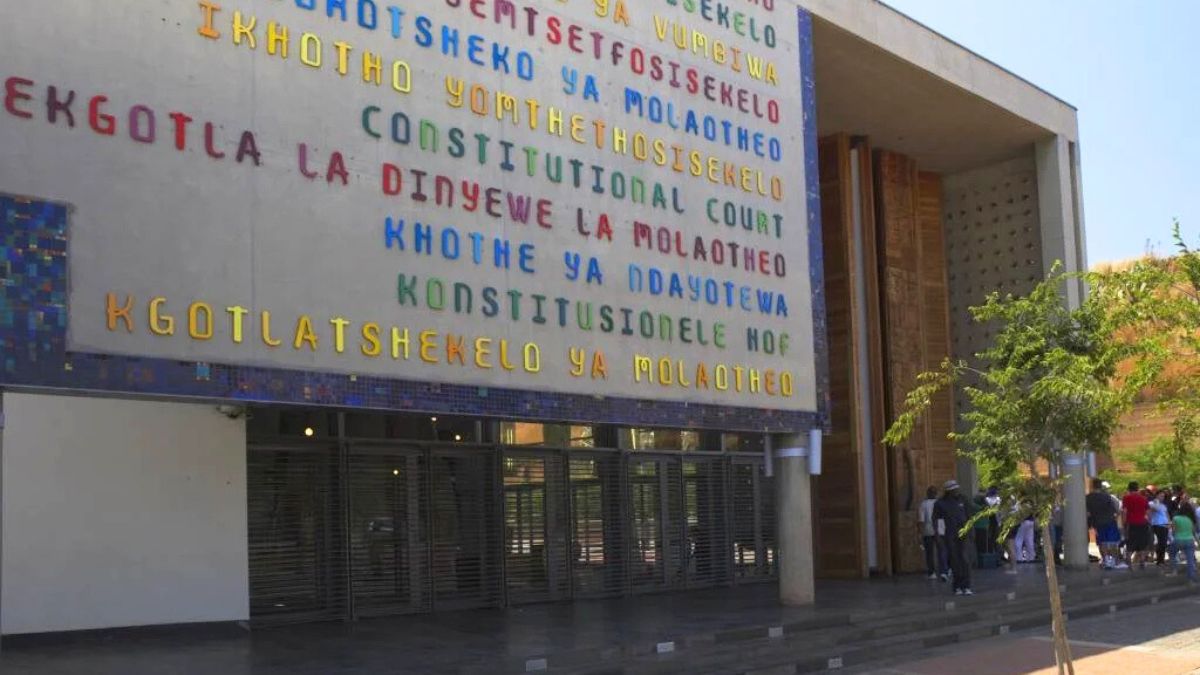
According to the Constitutional Court ruling, section 26(1)A to C of the Births and Deaths Registration Act 51 of 1992 is unconstitutional as it is in violation of section 9(1) of the Constitution.
The court said that it violates irrationally on the ground of gender and it unfairly discriminates by failing to afford a woman the right to have her spouse assume her surname and to affor a man the right to assume the surname of the woman after marriage.
It also fails to allow for a married or divorced man or widower to resume a surname which he bore at any time; and fails to allow a man, whether married or divorced or a widower, to add to the surname which he assumed after the marriage any surname which he bore at any prior time.
The could declared the section invalid, suspended for a period of 24 months to enable Parliament to remedy the defects.
This can be done either by amending the existing legislation to bring it in line with the Constitution or by passing new legislation to ensure that all persons are afforded the right of assumption of another surname.
Pending the coming into force of the new legislation or amendments, section 26(1) will not apply when:
- A person after marriage assumes the surname of the spouse with whom such person concluded a marriage or, after having assumed such surname, resumes a surname which they bore at any prior time;
- A married or divorced person or a widow or widower resumes a surname which they bore at any other time; and
- A person, whether married or divorced or a widow or widower, adds to the surname which they assumed after the marriage any surname which they bore at any prior time.
Should Parliament fail to correct the defects in the 24-month period, the order will continue to operate until remedial legislation, if any, is brought into operation.

















 Loading ...