

South Africa’s plan to stop its biggest cities from collapsing


South Africa’s metros are facing a crisis, with the government stepping in to ensure that R54 billion in grants must be based purely on performance, not promises.
South Africa’s biggest cities are home to close to half of of South Africa’s population, businesses, and jobs.
However, weak management, underinvestment, corruption, and unreliability in electricity and waste services have constrained growth.
The Auditor General has reflected the poor governance, noting that only one out of eight metros received a clean audit, that being the City of Cape Town.
AG Tsakani Maluleke said this doesn’t make sense given how large the metros’ budgets are.
“The eight metros across the country look after half of the expenditure budget for local government and provide services to 46% of South African households,” she explained.
“Their budgets are significant, and they sit in economic activity centres. They should have no difficulty attracting the skills they need to run their environments.”
Nevertheless, most metros are failing to meet even basic accounting standards.
These financial management failures are linked to poor basic service delivery.
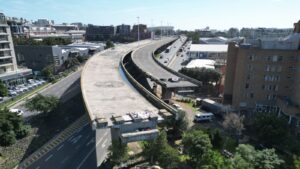
Case in point is the City of Johannesburg, which has almost a R90 billion budget, with most of the city’s traffic lights seeming abandoned, and local roads are left to decay.
Business Leadership South Africa (BLSA) Busi Mavuso said that the city’s poor performance has become a national embarrassment, as the city plans to host the G20 Summit later this year.
The government’s plan

The government is responding to the crisis facing South Africa’s cities via structural reforms from Operation Vulindlela, a joint initiative between the National Treasury and the Presidency.
While the first phase of the initiative focused on electrical, water and logistics infrastructure, the second phase is looking to improve local governance.
This was highlighted by Deputy Finance Minister David Masondo when he spoke at the RMB Morgan Stanley 2025 Investor Conference.
Masondo noted that economist growth requires structural reforms and that Operation Vulindlela remains the state’s vehicle for unlocking bottlenecks.
This is particularly true for Phase 2 of Operation Vulindlela – the Metro Trading Services Reform.
The Metro Trading Services Reform aims to create financially ring-fenced, professionally managed utilities within metros, which aim to restore sustainability to essential services.
He noted that access to a new R54 billion performance-linked incentive grant is strictly conditional on council-approved turnaround plans and adherence to clear accountability standards.
“This is not money for promises — it is money for performance. Only metros demonstrating measurable improvements in service delivery, financial performance, and governance will qualify.”
“The intention is to crowd in investment. For every rand of incentive funding, metros are expected to leverage at least another rand, mobilising an additional R108 billion into infrastructure.”
Masondo said that the impact will be significant, with reliable trading services strengthening municipal finances, attracting investment and boosting urban growth.
He added that the reform will create new opportunities for financial institutions and investors.
“Lower risk, greater transparency, and stronger governance will open the door for financing water, sanitation, energy, and waste infrastructure — projects that improve lives and generate sustainable returns.”










 Loading ...