

The government paid R9,800 per bucket which costs R150


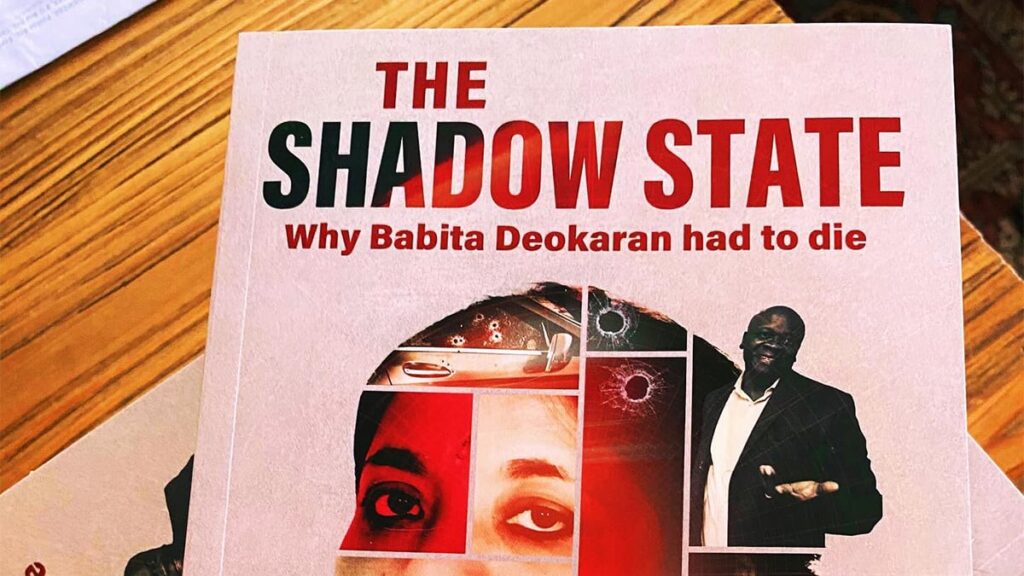
Award-winning News24 journalist Jeff Wicks revealed that the Gauteng Health Department massively overpaid for numerous products due to an extensive corruption scheme.
This was one of the facts shared by Wicks in his new book, The Shadow State: Why Babita Deokaran had to die.
In this book, Wicks provided details about the events leading up to Babita Deokaran’s murder in 2021. He also followed the story after she was assassinated.
Deokaran was a civil servant who worked her way up from an accounting clerk to the acting chief director of financial accounting at the Gauteng Department of Health.
In August 2021, she halted R850 million in suspicious payments to hundreds of companies linked to Tembisa Hospital.
She uncovered a sophisticated extraction network draining public health funds meant for the poorest communities, and called for a forensic investigation.
On 11 August 2021, she alerted the department’s chief financial officer that their lives could be in danger.
“Morning CFO, I am just worried that the guys in Tembisa are going to realise we are onto something. Our lives could be in danger,” she said.
Her boss, Lerato Madyo, replied: “Morning Babita, I have requested the HOD’s grant approval for the investigation.”
“This was a lie. No investigation was ever launched. The payments were released after her death,” Wicks said.
Deokaran was shot dead in a hail of bullets outside her home in Mondeor, Johannesburg. She had just dropped off her daughter at school.
Although the hitmen paid to kill her were caught, Wicks started to investigate the murder, asking who ordered it and why.
Like Deokaran, he soon learned about shell companies, inflated prices, and collusive bidding linked to the Gauteng Department of Health.
Her decision to stop the money meant exposing the syndicate. “In South Africa’s shadow state, whistleblowers who threaten billion-rand corruption networks don’t live long,” Wicks said.
Examples of the corrupt deals which Wicks uncovered

Wicks uncovered numerous dubious contracts under R500,000, which a hospital chief executive could approve without going to tender.
A handful of connected individuals, using numerous companies they registered, use this weakness to create an extensive extraction network.
Many contracts under R500,000 were pushed through for products with highly inflated prices. The difference was pocketed by the corrupt individuals.
Wicks highlighted a few of the contracts at the Tembisa hospital and the products with their inflated prices.
- The state paid R9,800 per plastic bucket. They should have cost R150 each.
- Headblocks, which should cost R700 each, were sold at R4,485.
- Cervical collars, which should cost R120 each, were sold at R2,106.
- Rain suits were sold at R17,000 each.
- V-neck jerseys were sold at R11,500 each.
- Brown leather shoes were sold at R10,370 each.
Wicks uncovered numerous contracts under R500,000 through which connected individuals extracted large amounts of money from the Gauteng Department of Health.
He uncovered an audacious web of crooked officials, criminal syndicates and ANC politicians, siphoning away billions meant for patients in Gauteng’s public hospitals.
















 Loading ...