

Goodbye East London and Graaff-Reinet – big name changes coming for South Africa


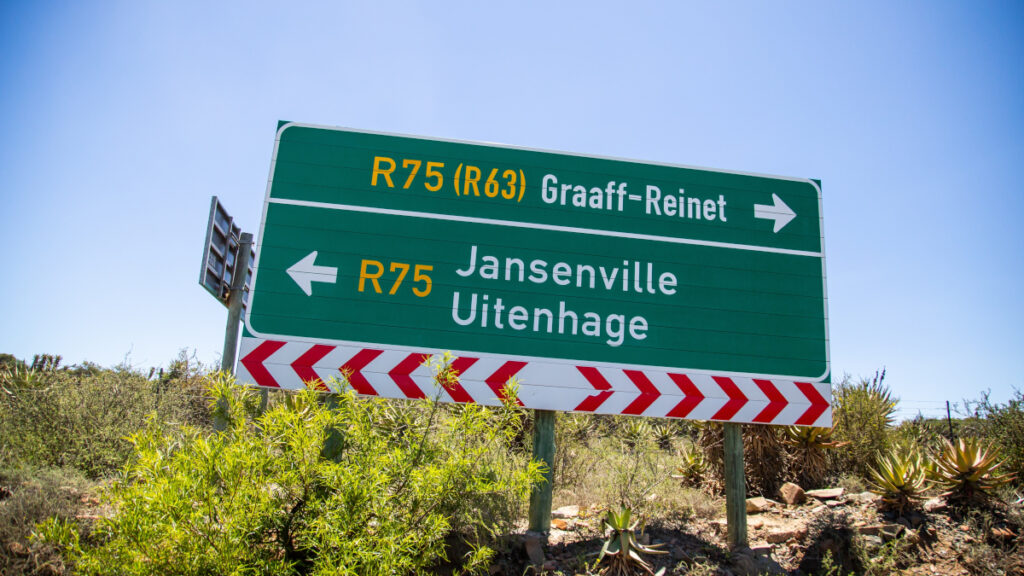
East London is reportedly set to be renamed KuGompo City, while the historic town of Graaff-Reinet is to become Robert Sobukwe Town.
This comes after reports that Sport, Arts and Culture Minister Gayton McKenzie approved 21 geographical name changes across South Africa.
Speaking to Daily Dispatch, South African Geographical Names Council chair Johnny Mohlala confirmed the changes.
However, while the approvals are in place, Mohlala stressed that the changes still need to be gazetted, with the formal publication process expected to take place in the coming weeks.
Department spokesperson Zimasa Velaphi also confirmed to The Herald that a broader statement would be issued to clarify the scope of the changes.
The Eastern Cape has played host to several attempts to change historic names in the province, which have been met with wide backlash from residents.
In the case of East London, the proposed renaming follows a public consultation process conducted by the Buffalo City Metropolitan Municipality.
The Eastern Cape government signalled in 2024 that it would push for the renaming of East London and make it a priority.
Meetings were held in Qonce, Mdantsane and several coastal areas during March and April 2025, as required by law before applications are submitted to national authorities.
The name change to KuGompo was previously rejected because there was already a small town with that name in the province. This has apparently been resolved by adding “City” to the name.
For the historic town of Graaff-Reinet, previous attempts to change the name were met with significant community opposition, to the point that the national Names Council did not recommend the change in 2024.
However, at the time, the provincial council made it clear that the matter was not finalised and that the changes were rejected by the department due to a “lack of information”, which could be collated for future applications.
Graaff-Reinet is the fourth-oldest town in South Africa, established in 1786 and named after the then Cape Governor Cornelis Jacob van de Graaff and his wife, Reinet.
The coming namesake, Robert Sobukwe, was a South African anti-apartheid revolutionary and founding member of the Pan Africanist Congress (PAC).
A contentious subject

The latest changes appear to form part of a much wider wave of renaming applications currently moving through government structures.
Responding to a parliamentary question late last year, McKenzie revealed that 104 applications for geographical name changes had been submitted during the past financial year and in 2025 to date.
Of these, 53 were lodged during the 2024/25 financial year, with the majority coming from KwaZulu-Natal.
During that period, KwaZulu-Natal accounted for 46 applications, followed by four from the Eastern Cape, two from Limpopo and one from Gauteng.
Since the start of the 2025/26 financial year on 1 April 2025, a further 51 applications have been received.
Once again, KwaZulu-Natal dominates the list with 38 submissions, while the Eastern Cape has applied for nine changes, which more than likely included East London and Graaff-Reinet.
Limpopo has submitted two applications, with the North West and Free State contributing one each.
Geographical name changes remain one of the most contentious issues in South Africa’s post-apartheid landscape.
Supporters believe that renaming towns, cities and landmarks is essential to confronting and moving beyond a colonial and apartheid past, and to restoring indigenous and liberation-era heritage.
However, critics argue that the processes are often politically driven, fail to reflect the views of all residents, and can impose economic costs on businesses, tourism and local governments.
Since 1994, more than 1,500 geographical features have been officially renamed and gazetted across South Africa, including towns, settlements, rivers, mountains, roads and airports.
KwaZulu-Natal has recorded the highest number of changes, followed closely by the Eastern Cape and Limpopo.
Most recently, King Misuzulu kaZwelithini called for KwaZulu-Natal itself to be renamed KwaZulu.
He made the call while speaking at the 147th commemoration of the Battle of Isandlwana in Nquthu, in the north of the province, where he questioned why the name “Natal” is still used.
“We need to remove this Natal. This is KwaZulu, so I don’t understand why we have this Natal,” the king said.
He argued that before colonisation, the area was known as KwaZulu and formed part of the Zulu kingdom, and that the name Natal was later imposed by colonisers.














 Loading ...