

Major blow for President Cyril Ramaphosa


President Cyril Ramaphosa is back in the hot seat over the Phala Phala saga, with the Constitutional Court ruling that Parliament acted unlawfully when it voted to block investigations into the saga.
The Constitutional Court ruled in favour of the Economic Freedom Fighters (EFF), determining that the National Assembly acted unlawfully when it voted in December 2022 to dismiss the Section 89 Independent Panel report regarding President Cyril Ramaphosa’s Phala Phala scandal.
This judgment represents one of the most significant rulings against a sitting president in South Africa’s democratic history.
The court has directed Parliament to properly address the Section 89 panel report, thereby reopening the possibility of a comprehensive impeachment inquiry into the President.
This ruling came over 500 days after the case was presented to the court.
The central issue in the ruling concerns Rule 129 of the National Assembly’s impeachment procedures, which the EFF contended was unconstitutional.
The EFF argued that the discretion provided by Rule 129 allowed Parliament to disregard the findings of an independent panel, undermining the constitutional integrity of the impeachment process.
The court concurred, concluding that the National Assembly’s 214-to-148 vote to dismiss the panel’s findings was irrational and inconsistent with the Constitution.
The scandal erupted in 2022, when the country’s former chief spy laid charges against Ramaphosa, alleging that he tried to cover up the theft of at least $4 million from Phala Phala two years earlier.
Phala Phala is Ramaphosa’s game farm in the northern Limpopo province.
It later emerged that about $580,000 was stolen, which the president said were proceeds from the sale of buffalo.
He denied wrongdoing and was never charged with a crime, but an independent panel found evidence that he may have committed misconduct.
The December 2022 vote in parliament blocked the panel’s report from being referred to an impeachment committee.
Government of National Unity tensions stoked
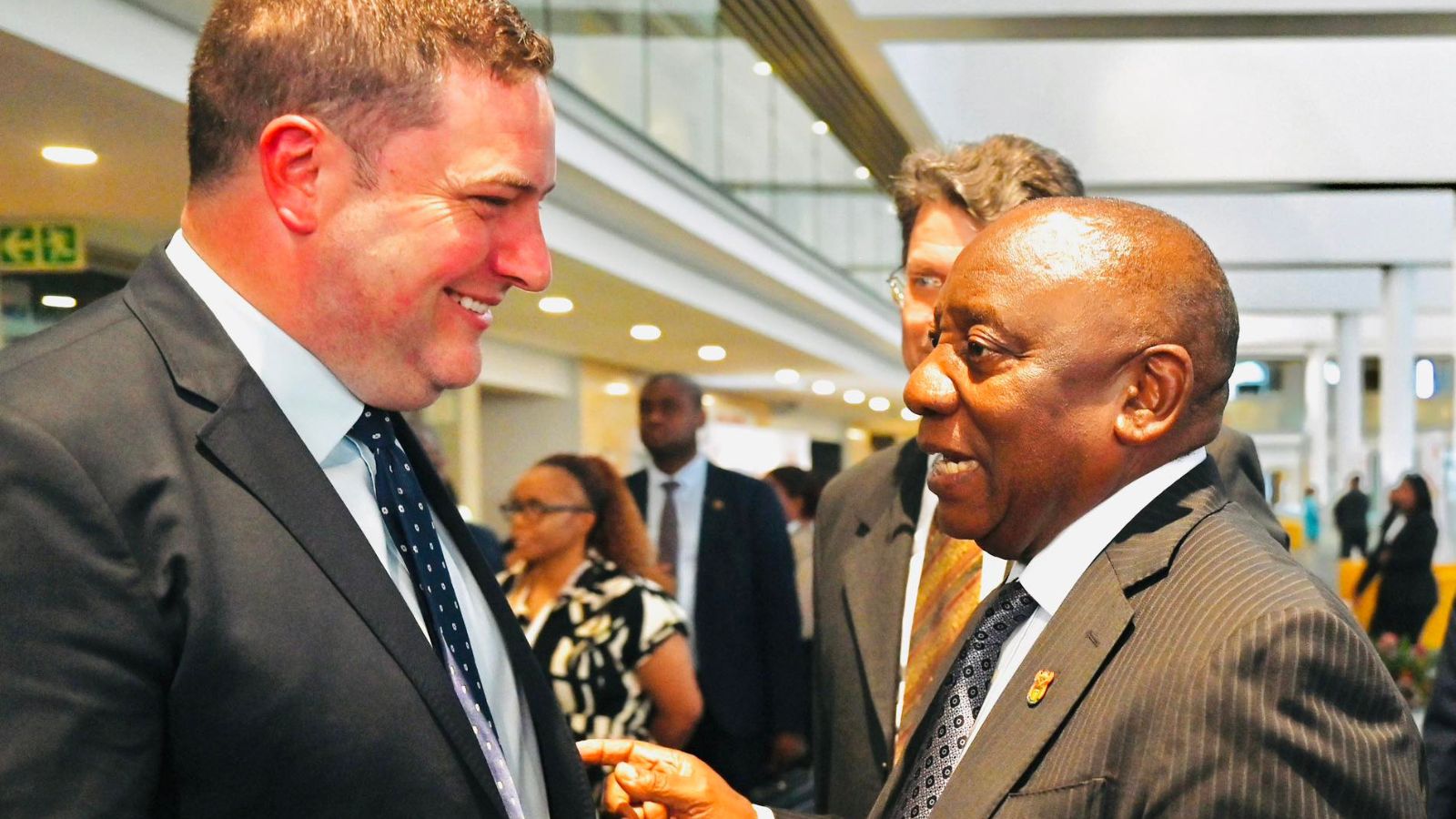
The Constitutional Court ruling holds significant consequences for politics and stability in South Africa.
The 2024 national elections fundamentally reshaped governance in the country, with many former opposition parties, such as the Democratic Alliance (DA), entering government under the Government of National Unity (GNU).
Notably, while the DA and once-majority ANC have clashed several times over policy issues, the Phala Phala saga was not pursued further by the DA, which supported Ramaphosa as president of the GNU.
This left the scandal to be chased by the new opposition parties, including the EFF, which led the charge.
Following the ruling, the DA has taken a measured stance, saying it will engage with the impeachment committee on the basis of facts and not prejudge the outcome.
However, it maintained that no one is above the law.
“We respect the Constitutional Court, the Constitution, and the rule of law,” said newly elected DA leader Geordin Hill-Lewis.
“The Court has now made clear that Parliament must correct its rules, and that the Section 89 report must proceed to an impeachment committee,” he said.
The DA said it will focus on the facts and the evidence presented to the committee, as well as its constitutional responsibilities.
The party said it will not make any premature judgments about the outcome and aims to ensure that no individual, regardless of their position, is above accountability.
“Those who hold the highest offices in the land must be held to the highest standards of honesty, transparency and accountability,” it said.
The DA said no one will be shielded from any wrongdoing.
“We will never be party to protecting misconduct, covering up corruption, or weakening accountability for political convenience,” Hill-Lewis said.
The DA said the judgment “draws a clear line” between the DA and the ANC, stating that the ANC has delayed its own accountability.
With Bloomberg and Reuters


















 Loading ...