

R9 billion project finally launching in South Africa next month after 15 years of delays


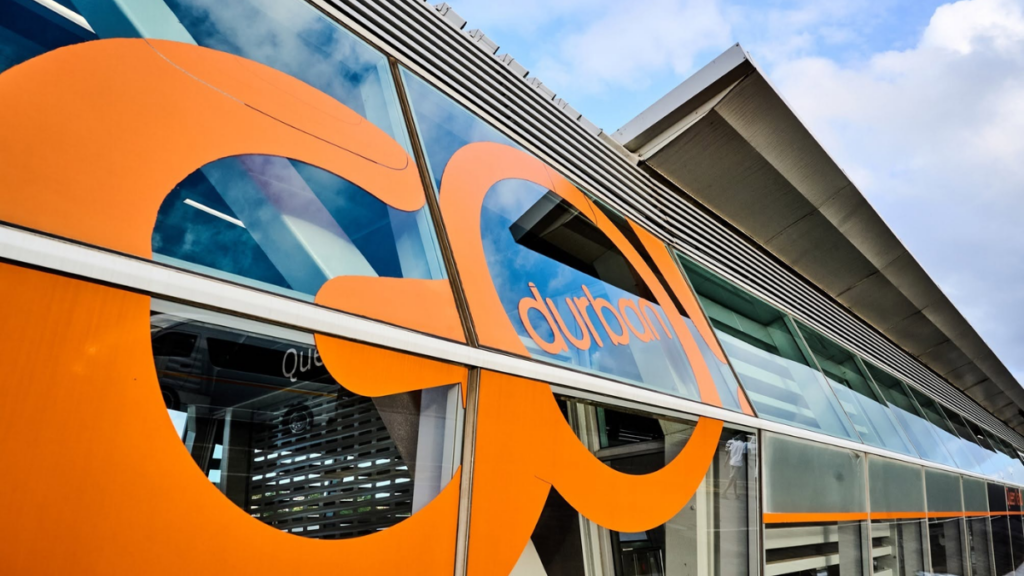
The City of eThekwini plans to launch the first stage of the delayed R9 billion Go! Durban public transport network in December 2026, with a soft launch planned for October.
The Go! Durban program is an Integrated Rapid Public Transport Network (IRPTN) initiative launched by the eThekwini Municipality.
Its goal is to transform urban mobility throughout Durban by implementing a phased rollout of Bus Rapid Transit (BRT) and rail corridors. The project aims to bring buses, minibuses, and trains to Durban.
The City of Durban said it aims to build accessible stations and promote targeted socio-economic development.
“We are pleased that the overarching negotiation principles have now been addressed. This creates a clear pathway towards formalising industry participation and implementing the first Go! Durban services,” said eThekwini Mayor Cyril Xaba.
Xaba said that while the implementation of the programme has suffered delays, it has delivered tangible results in the form of infrastructure, systems and economic empowerment outcomes.
“The priority now is to translate the investment already made into a functioning public transport service, beginning with the C3 corridor,” said Xaba.
Xaba said the city has agreed to procure 22 buses, while public transport operators will purchase feeder vehicles through the Vehicle Operating Company (VOC).
He said that the City of Durban will pay the VOC to operate the transport service, and 75% of the employees will be sourced from people displaced by the project.
Opposition parties are sceptical of the familiar promises and are raising concerns about the R9 billion cost.
“Not a single bus has operated on this corridor, and there are numerous issues being highlighted. Ultimately, it comes down to accountability,” said Zwakhele Mncwango, leader of ActionSA KwaZulu-Natal.
“The mayor has not provided anything new. After more than 15 years of hearing the same story about negotiations and plans, the people of eThekwini need buses, not reports.”
DA eThekwini councillor Melanie Brauteseth said that although the buses are ready, they’re not on the road.
“With the funding available, we must make this work and get the buses operating. eThekwini has not received a single cent from the R9 billion, yet we constantly incur costs for buses,” said Brauteseth.
The new transportation initiative

The Go! Durban Bus Rapid Transit (BRT) program is managed by the eThekwini Transport Authority (ETA).
Planning for the public transportation network began in February 2010 when the municipality appointed consultants.
The project was officially named “Go! Durban” in 2012, with detailed design work commencing that same year. Physical construction contracts were awarded starting in September 2013.
Originally, Phase 1 was targeted for completion and operational rollout around 2018.
However, due to significant delays related to utility relocations, land expropriations, and prolonged negotiations over fleet ownership with local bus and taxi operators, these targets were repeatedly pushed back.
An intermediate target for early 2025 was set but later delayed. A major agreement was reached between the eThekwini Municipality and local transport operators.
As a result, testing and soft launching are now scheduled for October 2026, with the public operations on the initial C3 Corridor (from Pinetown to Bridge City) expected to begin in December 2026.
This project is partially funded through the national Public Transport Infrastructure System Grant (PTISG) and incorporates road, rail, and non-motorised transport options.
The long-term Integrated Rapid Public Transport Network (IRPTN) plan includes 250 kilometres of corridors, of which 60 kilometres are rail.
The goal is to ensure that 85% of the municipality’s population is within an 800-meter walk of high-quality transit services.
The overall network comprises 8 BRT trunk routes and 1 Rail Rapid Transit (RRT) corridor.
| Phase | Corridors Included | Key Route Details |
|---|---|---|
| Phase 1 | C1, C3, C9 (C2 Postponed) | • C1: BRT from Bridge City to Durban CBD • C2: RRT from Bridge City to CBD (postponed to later phases) • C3: BRT from Bridge City to Pinetown/New Germany via MR577 • C9: BRT from Bridge City to Umhlanga New Town Centre |
| Phase 2 | C2, C5, C7 | Future expansion connecting peripheral network nodes. |
| Phase 3 | C4, C8 | Corridor connections, including airport links. |
| Phase 4 | C6 | Final network integration. |







 Loading ...