

Africa: The Next Frontier of Global Markets Growth


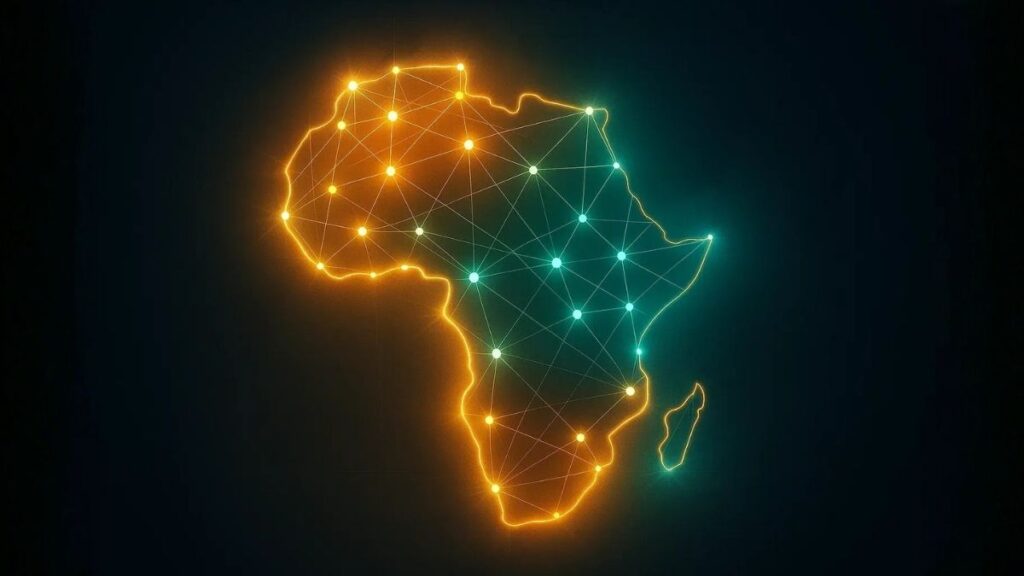
Africa is rapidly shifting from a promising footnote to a defining chapter in global markets.
At the heart of this transformation is the African Continental Free Trade Area (AfCFTA), a landmark agreement established in 2018 among African Union member states to establish a single continental market.
By reducing tariffs and non-tariff barriers, the AfCFTA, which came into effect in 2021, aims to unlock intra-African trade, spur industrialisation and accelerate investment flows within and beyond the continent.
For global markets, this integration means new opportunities for financial, digital and supply-chain diversification, as Africa emerges as both a manufacturing hub and a driver of trade in the developing world.
The total African trade market is already estimated to be worth more than $ 1 trillion, but there is still a lot of potential for growth in intra-African trade and in general internalisation of value within Africa.
At present, this accounts for only around 16%, or $220 billion, of the continent’s total trade volume, with 20% of this driven by South Africa.
With this in mind, Monocle Solutions – an international management consultancy that specialises in Financial Services – have identified three key areas of development creating investment propositions that neither international investors nor local institutions can afford to ignore:
Capital Markets and Commodities: Retaining More Value at Home
African capital markets are maturing fast.
Exchanges in Johannesburg, Lagos, Nairobi and beyond are aligning governance, transparency and market infrastructure standards with global benchmarks, making it easier for institutional investors to access African assets with greater confidence and liquidity than ever before.
At the same time, commodity houses that once focused solely on resource extraction are investing further downstream in refining, logistics and processing, thereby retaining more value within the continent.
The rise of Africa-focused trading firms, both domestic and offshore, reflects this evolution, with a shifting emphasis on building physical desks connected to real African supply chains rather than merely trading financial derivatives.
This marks a fundamental shift towards greater autonomy and value creation within African economies.
Cross-Border Payments and FX: Innovation Driving Integration
Modernisation in payments and FX infrastructure is also a cornerstone of this growth story.
Initiatives such as the Pan-African Payment and Settlement System (PAPSS), backed by Afreximbank, are revolutionising how cross-border trade is conducted by reducing the cost and friction of settlements across African currencies.
This evolution is moving trade away from costly correspondent-banking routes towards faster, continent-wide settlement frameworks.
Complementary initiatives like PAPSSCARD, the African Collaborative Transit Guarantee Scheme, the African Trade Gateway, MANSA, and AfPAY (Afreximbank’s trade payment service) are collectively lowering barriers to trade, improving liquidity for businesses, and creating new opportunities for financial institutions to expand hedging, risk and product offerings.
Together, these systems are enabling the seamless flow of capital and goods across Africa’s borders – a key condition for sustained regional growth.
Infrastructure Modernisation: The Growth Multiplier
Beneath these financial and trade advancements lies a crucial enabler: infrastructure.
Africa’s transport, energy, digital and logistics networks still face significant financing gaps, with the continent investing a lower share of GDP in infrastructure than other emerging regions.
Closing this gap through public-private partnerships, local institutional investment and multilateral support will serve as the multiplier that transforms Africa’s market potential into long-term, inclusive growth.
One example of successful African-led infrastructure investment attracting global interest is the Dangote refinery in Nigeria, backed by US$4 billion from an Afreximbank-led syndicate.
The project expands Africa’s industrial and energy capabilities and showcases how the continent can retain more value rather than simply exporting crude oil.
Another high-potential project drawing global attention is the Lobita corridor, a transport chain linking Angola’s port to mines in the DRC and Zambia.
Although still developing, strong interest from the US and EU validates its investment case, and successful delivery could rapidly transform the region’s economy and infrastructure.
What This Means for Global and Local Players
Given these developments, Africa presents a compelling, threefold opportunity for international investors and corporates, who can:
- Enter earlier in value chains by financing downstream processing, logistics and manufacturing
- Partner with local firms and fintech innovators to manage foreign exchange and payments risk more efficiently
- Structure long-dated infrastructure finance that aligns strategic capital with Africa’s long-term growth horizon
Local institutions, from banks and pension funds to development finance agencies, also stand to benefit by enhancing market-making capabilities, managing cross-border risks more effectively and mobilising domestic capital for infrastructure investment.
The timing for this could not be better.
In its 2025 World Investment Report, the UN Trade & Development agency noted that “Africa’s foreign investment deal volume and value reached a record high” this year, with investment inflows reaching $97 billion – a 75% increase from last year.
A noteworthy transaction that contributed to this growth was the $35 billion deal between Egypt and the Abu Dhabi Sovereign wealth fund to develop the town of Ras El-Hekma.
The capital exists within the continent – the challenge now lies in reform and product innovation to channel it productively.
This is precisely where the establishment of Monocle’s Markets & Trading Practice (MTP) is designed to play a pivotal role.
Bridging Global Standards with African Potential
As an international management consulting firm with deep roots in Africa, Monocle has seen first-hand the continent’s potential for growth while assisting our clients in their Global Markets businesses.
With deep experience in trading platforms, collateral and counterparty risk, reporting and post-trade automation, as well as tailoring frameworks for ESG, risk and derivatives to local contexts, Monocle translates international best practices into African market realities.
Monocle has assisted our clients in building their trading capabilities through expert services that include implementing world-class vendor systems, enhancing data and governance processes, and guiding process enhancement and automation.
This has been achieved with a deep understanding of Africa’s unique regulatory and social context to ensure compliance while simultaneously fostering competitiveness.
Combining technical expertise with a nuanced understanding of regional dynamics, Monocle is ideally positioned to support institutions seeking to participate in Africa’s financial future.
Unlocking the Potential
Africa’s next chapter in global markets is unfolding in real time and as the continent cements its place as the new frontier of global growth, the ability to translate ambition into lasting impact will define its success story.
With its extensive expertise and deep understanding of global best practices, Monocle’s MTP stands ready to help its partners as they drive the transformation of Africa’s potential into tangible, enduring prosperity.


















 Loading ...