

Global Goals 2030: Africa Scholarship – where planning meets purpose


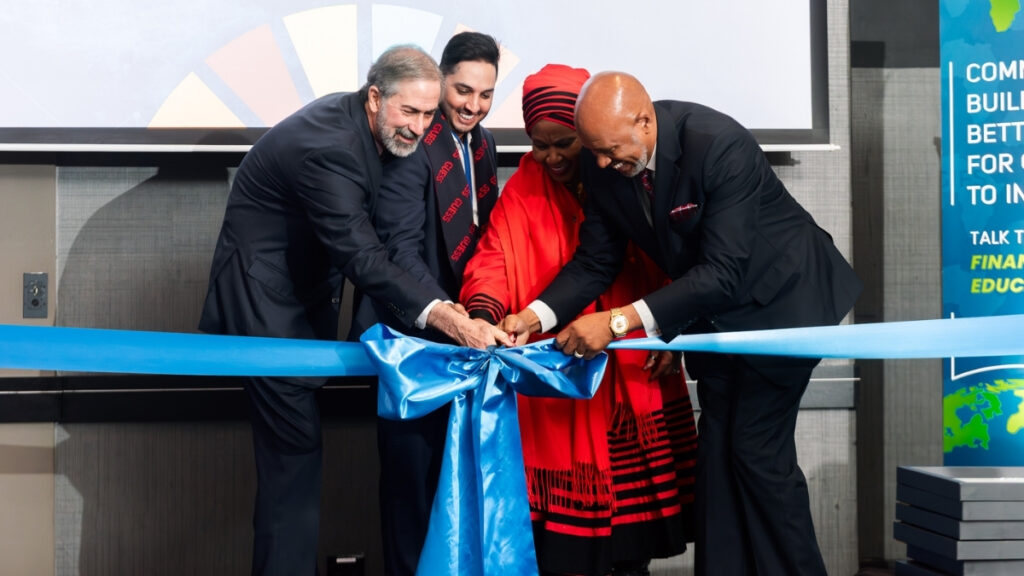
One of the lesser known outcomes of South Africa’s G20 Presidency in 2025 was the adoption of the Declaration on Education that emerged from the education plenary sessions that took place during the G20 Social Summit.
Among its tenets is that no African learner must be left behind.
It’s a lofty goal but one that’s underpinned by the continent’s reality.
The obvious question is how to widen access, transform curricula to reflect African‑centric values, and integrate digital and AI technologies at scale.
The Global Goals 2030: Africa Scholarship seeks to do exactly that.
The first cohort of two thousand students, that was approved for the scholarship, is already immersed in studies at South African and Global educational institutions and the second cohort will begin courses in April 2026.
The United Nations Development and African Union Development Agency-NEPAD Programme-endorsed scholarship is being rolled out by the Graduate Institute of Financial Sciences (GIFS) and the Umlambo Foundation as the project delivery partners for Africa.
The scholarship offers macro employers the opportunity to get a significant reduction in course fees at educational institutions.
Qualifications eligible for the scholarship range from entry-level courses to supplementary skillsets, to master’s level programmes.
GIFS CEO Dr Kershen Pillay says it’s time for action to replace rhetoric, especially when it comes to finding African solutions to African problems, “With 60% of our population under the age of 25, we are the youngest continent in the world. Yet, only 9% of young Africans currently have access to tertiary education.” Dr Pillay has championed the call on various platforms, including the G20 Social Summit.
He’s likened the statistics to a clear call to action, “By 2050, more than a quarter of the global workforce will come from Africa. The question is not whether we are ready, but how we prepare today to ensure that our youth are equipped to lead tomorrow.”
The Global Goals 2030: Africa Scholarship responds to the call for education to be accessible, affordable and relevant to the African reality.
It’s a model that widens access as it requires the backing of macro employers, who in turn sign up their employees for courses that not only elevate the employees’ workplace knowhow but equip them to pursue elevated employment opportunities.
The scholarship is also generous in comparison to other opportunities particularly in the South African landscape.
Courses are also fully accredited and offered asynchronously, which allows learners flexibility when it comes to deciding when and how to study.
Perhaps the biggest advantage to macro employers, aside from the upskilling of employees, is the fact that the scholarship is free of red tape.
South African employers have long complained of training opportunities that are mired in bureaucracy that inevitably leave the employee at a disadvantage.
Challenges have included lengthy waiting periods for qualification verification.
The knock-on effect is detrimental to employees’ advancement opportunities as they aren’t able to prove that they’ve met the required standard for certain qualifications that are industry requirements (in the case of financial services.)
Dr Phumzile Mlambo-Ngcuka, South Africa’s former Deputy President and the former Executive Director of United Nations Women, is the patron of Global Goals 2030: Africa Scholarship.
For her, the scholarship is a clear beacon for helping Africa extract the wealth of its potential.
“The scholarship offers opportunities to employees in various parts of Africa. They don’t have to travel great distances to get to universities of choice. All they need to do is take advantage of the asynchronous education model. They have access to lectures at their fingertips, as well as resources that ordinarily would not be available to them,” she says.
With over 3300 students enrolled thus far, within the first two Cohorts, the Global Goals 2030: Africa Scholarship is slowly making inroads into the continent’s education challenge.
Learn more about the Graduate Institute of Financial Sciences.

















 Loading ...