

Purpose-led technology is helping drive digital inclusion in South Africa


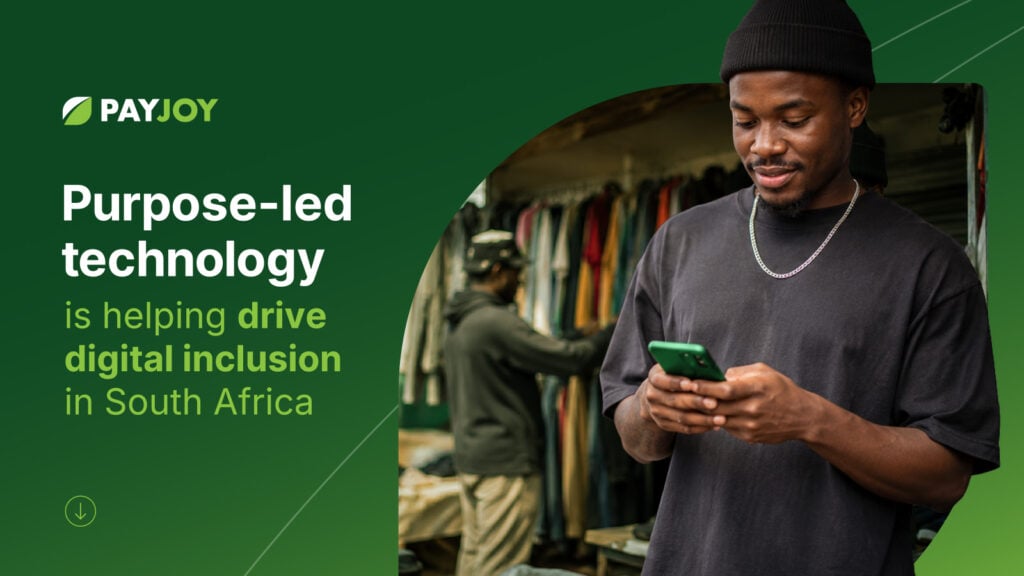
South Africa has a large, economically active, population. Although many remain locked out of the formal financial system.
Importantly, these are consumers who participate in the economy – despite being underbanked or unbanked entirely.
For this population, the only way to access digital platforms for online marketplaces, educational resources, employment platforms, and financial services is through a smartphone.
This means that for millions of South Africans, a smartphone is no longer simply a communication device. It has become a gateway to employment opportunities, digital services, financial tools, educational resources, and income-generating opportunities.
However, that gateway is often out of reach for those without a credit history, an active bank account or enough funds to make a full cash purchase.
This limited access to formal financial services can lead to reliance on costly, informal and even predatory lenders for financing. This highlights the importance of responsible, transparent and inclusive solutions that expand access to the technology people need to participate in the digital economy.
That’s where public benefit comes in.
Public benefit and financial inclusion
Technology companies are recognising that long-term success is closely linked to creating meaningful public benefit alongside commercial growth.
As digital access becomes essential for economic participation, purpose-led business models are focusing on meeting real customer needs, fostering inclusion, and delivering positive outcomes that improve customer welfare.
One example is PayJoy, which operates globally as a registered Public Benefit Corporation – a legal structure that commits the company to pursuing positive social impact alongside financial performance.
This approach reflects a growing movement among technology companies to develop products and services that expand access to opportunities for people who have traditionally been excluded from the formal financial system.
While PayJoy South Africa is not separately registered as a Public Benefit Corporation, its local operations are guided by the same principles.
It focuses on transparent pricing, responsible business practices, ethical customer treatment, and improving customer welfare through greater financial inclusion.
This philosophy is particularly important for financially excluded South Africans.
Recognising this need, PayJoy offers a smartphone rental solution that makes access to modern devices more affordable and accessible for customers who don’t qualify for a traditional network contract.
It found that 89% of its customers use their smartphones to work outside the home, meaning smartphones have become essential productivity and financial tools.
Deon Verster, Country Manager at PayJoy South Africa, says access to technology has become a critical component of economic participation.
“Many South Africans are working hard every day to create opportunities for themselves and their families,” said Verster.
“Providing responsible access to smartphone technology helps connect people to employment opportunities, digital services, and the broader economy.”
Only 39% of PayJoy South Africa’s customers have a bank account, emphasising the need for more inclusive financing models that serve both the banked and the unbanked.
Beyond basic financial inclusion, this rental model also enables customers to build their credit score.
This means South Africans who might otherwise have limited or no formal credit histories can build a credit profile that later improves access to financial products, supporting broader financial inclusion over time.
All they need to do is make consistent, on-time repayments.
The PayJoy inclusion solution
In South Africa, 25% of PayJoy customers reported an increase in their income, after obtaining a smartphone through the company’s rental solution.
This demonstrates how greater connectivity can translate into tangible economic outcomes.
“When customers gain access to the tools they need to participate more fully in the digital economy, the impact extends beyond the individual,” said Verster.
“It creates positive outcomes for families, communities, and the broader economy.”
PayJoy’s approach shows how purpose-led business models can help bridge technology gaps while supporting meaningful customer progress and long-term financial inclusion.


















 Loading ...