

This small coastal town in South Africa is under siege


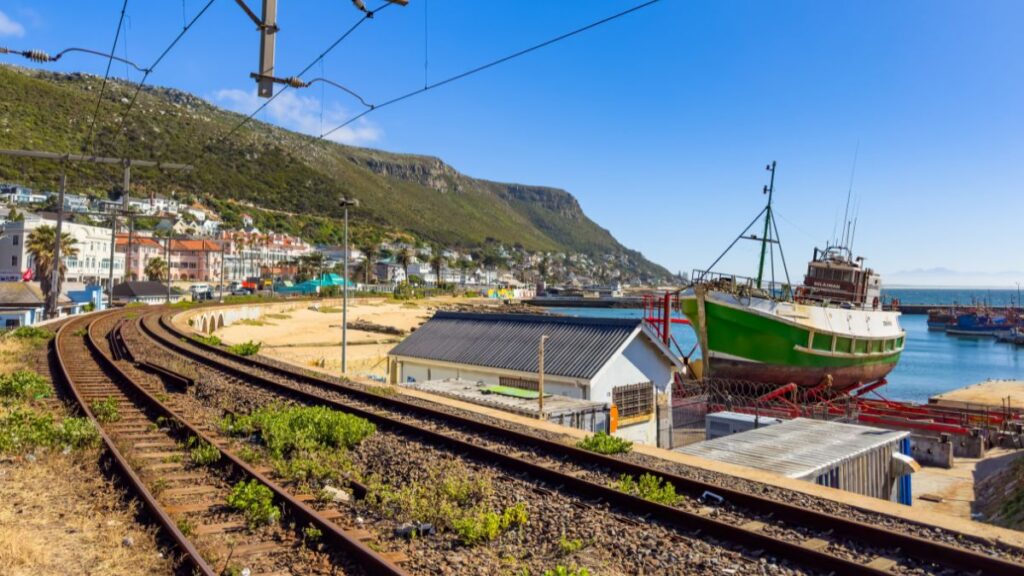
Residents of Kalk Bay feel the town is under siege by wealthy buyers who are pushing long-time residents out while also pushing tariffs up, especially for water, which is becoming unaffordable.
Kalk Bay is a fishing village that lies on the west coast of False Bay. Much of the town is built on the slopes of mountains which border the sea.
Kalk Bay’s historically dominant fishing industry has largely been replaced by tourism, driven by a few notable attractions.
The harbour still hosts an active fishing industry but has become a popular tourist attraction. It features multiple seafood restaurants and a fresh fish market. It is also known for its population of brown fur seals.
According to the City of Cape Town, Kalk Bay is best known for its vibrant fishing harbour and bustling main road.
The road features old buildings, various trendy restaurants, art galleries, antique shops, and bohemian boutiques.
However, as a result of its attractions, the town is seeing an influx of wealthy buyers and investors, creating tension between preserving a centuries-old community and catering to tourism-driven growth.
In recent years, property demand along the Western Cape coastline has surged, and Kalk Bay has been no exception.
Areas in False Bay have seen house prices increase between 20% and 150% from 2020 to 2025, driven by both residential and investment buyers, including Airbnb investors.
Data from Seeff Property and Lightstone shows that full-title house prices in Kalk Bay rose from R4.9 million in 2020 to R9 million by early 2025—an 83% increase.
Sectional title properties grew even faster, from R2 million to R5 million, a 150% jump. Other False Bay towns, such as Fish Hoek, Simonstown, Glencairn, Marina Da Gama, and Lakeside, have experienced similar growth.
For residents like Traci Kwaai, a community activist and sixth-generation Kalk Bay resident, the rapid changes threaten the town’s heritage.
“The Kalk Bay community has lived here for 300 years. We have never owned land, and we still don’t,” she said.
Families under pressure

Most long-time residents live in council flats built in 1947, which they only began owning in 1995. Kwaai stressed that these homes were not given away for free; families paid for them and hold title deeds as proof.
However, rising municipal rates and property valuations are putting these families under pressure.
“All of a sudden, property in Kalk Bay has gone up, and because we live in flats, the city is applying values that don’t make sense,” Kwaai said.
“People who don’t own land are paying the same water and rates charges as people living in large houses across the road.”
New water tariffs, which took effect in July, have worsened the problem. Bills that were around R224 have jumped to R7,686.
For a block of eight families sharing a building, each household, often living on pensions, now pays about R600 a month. “It’s just unaffordable,” Kwaai said.
Kwaai emphasised that Kalk Bay’s true value lies in its community rather than its boutique shops or tourism appeal.
“Kalk Bay’s charm isn’t about the shops, it’s about the people who have been here for generations, working at the harbour and keeping the culture alive,” she said.
However, as outsiders increasingly buy property, long-time residents are being priced out. One flat has already been sold to a high bidder despite community pleas to keep it local.
The new owner made structural changes that disregarded heritage rules and converted a public passageway.
Everyday life is becoming harder for older residents. “People can’t afford to buy a loaf of bread or a cup of coffee here,” Kwaai said.
“Some pensioners walk to Fish Hoek once a week to buy groceries because there’s no affordable shop nearby.”
The town’s growing popularity has only intensified the pressure. “Forbes once called it the coolest neighbourhood in the world. Since then, more people want to live here, but that demand is displacing the families who’ve been here the longest.”
Kwaai noted that similar pressures affect other parts of Cape Town, including Sea Point, where residents face higher living costs. But she said the situations differ.
“In Sea Point, there’s a range of incomes—from rich to richest. In Kalk Bay, it’s just the poor and the wealthy.”













 Loading ...