

South Africa’s big shopping mall problem


New retail data shows that South Africa has a shopping mall access problem, with many lower-income households finding themselves having to travel far to shop.
Mohit Narotam, Managing Director of Lightstone Retail, noted that the reality is that higher-income households in South Africa (at least 40%) live within 5 kilometres of a super-regional mall.
This refers to a massive shopping centre, 80,000 square metres or more. However, when compared to the lowest-income households, 46% of them do not have a shopping centre with a grocery retailer within 5 kilometres of their home.
This disparity highlights how convenience and access to retail privileges are largely reserved for wealthier urban areas.
“If you’re in Johannesburg, for example, you can think of places like Sandton, Hyde Park, Clearwater or the Mall of Africa,” Narotam explained.
“But the further we move away from these urban areas, the fewer large shopping centres we see. Super-regionals are just not present in many parts of South Africa.”
However, according to Narotam, the absence of retail hubs in lower-income or peri-urban areas doesn’t mean there’s no spending power there; it’s quite the opposite.
“Even though our lower-income households are perceived to have less spending power, the sheer density of these communities creates a massive spending opportunity,” he said.
Narotam noted that the problem lies in how and where people are able to shop. “Many people in lower-income areas do most of their shopping outside of their local area,” he explained.
“That’s either because they don’t have access to the right kinds of stores or because the infrastructure makes it more convenient to shop elsewhere.
These people tend to shop along transport corridors or near where they work, and this behaviour stems from economic necessity.
“If you’re already paying for transport to get to work, it doesn’t make sense to spend more money to shop somewhere else,” he said.
“For those using public transport, the ability to buy in bulk or transport large goods is limited. So, the cost and inconvenience change the way people shop. It’s not just about where you shop, it’s also about what you can buy.”
Massive spending potential
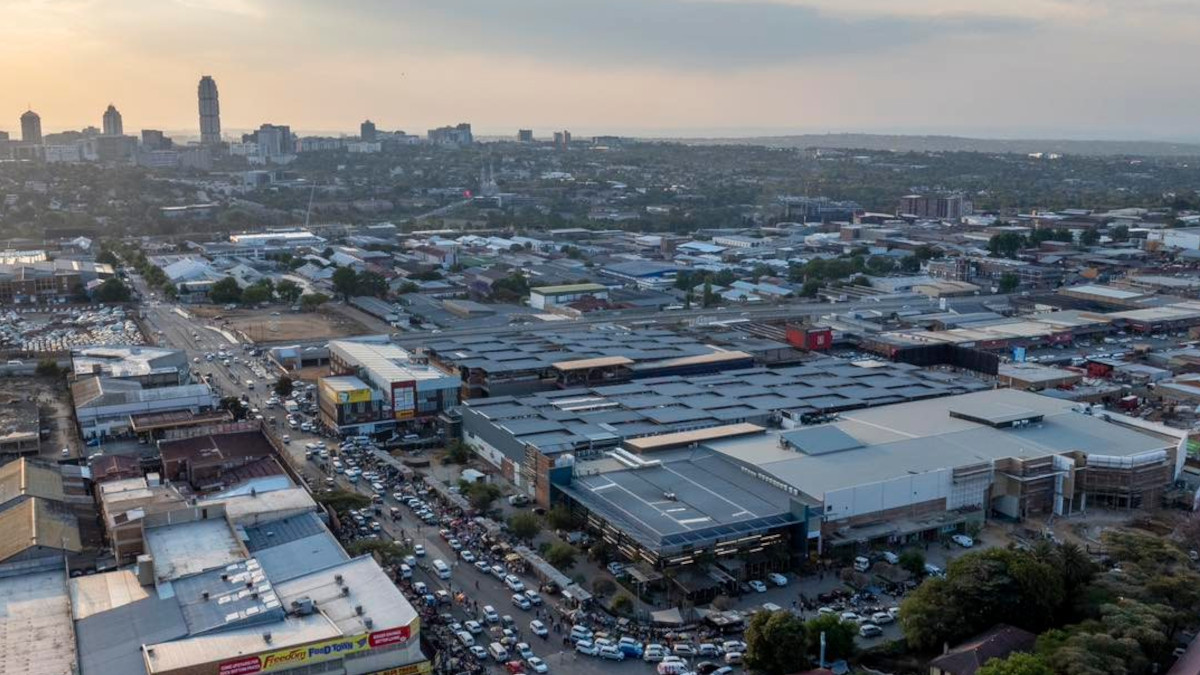
Lightstone describes this trend as spending displacement. “The opportunity to create local economies is missed because that spend is leaving the area,” he said.
Narotam explained that the money that could be circulating locally, creating jobs and driving growth, is instead spent elsewhere. And a portion of it goes to transport costs, which could otherwise be spent in the community.
He pointed out that this is exactly why many retail developers have started investing heavily in township and rural retail centres.
“We shouldn’t forget about the informal trade that already exists in these communities,” Narotam added. “There’s real spending happening there.”
“The opportunity is for formal retail to enter those markets and provide convenient access to essential goods.”
Narotam cited Thembisa as an example. He argued that it’s a dense community with massive spending potential.
For a long time, residents were serviced by malls on the outskirts in areas like Edenvale, Greenstone, or Centurion.
“However, now you have a mall like Busy Corner right inside Thembisa, drawing local spending. That’s the kind of development that makes sense,” he said.
On the question of whether South Africa has too many malls, with around 2,000 already across the country, Narotam said it’s more about location and format than pure numbers.
“From our analysis over the past five years, shopping behaviour has shifted toward more convenience centres,” he said.
“People either want quick, easy access or an experience. Regional malls are becoming destinations for experiences, while convenience centres are where the real growth is.”
He added that affluent areas are likely nearing saturation, but there’s still massive room for growth in the lower-income and rural markets.
Narotam also pointed to population movement as a key driver of retail development. Economic activity follows people.
“Where people move, demand is created, and investment follows. We’re seeing this in places like northern KwaZulu-Natal around Ballito and Hammarsdale, and in parts of the Western Cape near the proposed new airport,” he said.










 Loading ...