

Bad news for anyone who likes to braai in South Africa


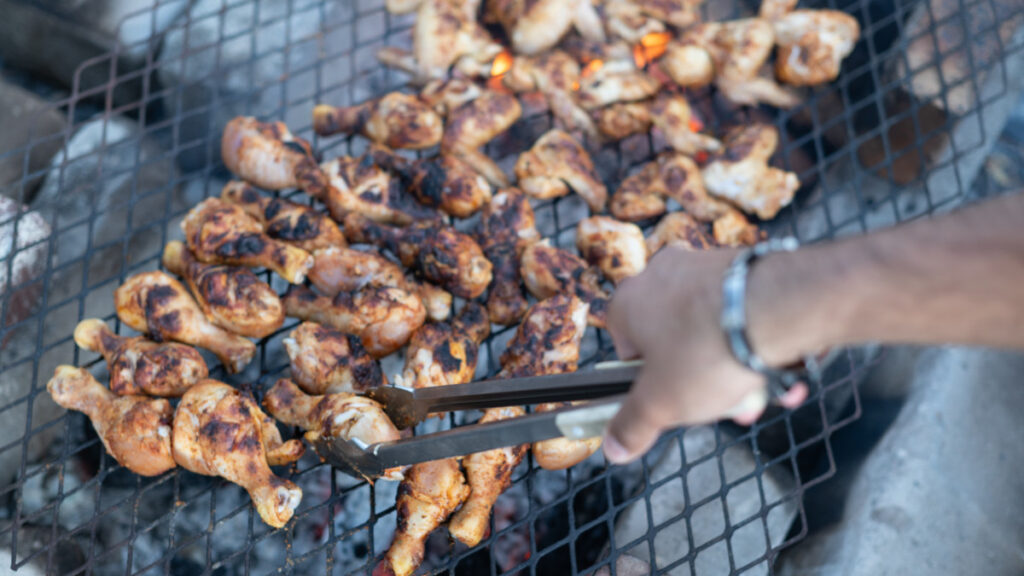
Despite the overall cooling of food price inflation, certain categories like meat are still running hot, making it a costly affair to have a braai at the moment.
The latest Braai Index for October shows that price pressure on the basket has taken a bad turn for consumers.
The Braai Index, originally developed by Bloomberg, is compiled monthly using pricing data from the Pietermaritzburg Equity Justice and Dignity (PMBEJD) group.
It tracks the prices of a selection of essential items typically used for a South African braai, offering a more focused view of inflation at the grill.
The index includes meat (beef, wors, chicken portions), vegetables (spinach, carrots, tomatoes, potatoes, onions, green pepper) and others (samp, maize, curry powder, salt).
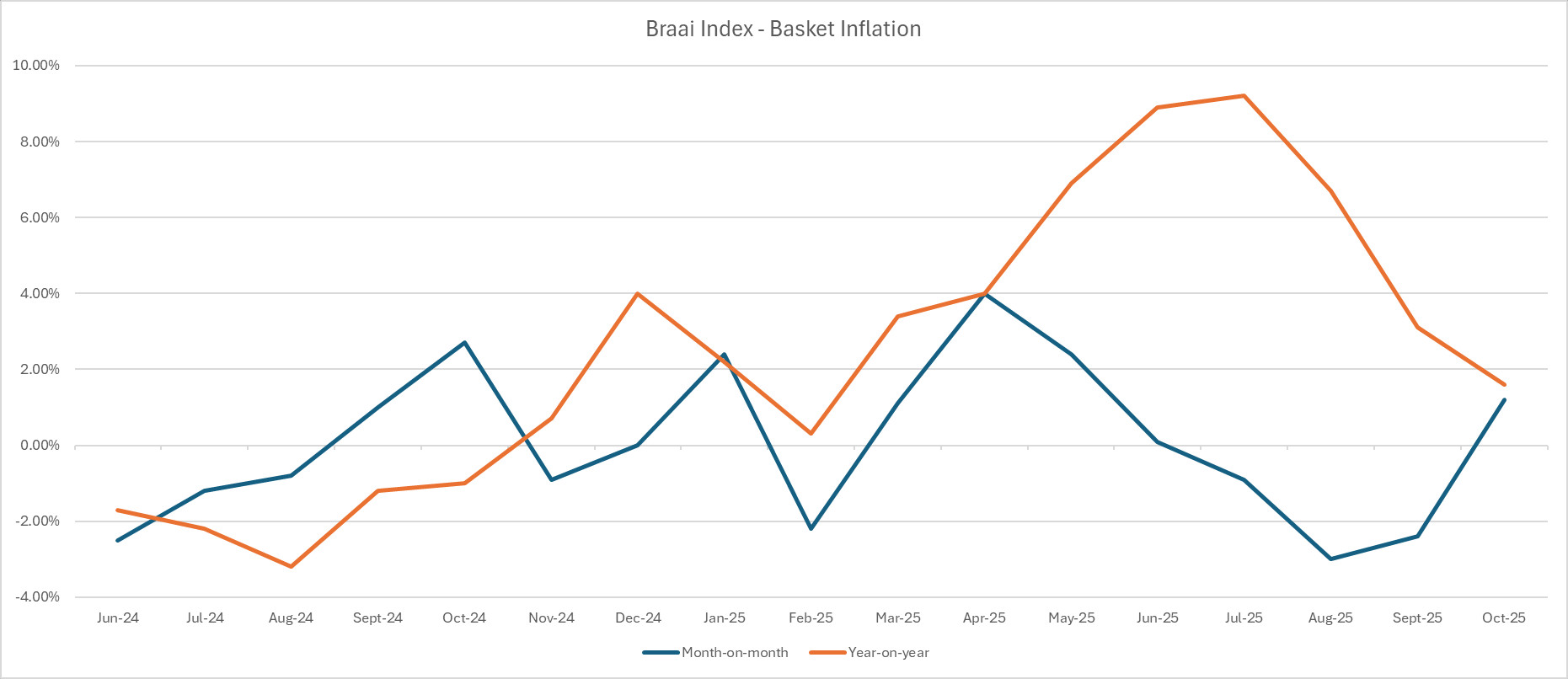
The latest Braai Index for October shows price pressure is back for braai lovers in South Africa, with both the month-on-month and annual indices up.
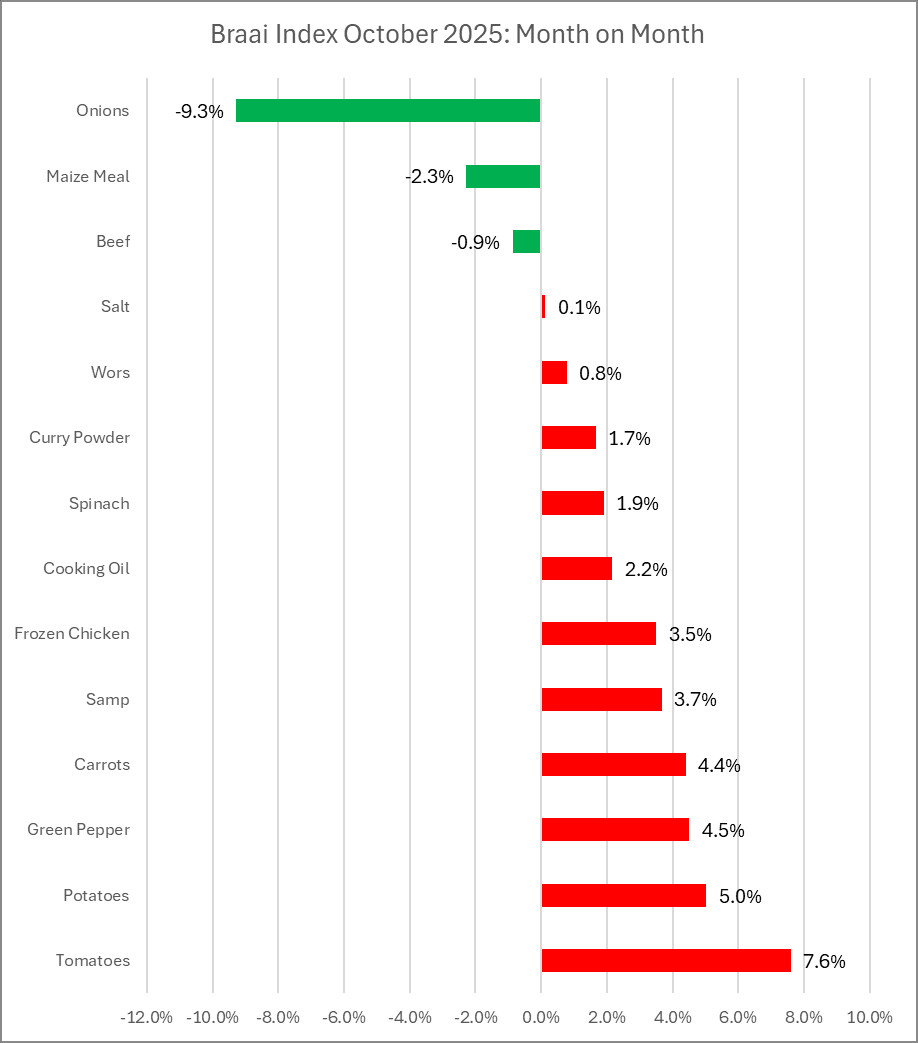
Prices increased 1.2% between Septemeber and October, driven mostly by above-CPI price hikes for vegetables and samp. This was countered by a steep drop in the price of onions.
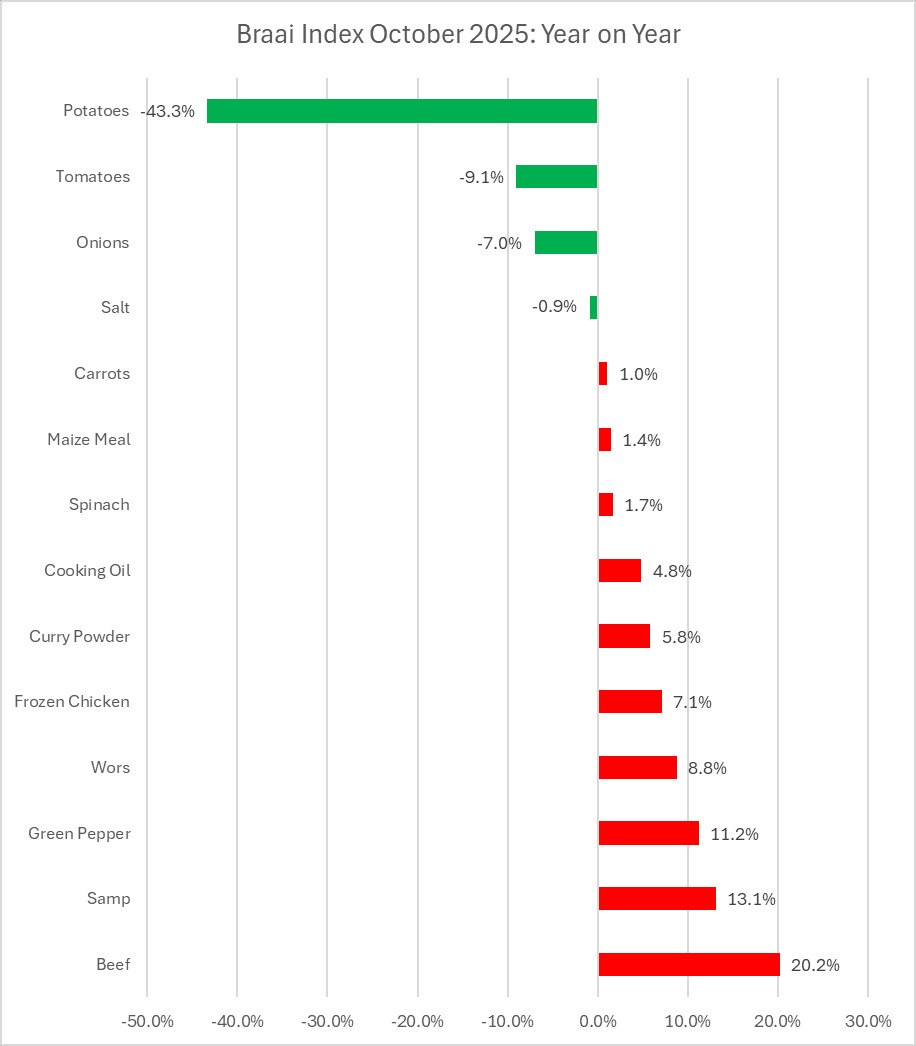
Year-on-year prices pushed 1.6% higher, driven by a 20% y/y jump in the price of beef, after a 25% y/y climb in September.
Other meats like wors and chicken were also much higher year-on-year, though the index was partially balanced out by a 43% drop in the price of potatoes year-on-year.
Overall, the index shows a significant turn in inflation for the basket.
Month-on-month basket price inflation had been easing since April, turning into disinflation from June. However, this trend started reversing in August and is now back in inflationary territory at +1.2%.
Annual price inflation, meanwhile, is still cooling from the highs seen around the middle of the year.
Year-on-year, basekt inflation has cooled to +1.6%, lower than +3.1% in September and further reduced from the +6.7% in August, +9.0% in July and the +8.9% in June.
This shows a slowing down in inflation for the braai basket y/y, but inflation heating up again over the short term.
Month-on-month index change [+1.2%]
Year-on-year index change [+1.6%]
Inflation pressure easing
It is evident from the index that meat prices are currently driving food inflation, even as headline inflation remains favourable and fairly stable.
The latest inflation data from Stats SA (for September) recorded CPI at 3.4% y/y, but the average over nine months is still 3.1% – close to the South African Reserve Bank’s preferred target.
According to Investec Chief Economist Annabel Bishop, 2025’s average inflation so far shows a remarkable cooling from the pressure households have faced over the last five years.
Inflation averaged 4.4% in 2024, 5.9% in 2023 and 6.9% in 2022. The climb started in 2020, where inflation averaged 3.3%, moving up to 4.6% in 2021.
Bishop said that a standout point in the data for September, however, is that food price inflation was not a significant driver of CPI inflation for the month.
In September, food price inflation dropped to 4.4% y/y from 5.2% y/y in August, as prices fell by -0.4% m/m.
This was a substantial drop driven by lower fruit (-0.7% m/m), vegetables (-5.5% m/m) and dairy prices (-0.4% m/m).
Processed food prices fell by -0.9% m/m, as the inflation rate lowered from 6.5% y/y in August to 5.1% y/y in September, indicating demand is still weak.
However, Bishop acknowledged that meat price inflation remains elevated at 11.7% y/y, up 0.5% m/m.
Citing the Agricultural Business Chamber, Bishop said that panic buying, rather than product shortages, is the main driver of higher meat prices.
This was due to concerns over the outbreak of Foot and Mouth Disease at the country’s biggest feedlots earlier in the year. As the issue is being handled, slaughtering has resumed.
Looking ahead, October’s data is expected to be muted, benefiting from lower fuel prices and a stronger rand—despite higher international food prices.
“The Bloomberg consensus sees the average for CPI inflation for this year at 3.4% y/y, slightly higher than our 3.2% y/y,” Bishop said.


















 Loading ...