

Another new mafia thriving in South Africa


African student movements originally created for social justice have become mafia-style criminal groups that have taken hold in South Africa.
This is according to Dr Christian Ani, from the ENACT programme at the Institute for Security Studies in Abuja.
The Enhancing Africa’s capacity to Counter Transnational Crime (ENACT) programme is a project funded by the European Union that works to mitigate the impact of transnational organised crime in Africa.
In an interview with BizNews, Ani explained how Nigerian confraternities operating in South Africa have become mired in transnational organised crime, with the most prominent group called the Black Axe.
The Black Axe network is part of several Nigerian confraternities that emerged from the 1950s onwards.
The first was the Pirates Confraternity, founded by Nobel Prize winner Wole Soyinka. Later, in the 1970s, other groups, such as the Black Axe, also known as the Neo-Black Movement of Africa, formed.
Ani noted that these groups originally started as student movements promoting social justice.
“They were born out of the university system during a time of activism and opposition to apartheid,” he said. “Black Axe was meant to be a liberal, inclusive group supporting equality and social progress.”
However, he explained that over time, things changed. “Rivalries developed between the confraternities, and recruitment became more open,” Ani said.
“This allowed people with criminal motives to join. Violence also became a defining feature as groups fought for power, especially during Nigeria’s years of military rule when violence was common.”
He said that today, groups like Black Axe are deeply involved in organised crime. In South Africa, they’ve been linked to cybercrime, romance scams, business email compromise, drug trafficking and human trafficking.
“In 2021, eight members were arrested in Cape Town for large-scale online scams connected to networks in Europe and the US.”
However, Ani highlighted that the confraternities don’t officially direct these crimes. “The organisation doesn’t sit down and plan scams,” he said.
“Its constitution appears legitimate—focused on welfare and humanitarian work—but criminal members exploit its structure and culture of loyalty to operate protection rackets.”
Members are wealthy and influential
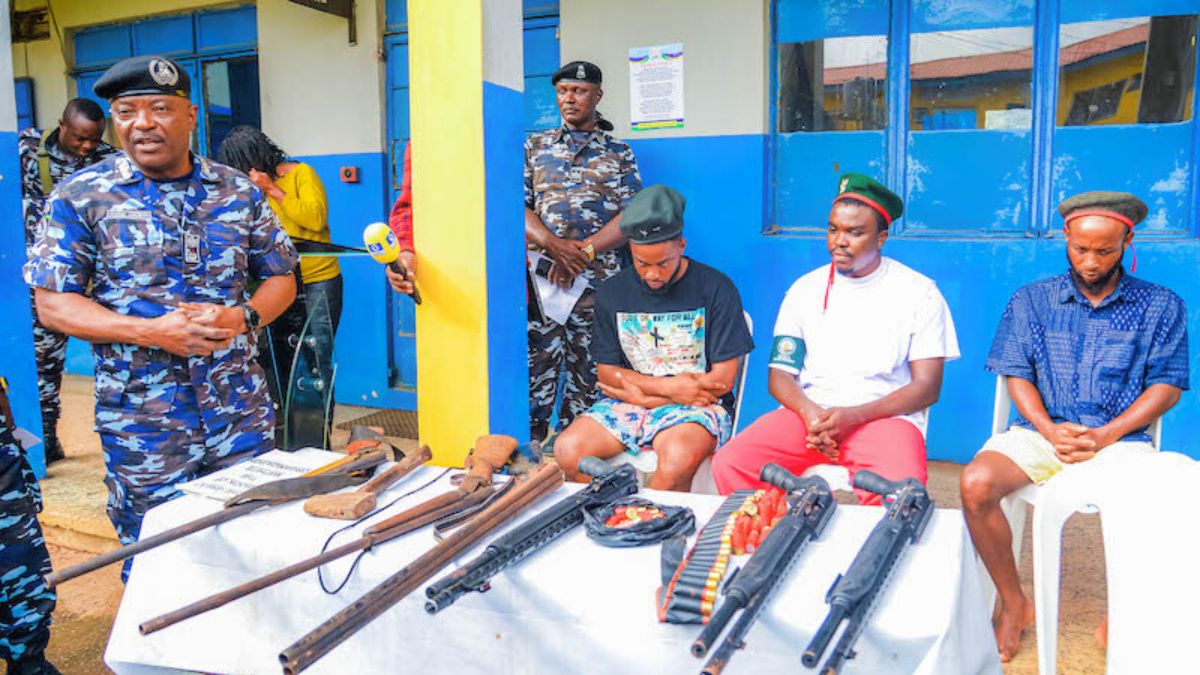
He explained that these protection networks allow criminals to call on confraternity members for help.
“If someone has a problem in the underworld, they can turn to confraternity members to intimidate or attack rivals. These networks are international, so conflicts in Nigeria often spill over into South Africa,” Ani said.
He added there are at least five major confraternities active in South Africa: Black Axe, Vikings, Aye-Aye, Buccaneers and Maites.
“They are especially active in Johannesburg, where rivalries often break out over business deals or money disputes,” he said.
The confraternities have also infiltrated law enforcement. Some members have managed to persuade police officers to act on their behalf. For example, Ani mentioned that a group might use police contacts to target or harass its rivals.
He added that there’s no firm evidence of political involvement, but the groups are highly connected.
“Some members are wealthy and influential enough to sway officials or security personnel,” he said. He also noted that South Africa’s authorities often struggle to identify these networks.
“When a Nigerian national is arrested, it’s usually reported simply as that—without noting which confraternity they belong to,” Ani said.
“In the US and Europe, investigators are starting to look deeper into these links, but that hasn’t happened here yet.”
Ani believes tackling these groups requires cooperation, not just crackdowns.
“Law enforcement should engage them directly. If they truly see themselves as humanitarian or social organisations, they must help identify the criminal elements within their ranks.”
He added that many members are not criminals. Some are professionals, including lawyers, doctors, and politicians.
However, because of the secrecy and loyalty within the groups, even non-criminal members can end up protecting those who are.
Ani is in South Africa to attend a workshop on how these confraternities operate in the country. “We’re trying to understand whether they are purely criminal networks or social brotherhoods,” he said.
“It’s a complicated issue, but engaging them openly might be the only way to weaken these criminal networks that have taken hold.”


















 Loading ...