

Warning to braai lovers in South Africa



The latest Braai Index for the end of 2025 indicates that the cost of hosting a braai in South Africa is becoming more affordable, setting a positive trajectory for 2026.
However, meat prices are still rising significantly, offset by lower prices on the vegetable side of the equation. Industry analysis suggests that this is unlikely to change soon.
The index shows that the South African braai basket has come down by 1.6% month-on-month.
While the basket remains inflated by 0.7% compared to the same time last year, it is generally flat and significantly lower than headline food inflation.
Annual inflation for food & NAB in November recorded its first increase in four months, quickening to 4.4% in November from 3.9% in October.
The Braai Index for November pointed to basket inflation of 2.3%—almost half the headline figure of the same period—a trend which should reflect similarly when December’s inflation data comes out.
The Braai Index is compiled monthly by BusinessTech using pricing data from the Pietermaritzburg Equity Justice and Dignity (PMBEJD) group.
The PMBEJD’s data reflects real “on the ground” pricing across South Africa’s major provinces and includes the items found in the shopping baskets of the majority of South African households.
The index, in turn, tracks the prices of a selection of essential items typically used for a South African braai, offering a more focused view of inflation at the grill.
The index includes meat (beef, wors, chicken portions), vegetables (spinach, carrots, tomatoes, potatoes, onions, green pepper) and others (samp, maize, curry powder, salt).
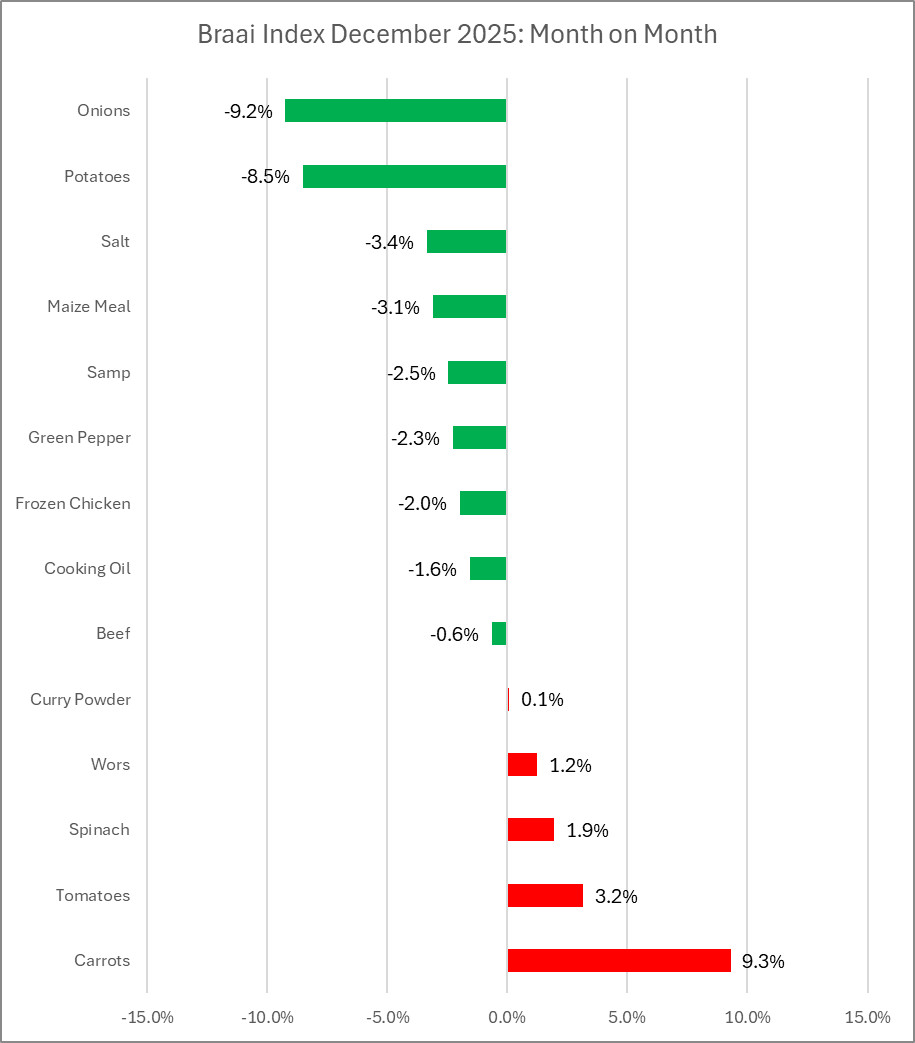
Between November and December, pricing was generally flat compared to inflation, with a sharp increase in the price of carrots offset by similarly sized decreases in the prices of potatoes and onions.
Overall, the total basket dropped by 1.6% in price.
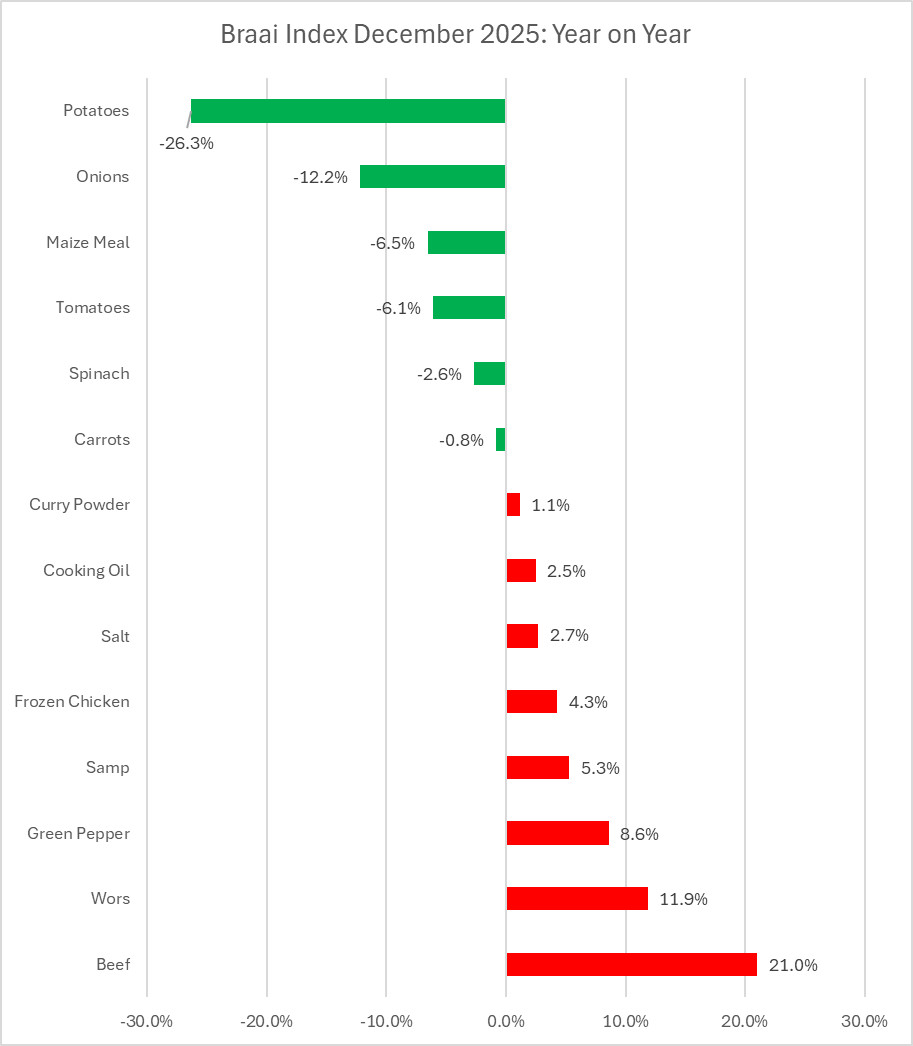
However, the year-on-year pricing for the basket increased by 0.7% versus December 2024, with meat prices being the main driver.
With beef prices rising 21% and wors up 11%, the basket was balanced by steep declines for potatoes and onions, meaning the side salads should be making up some savings when hosting a braai.
The index shows that inflationary pressure for food items has taken a downward turn, though.
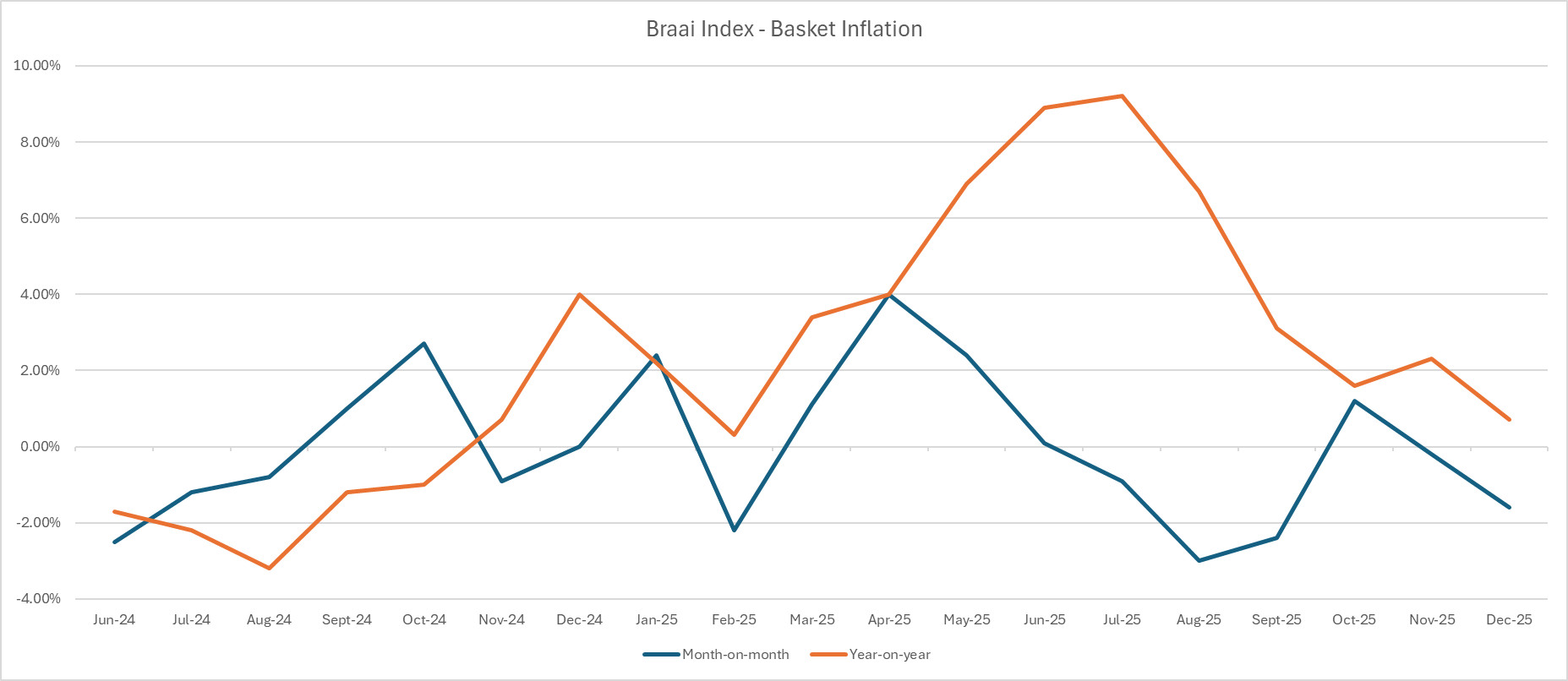
Month-on-month [-1.6%]
Year-on-year [+0.7%]
Watch out for meat prices
It should be noted that the Braai Index is heavily influenced by two proteins—beef and chicken—which are by far the most widely consumed in the country (around 50% and 25%, respectively).
Other proteins, such as those from pork and lamb, are not tracked in the PMBEJD basket and therefore do not appear on the index.
Producers of these proteins have criticised the data presented in the index, noting that braai affordability could differ significantly if consumers choose alternative proteins.
Because of the central role of beef and chicken in the index, it is invariably impacted by the fluctuating costs of these meats.
Since May 2025, South Africa has been experiencing a significant outbreak of Foot-and-Mouth Disease (FMD), which has exerted upward pressure on red meat prices in the country.
As tracked by Stats SA, beef products have experienced year-over-year (y/y) inflation of over 20%, and this has also been reflected in the Braai Index, which uses retail pricing.
While the impact of FMD has been felt most acutely in red meat products, Stats SA noted in December that other meat products have now joined the fray in seeing higher prices.
It recorded price increases with pork, mutton & lamb, as well as sausage prices, “rising fast,” it said.
Luckily, the price hikes in these proteins are being offset by moderation in most other food categories, with healthy crop yields particularly benefiting from favourable weather conditions.
According to the Red Meat Industry Services (RMIS), pricing is likely to remain firm for the time being.
The group reported steady export demand and moderate herd rebuilding; however, this has been offset by higher feed costs and other production expenses, which have prevented price relief.
As a result, the RMIS noted shifting consumer behaviour, with shoppers opting for more affordable cuts of meat, buying meat in bulk and turning to chicken, plant-based proteins, or smaller meat portions to counter rising costs.
Overall, the Braai Index remains a broad indicator of food inflation, tracking the most widely consumed food products, as tracked by the PMBEJD.
Costs will vary depending on what you actually eat.















 Loading ...