

Warning for estates that scan driver’s licences in South Africa


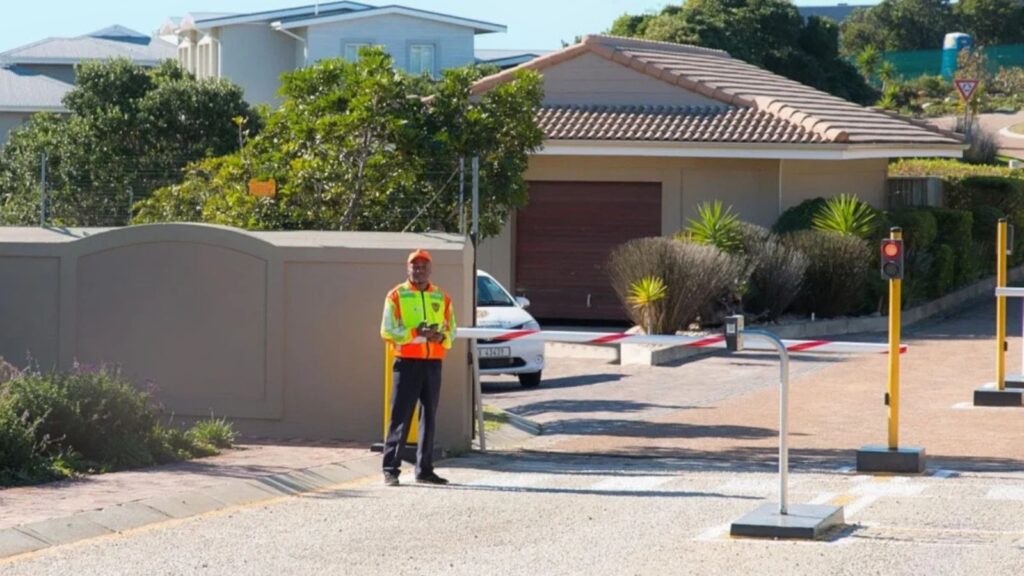
Private estates and business parks can refuse entry to a person with an expired car licence disc—but this doesn’t extend to residents or property owners.
This is according to Johlene Wasserman, Director of Community Schemes and Compliance at Van Deventer Dowlath & Marx Inc.
Wasserman spoke on Cape Talk about the laws governing entry to private estates and businesses and said that these properties have the right to refuse entry.
She said that while an estate is not allowed to refuse entry to residents or property owners, it does have control over policies governing whether others may enter.
“You have an absolute right when you are an owner, occupant, or tenant to enter an estate and they are not allowed to refuse you access,” she said.
“They can control invitees of a resident, such as guests, family members or contract workers, and many estates in South Africa say if you cannot produce a valid identity document or driver’s licence, you will not be getting entry.”
She said this policy can extend to car licence discs, even if the licence has only recently expired or is within the 21-day grace period.
She also noted that many estates require foreign nationals to provide both a passport and a work permit before being allowed entry to a property.
This applies particularly to contract workers entering an estate, to prevent illegal immigrants from working on the property.
South Africans have a 21-day period after a vehicle licence expires to renew it, but the licence could still be considered expired by a private estate during this time.
In South Africa, many private estates or business parks will scan identity documents and vehicle licences before permitting a person entry.
The rules governing entry to a private estate by people who do not live on the property were recently clarified by a High Court ruling.
This ruling said that denying access to people other than the tenant does not amount to spoliation, where property is taken unlawfully.
The ruling specifically concerned a person having their ability to generate visitor codes revoked due to ongoing levy disputes.
Wasserman’s recent comments highlight that private property owners have significant power over their policies, deciding who can and cannot enter their premises.
The battle over personal information

While estates can collect personal information and require it before allowing a person onto the property, Wasserman said there are ongoing disputes over what is done with that information.
South Africa’s Information Regulator has set out new rules about how gated estates and businesses can collect and store private information.
This code of conduct aims to clarify the existing Protection of Personal Information Act (PoPIA) as it applies to private estates.
The new rules would prevent personal information from being gathered unnecessarily or shared with others.
Wasserman said that collecting personal information is understandable for a private property, but there are questions about what is being done with it.
“We don’t know what happens to some of our data when we enter these gated communities in South Africa,” she said.
She said the Information Regulator’s new policy comes amid concerns that private information is being used for more than identification.
The Information Regulator’s proposed rules would require gated estates to store personal information securely and delete it after a reasonable period.
The rules would also mean that biometric and CCTV systems, commonly used for access control at estates, need to be declared to residents along with their purpose.
The rules would also specifically target physical books where people have to write down personal information before entering a property, as these make private details public to people who come after you.
















 Loading ...