

Domestic workers and Checkers Sixty60 drivers are fleeing South Africa


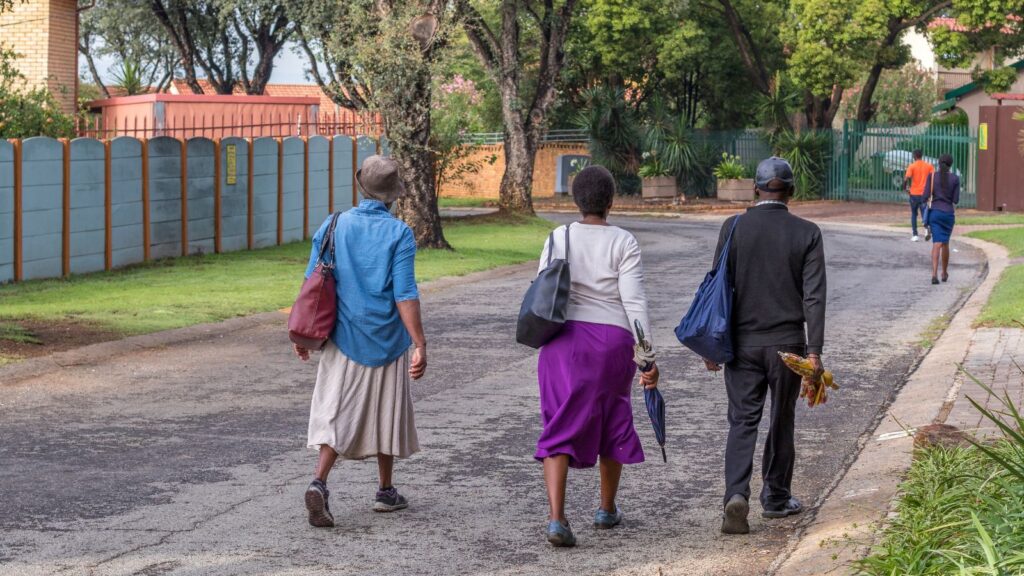
A South African app that links households with domestic workers is reeling, delivery drivers are fleeing, and a key textile hub has lost workers as anti-migrant protests push tens of thousands of people to leave the country, sending tremors through a strained economy.
Authorities in South Africa say they have processed around 67,000 migrants for deportation or voluntary repatriation in recent weeks, but the real number is likely to be much higher; Zimbabwe alone has said almost 100,000 citizens have returned since late May.
Africa’s largest economy has long been a magnet for migrant workers. Yet it also has one of the world’s highest unemployment rates and grapples with entrenched poverty and inequality.
Per capita income has barely grown over the past decade, and the departure of foreign workers risks adding another drag to an already struggling economy.
“A fast outflow of migrant workers could hamper productivity and production in the near term and may slow economic growth,” said Mpho Lenoke, economics programme leader at North-West University.
“The immediate economic impact is likely to be negative unless it is accompanied by broader policies to address skills shortages, unemployment and labour-market challenges.”
SweepSouth, an app connecting domestic workers with households, recorded the highest cancellation rate since the pandemic from those offering their services.
There’s also a shortage of drivers on some e-hailing services that’s pushed up trip prices, and a union in a key textiles hub estimates 15% of the workforce have fled.
While estimates of the size of South Africa’s migrant population vary, a report backed by the central bank last year put the figure at about 3.9 million, of which it assessed 89% were undocumented.
Nearly half are from Zimbabwe, with Malawi and Mozambique — which rank among the world’s poorest nations — estimated to account for more than 630,000 each.
The rush of returnees also threatens to throttle a key source of income for the labour-sending nations: remittances from South Africa that grew to a record R19.4 billion rand in 2024, triple the amount from 10 years ago, according to the report.
South Africa’s porous borders and lax law enforcement have made it easy for millions of migrants to enter the country, where they tend to work longer hours and for less pay than locals.
Many gravitate toward jobs through online services like SweepSouth, Uber and its lower-cost competitor inDrive.
Uber and Sixty60 Drivers flee the country

At least half of e-hailing drivers are migrant workers, according to Tella Masakale, spokesperson for the National E-Hailing Federation of South Africa, who said there has been a noticeable absence of workers since June 30, when the anti-immigrant protests peaked.
Migrants account for 70% of retail giant Shoprite Holdings’ Sixty60 delivery service, which has a fleet of nearly 10,000 motorcycle riders.
A Johannesburg-based Sixty60 driver from neighbouring Lesotho said seven of the 10 delivery riders with whom he started the job in June have already left the country.
Another driver said that delivery demand has also dipped since the protests. Neither wanted to give their names due to fear of being targeted.
Shoprite declined to comment, but has previously said that eight out of every 10 South African drivers quit before their 10-week training is over, leaving foreigners to fill the void.
The body governing South Africa’s minibus taxi industry said while some members reported slower business in recent weeks, it was reluctant to pin this on the protests, as other factors could have played a role.
Uber didn’t respond to requests for comment, and inDrive said it “observed only a minimal and short-lived decline in both rider demand and driver supply on the platform.”
“We recorded the highest rate of lost bookings on our platform since the Covid period” during the week of June 30, SweepSouth’s Chief Executive Officer Lourandi Kriel said, adding the biggest cause was transport disruptions or safety concerns.
“On June 30 itself, the number of lost bookings in a single day surpassed what we typically see in a whole month.”
Nadia Nyamayaro, a 36-year-old domestic worker from Harare, Zimbabwe’s capital, left her job near Cape Town due to safety concerns.
She doubled up as a cleaner and child-minder from 7 a.m. to 5 p.m. weekdays, and did a shift every second Saturday too, for about R8,500 a month.
South Africans would demand much more for the same work, she said as she waited for a bus home at a temporary repatriation centre in Cape Town on June 30.
In South Africa’s Newcastle textile hub, hundreds of foreign workers have gone home, said Siyabonga Ntombela, of the Southern African Clothing and Textile Workers’ Union in Newcastle.
There is little chance of these vacancies being filled soon, said North-West University’s Lenoke.
“Some opportunities may open up for South Africans, but many sectors are already struggling to attract local workers due to low wages, difficult working conditions, seasonal employment, or the need for specialised skills,” he said.
“While reducing undocumented labour might lead to more compliance with labour laws, it will not necessarily solve the issue of unemployment.”
Ntombela agreed, saying locals demand higher pay. While migrant workers often sleep in shipping containers on the factory premises, the South Africans usually live in nearby communities and wages can barely cover commuting costs.
“It’s not that South Africans don’t want to work,” Ntombela said. “They complain that they end up just accumulating money for transport.”
“That is the challenge, and it will make it difficult to replace those spots.”
This was also reflected by the nation’s justice minister, Mmamoloko Kubayi, who is also the head of the inter-ministerial committee on migration.
Speaking at an event in Johannesburg, Kubayi said the belief of South Africans “is that the employers choose foreign nationals because they are vulnerable.”
“They do not have the rights,” she said.
“They will not demand basic conditions of employment. But when it’s me, as a South African, I will demand that. That’s the belief on the ground,” she said.
Reporting by Matthew Hill and Janice Kew for Bloomberg

















 Loading ...