

Price hikes announced for Johannesburg residents starting next week


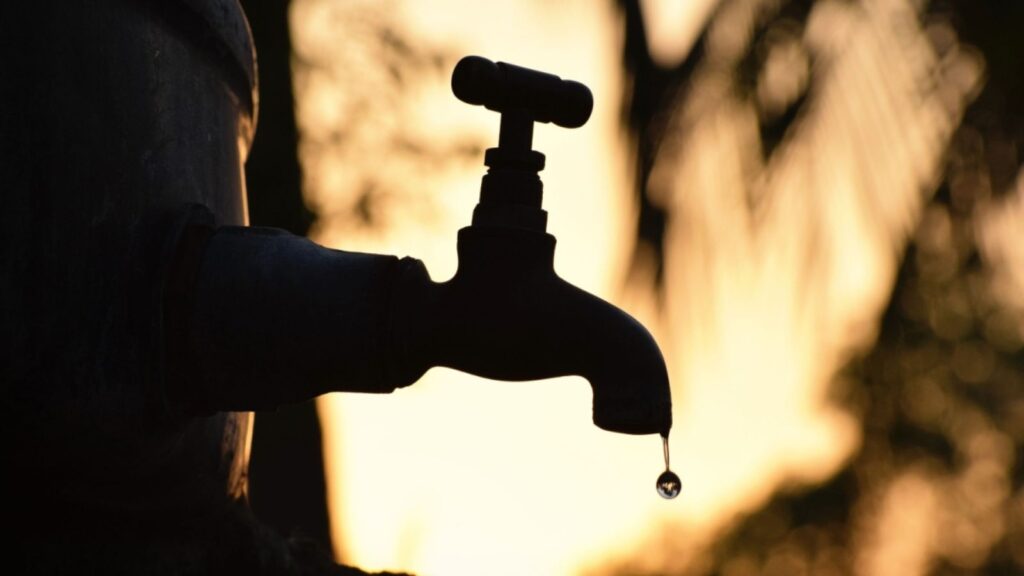
The City of Johannesburg has announced level two water restrictions for residents effective from 1 December 2026.
The restrictions are intended to reduce water consumption in the city and introduce elevated tariffs for households.
The increased tariffs are not a flat-rate increase but are calculated based on a household’s total monthly consumption.
“Your monthly water usage is divided into consumption bands, and you pay the rate for each band as you use it – not the highest rate on your entire consumption,” the city said.
“Households that use less water pay significantly less per kilolitre than heavy water users.”
Under normal tariffs, the first 6,000 litres incur no tariff charge, but will now incur an extra monthly cost of R46.80 under level two restrictions.
A household using exactly 6 kL in a month will pay R46.80 for water consumption instead of R0.00 (excluding VAT and other standard municipal charges).
The new tariffs are intended to reduce total water consumption in Johannesburg, which currently averages roughly 1.7 billion litres per day.
This is 185 million litres per day above the city’s bulk allocation from Rand Water, and the city’s municipal storage reserves are also below required levels.
“Although the City already receives 27% above its permanent Rand Water apportionment, heavy draw-off pushed municipal storage reserves down to 8 hours (well below the required 24-hour safety buffer), leading to intermittent water supply in some areas,” the city said.
The city added that the goal of the level two restrictions is to stabilise reservoirs and restore a reliable water supply.
“Level 2 restrictions aim to reduce daily water consumption by 200 million litres per day to stabilise reservoirs, protect infrastructure, and restore reliable water supply across Johannesburg,” it said.
Level 2 water restrictions tariff adjustments
| Monthly Household Usage | Normal Tariff Charge | Level 2 Tariff Charge | Extra Monthly Cost | Overall Change |
| 6,000 litres | R0.00 | R46.80 | R46.80 | – |
| 10,000 litres | R134.28 | R196.72 | R62.44 | 46.50% |
| 15,000 litres | R309.48 | R404.27 | R94.79 | 30.63% |
| 20,000 litres | R555.13 | R703.37 | R148.24 | 26.70% |
More than higher tariffs
Level two water restrictions do not just increase tariffs, with the city noting several other actions which will be prohibited from 1 December 2026.
This includes using municipal drinking water to irrigate gardens, hose down hard surfaces, and dampen building sand.
“The Johannesburg Metropolitan Police Department (JMPD) will actively enforce Level 2 water-use restrictions under the City’s Water Services By-laws,” the city said.
The restrictions will apply to all people in Johannesburg, but the city noted that the adjusted tariffs will only apply to residential properties.
“Because deemed-consumption customers pay a fixed charge and prepaid consumption is not regulated through monthly stepped billing, these areas are not affected by the stepped tariff adjustment and will instead be managed through a 20% flow reduction on zone supply meters,” it said.
“Commercial, industrial, and other non-residential categories are not included in this residential tariff adjustment, although all water users must comply with Level 2 water-use restrictions.”
Johannesburg is not the first city to be hit with water restrictions, with Tshwane implementing level two restrictions from 16 November 2026 for an initial 30-day period.
Cape Town will also implement level one water restrictions from 1 December 2026, aiming to reduce water usage by 10%.
The water restrictions come amid expectations of reduced rainfall due to an El Niño weather pattern, which is often associated with drier conditions.
This can place pressure on water levels in dams and reservoirs, leading to reduced water supply in some areas.










 Loading ...