

Top car brands in deep trouble in South Africa



Major car manufacturers are facing growing scrutiny in South Africa over the safety standards of vehicles sold locally.
Industry stakeholders, such as the Automobile Association of South Africa (AA), have argued that some brands are offering African consumers cars with fewer safety features than those sold in developed markets.
This comes after several cars from top brands like Chery, Toyota, and Hyundai have failed or scored very poor safety ratings in South Africa.
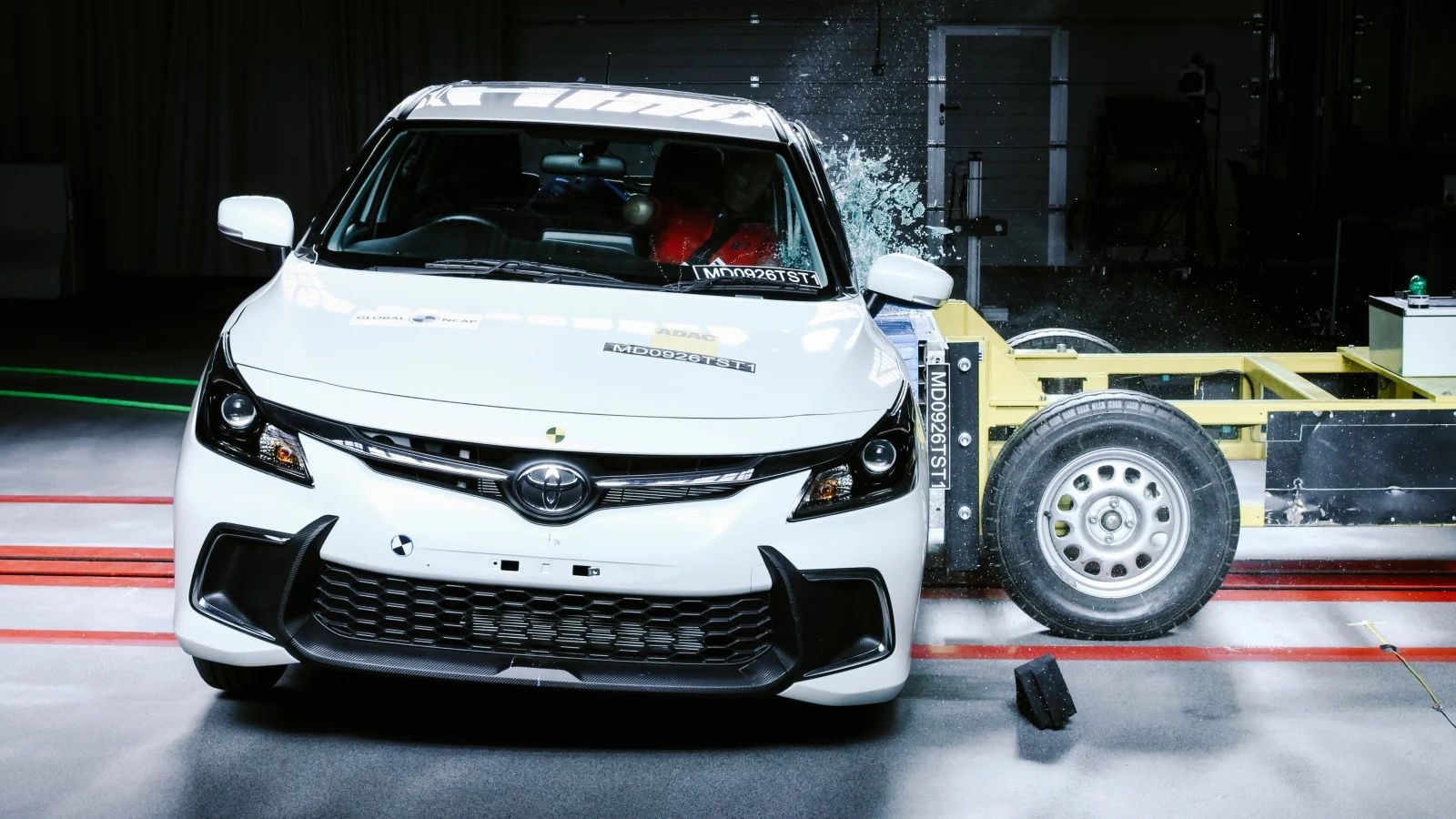
In the most recent case, the Toyota Starlet received a zero-star rating for adult occupant protection during testing conducted by the Global New Car Assessment Programme (GNCAP).
These tests were conducted under the AA’s #SaferCarsForAfrica campaign, which, alongside GNCAP, buys entry-level vehicles in South Africa, ships them to Europe and submits them to global standard crash tests.
Testing revealed that the vehicle demonstrated serious failures, particularly during side-impact testing, as it lacks restraint systems like side-body and curtain airbags.
In the last six months, another three popular entry-level cars have come under scrutiny in South Africa. Hyundai’s Grand i10 received a zero-star safety rating, while the Chery Tiggo 7 and the Toyota Corolla Cross both received a two-star rating.
However, Toyota responded to the Starlet tests and to the criticism by the AA through a cease and desist letter sent to the association.
Toyota SA said the model assessed by the AA is obsolete and not representative of the Starlet currently available in the South African market.
The automaker added that safety is its top priority and a non-negotiable commitment, and that it is dedicated to creating better mobility for everyone.
It further noted that it consistently invests in advanced safety engineering, strong structural design, and accessible in-vehicle safety technologies that protect drivers, passengers, and all road users.
Speaking in an interview with The Money Show, following a dispute with Toyota over the safety rating of the Toyota Starlet, AA CEO Bobby Ramagwede said the association would not back down.
Ramagwede explained that the AA’s criticism was based on a specific version of the Starlet that was available in South Africa at the time of testing.
“If one carefully reads our press release, you’ll realise that we acknowledge that the vehicle that we tested was revised on 25 September, but when we ran the Starlet in our programme, it was the model that was on sale at the time when we bought the vehicle,” he said.
Comes down to morality rather than legality
Ramagwede acknowledged that there was “some fact” to Toyota’s argument that the tested model was outdated and that the current version has improved safety features, noting that the revised model added four more airbags.
“If you were to compare the two variants side by side, the differences would be two airbags versus six airbags,” he said. However, he stressed that the AA would independently verify the manufacturer’s claims.
“In order for us to make a qualified comment on that, we’d have to test the new vehicle, which is exactly what we’re going to do. We’ve since bought a pair of those vehicles, and we sent them to Germany, and we’ll crash test that.”
Ramagwede said the AA was surprised by Toyota’s aggressive response, especially given the long-running nature of its crash-testing programme.
“We’ve been running this program since 2017, and this isn’t the first Toyota that we’ve crash tested. In fact, we’ve crash tested vehicles across many brands,” he said.
According to Ramagwede, the bigger concern is that vehicle safety standards in South Africa lag behind those in Europe and Australia.
These standards allow manufacturers to legally sell cars locally with lower safety specifications.
Ramagwede argued that this creates a situation where African consumers receive less protection than buyers in developed countries, despite purchasing vehicles from the same global brands.
He added that some entry-level vehicles sold in South Africa would not pass safety standards in Europe or Australia.
While manufacturers may argue that they are complying with local laws, Ramagwede said the issue ultimately comes down to morality rather than legality.
“Our argument has always been one of morality. If a car is safe in Europe, it should be the same in South Africa,” he said.
Ramagwede also rejected suggestions that adding more safety features would make affordable vehicles prohibitively expensive.
“The economies of scale allow them to introduce at least some of the parameters that we’re arguing for without necessarily making dramatic changes to their margins,” he said.
“Some manufacturers have publicly disclosed the cost of adding extra airbags. When you consider the value of upgrading the airbags, one might question why these features aren’t included as standard.”


















 Loading ...