

Municipality ordered to stop the collapse of prestigious estate in South Africa


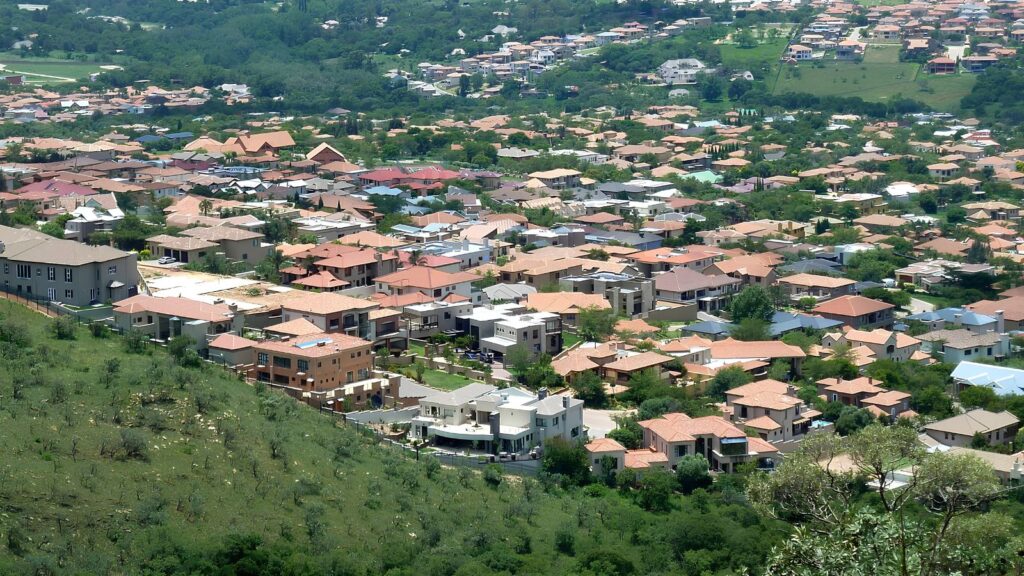
The Johannesburg High Court has ordered Mogale City Local Municipality and others to repair failing river infrastructure threatening the stability of one of Gauteng’s best-known residential estates, Featherbrooke Estate.
The court order brought an end to a six-year legal battle marked by years of delays and disputes over responsibility.
This is the feedback from Johlene Wasserman, Director of Community Schemes and Compliance at Van Deventer Dowlath & Marx Incorporated.
She said the ruling has established an important precedent for community schemes facing prolonged government inaction.
On 29 May 2026, Judge Mahalelo handed down judgment in Featherbrooke Homeowners Association NPC v Mogale City Local Municipality and Others.
The Judge granted a structural interdict against the Mogale City Local Municipality, the City of Johannesburg and the Johannesburg Roads Agency.
The court ordered the three entities, jointly and severally, to repair damaged riverbeds, install gabions to prevent further erosion and produce a formal Stormwater Management Plan.
“Structural interdicts of this nature—compelling multiple state organs to act jointly—are rare in South African law and typically reserved for systemic governance failures,” Wasserman said.
“The judgment sets an important national precedent for community schemes facing overlapping municipal and departmental inaction,” she said.
“Finally, residents have the outcome they’ve been waiting for since the estate first approached the courts in May 2020.”
Featherbrooke Estate is situated on the western edge of Mogale City, between the Crocodile River and the Walter Sisulu National Botanical Gardens.
Running through the estate is the Muldersdrift se Loop, a river that has repeatedly flooded the area for more than a decade.
Wasserman explained that the river forms part of an important ecological system that flows from the botanical gardens, meaning its deterioration poses environmental risks beyond the estate itself.
“Since around 2010, it has flooded the estate most years, eroding embankments and exposing sewer lines and underground power cables, and leaving residents to weigh the risk of electrocution against the risk of raw sewage,” she said.
The court put an end to the government’s responsibility shifting

The damage became so severe that sections of the estate’s perimeter security fence were left virtually suspended above collapsing riverbanks.
“The erosion had eaten so deeply into the embankment that the fence’s foundations were suspended in mid-air, creating a serious security risk for residents.”
Court papers also revealed that a major sewer line had shifted to within about a metre of the estate boundary fence, which created a significant environmental and public health risk if the infrastructure failed.
Despite approaching multiple government departments over the years, the homeowners’ association was repeatedly referred elsewhere.
“For more than a decade, the homeowners’ association knocked on the doors of the Department of Water and Sanitation, of Mogale City, of the City of Johannesburg. And the answer was the same: Not us. Try next door,” she said.
The legal battle began in 2020 but was delayed by several setbacks, including a wrongful dismissal, a remittal and the threat of a substantial costs order.
A major breakthrough came in March 2024 when the Supreme Court of Appeal overturned an earlier Full Court ruling that had dismissed the estate’s application and ordered it to pay costs.
The appeal court found that the lower courts had failed to properly determine the responsibilities of each government entity and sent the matter back to the High Court.
According to Wasserman, the latest judgment exposed years of responsibility shifting between authorities. She noted that the Department of Water and Sanitation had internally recommended issuing directives as early as March 2016, but did not act.
She added that the ruling reinforced the principle that the government cannot avoid constitutional obligations through procedural arguments.
“You can’t acknowledge a disaster risk and then hide behind licensing processes to escape responsibility. Thankfully, the court saw through the blame shifting and put an end to it.”
Wasserman said the case also serves as a warning to community schemes across South Africa.
Featherbrooke spent millions of rand on engineering reports, hydrological assessments, emergency stabilisation work and legal costs.
This, while residents endured repeated flooding, exposed electrical infrastructure and compromised sewer systems.
“Featherbrooke Estate had to survive years of litigation and multiple rainy seasons before they could get the state to execute its basic municipal functions,” she said.


















 Loading ...