

Retrenchment warning for major South African state-owned company


The South African Broadcasting Company (SABC) may be forced to retrench more employees due to significant problems with its advertisers.
As reported by City Press, insiders at the public broadcaster believe that more positions are on the chopping block as the organisation fails to collect revenue from advertisements not playing on the radio.
An internal exception report shows that over 800 adverts were skipped by radio hosts in August alone across 18 stations. Insiders said that this amounted to millions of rands being lost.
An exception report occurs when a client purchases airtime at the broadcaster but is refunded if the station fails to play their ad or live read.
Radio stations are reportedly the largest culprits, with presenters taking on the majority of the blame, as they run their own desks and are responsible for playing advertisements as scheduled.
The SABC has been hit hard by retrenchments over the past few years, with a possible second round creating uncertainty amongst staff in multiple divisions.
Over 600 SABC employees were affected during retrenchments in 2021. The organisation recently handed out Section 189 notices that could affect 180 sales staffers.
The broadcaster’s challenges are vast, with issues ranging from outdated infrastructure, rising debt, and an unreliable funding model.
When it comes to the funding model, the broadcaster is currently at a crossroads after the SABC Bill was delayed in parliament.
Introduced in October 2023, the Bill aimed to create a new funding model to replace the current TV licence system, which has poor compliance levels.
The Bill set a three-year deadline for developing a replacement model, which left the broadcaster’s immediate funding challenges unresolved.
In November 2024, Solly Malatsi, Minister of Communications and Digital Technologies, withdrew the Bill from parliament, calling it flawed. This resulted in a pushback from other officials in parliament.
Khusela Diko, chairperson of Parliament’s Portfolio Committee on Communications and Digital Technologies, wrote to Malatsi for clarity in August.
“The Bill has now been delayed for more than six months, with no clear urgency from the department to resolve the matter,” she said.
“This delay has left the Bill stuck in Parliament while the SABC’s financial and operational crisis continues to worsen.”
Malatsi said that the department is looking at another process to develop a funding model for the SABC.
Blackout warning
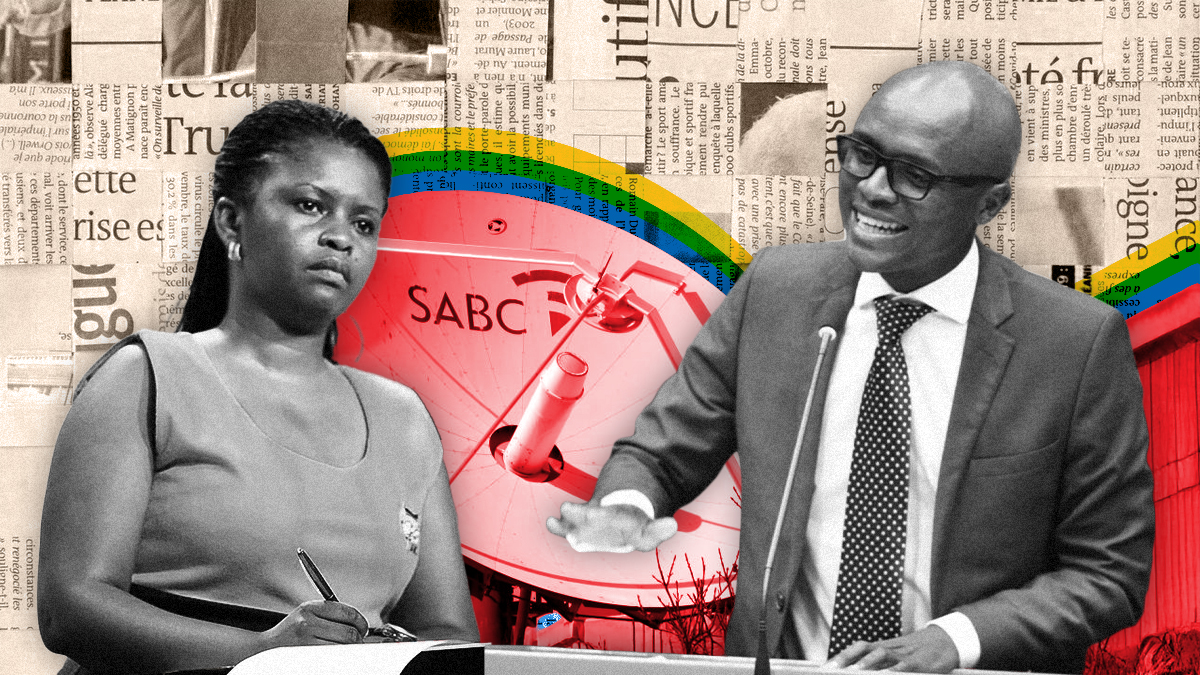
Diko has also recently warned that the broadcaster could soon have its signal switched off before the end of the year.
Sentech, the state-owned company that transmits the SABC’s signal, has threatened to cut off services due to the broadcaster’s over R1 billion in debt.
Diko warned that urgent steps are required to stabilise the situation, with both the SABC and Sentech warning that they don’t think they can continue their operations in the current way beyond December 2025.
The dispute between the parties dates back to the start of the decade, when the SABC complained that Sentech was charging excessive transmission fees.
The Competition Commission found no evidence of excessive pricing and is now working directly with Sentech to resolve the issue.
Malatsi asked for mediation to break the deadlock, with his department issuing a tender to appoint a mediator to help the parties reach the settlements.
Diko warned that Sentech, whose main client is the SABC, is losing over R70 million monthly by covering the broadcaster’s unpaid signal distribution costs.














 Loading ...