

National strike planned for next week – what you need to know


Public servants across South Africa are poised to strike next week Tuesday (22 November 2022) in a “National Day of Action.”
The main march is to be at the National Treasury’s offices in Pretoria, while union members will march to their equivalent across the other provinces.
Picketing is also set to occur at service centres such as public hospitals, ports and government institutions, e.g. home affairs.
The Public Servants Association (PSA) said that unions have been forced to intensify their industrial action after communication between workers and the government broke down.
According to the PSA, the government has offered a 3% and continued R1,000 cash gratuity only until March 2023 – this has subsequently been rejected by workers who last saw an increase in 2019.
The government was given a seven-day ultimatum to respond to the calls for a 10% increase across the board – this was not met, and unions now plan to take to the street.
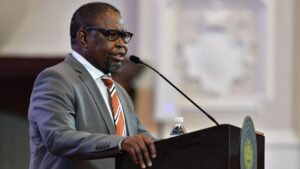
Enoch Godnogwana, the finance minister, unilaterally pushed through a 3% wage hike for government workers while unions have been demanding between 6.5% and 10%.
Godongwana has said that the Treasury has done all that it could have. “We have got no room to move at the moment; even in the medium-term budget policy statement, the carry-through costs we have are only for the 3%.”
Other unions set to take part in the strike include the National Education, Health and Allied Workers Union (NEHAWU) which represents 274,000 members. The PSA represents approximately 235,000 workers.
Including the PSA and Nehawu, several other unions have been granted strike certificates, representing over 800,000 workers.
- Police and Prisons Civil Rights Union (POPCRU) – 120,000 members
- Democratic Nursing Organisation of SA (DENOSA) – 84,000 members
- Health & Other Services Personnel Trade Union of SA (HOSPERSA) – 70,000 members
- South African Policing Union (SAPU) – 60,000 members
The PSA already concluded a previous march on 10 November. Government departments, especially home affairs and transport activities, were targetted by picketers. Despite the pickets, the respective departments reported little to no impact on operations.
Addressing the media on Thursday (17 November), a spokesperson for the unions said that workers are set to protest the failure of the government to address the needs of workers and the poor as the cost of living continues to worsen.
Skyrocketing petrol prices, food and public transport costs have taken their toll on workers across the nation.
“The unilateral implementation gives us – the unions – no reason to engage with the bargaining council.
“We are no longer just fighting for a decent wage; we are fighting to keep the right to bargain in the face of continuous efforts by the government to undermine bargaining,” said the spokesperson.
Earlier this month, addressing workers outside the PSCBC, Newhawu said that they have had to be meticulous about when they timed the upcoming strike.
“We have to make sure that when we start…we hit hard and that the employer feels the wrath and the pain of the worker.”
Public servants have faced pushback, with some arguing that they are essential workers. Nehawu has struck this down, saying that it is up to the government to remedy the situation.
Read: Brace for a big interest rate hike next week: economist
















 Loading ...