

Bad news for petrol and diesel drivers in South Africa


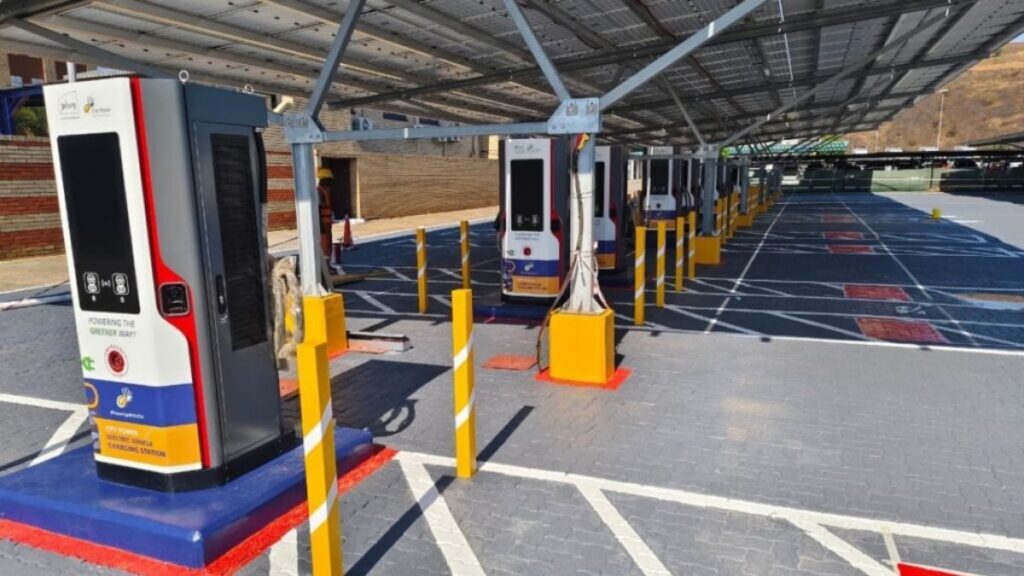
The Department of Energy and Electricity has proposed a new levy system on high-emission cars to finance rebates for lower-emission vehicles.
The idea was proposed in the department’s draft National Energy Efficiency Strategy (NEES), which also outlines several other electricity-efficiency reforms.
The strategy involves a “feebate” system, which will pay rebates to low-emission vehicles such as fully electric or hybrid vehicles.
These rebates would be funded through a levy imposed on vehicles with above-average emissions.
The department did not specify the standards for what emissions would place vehicles into each of these categories.
The new feebate system was proposed as the department said South Africa’s current CO₂ levy does not incentivise efficiency.
“The levy must be restructured into a revenue-neutral feebate system paying rebates for efficient vehicles (below-standard emissions), funded by levies on inefficient vehicles (above-standard).”
It added that the new proposed levy and rebate structure should include incentives for fully electric and hybrid vehicles.
“The feebate structure should be transparent, with annual threshold adjustments reflecting improving fleet average, and should include incentives for new energy vehicles (NEVs) and hybrid technologies,” it said.
Along with the new levy structure, the NEES proposed new mandatory fuel economy standards for light vehicles.
It argued that these would help South Africa compete in global markets as many other countries adopt fuel economy regulations.
“To sustain competitiveness in international markets, by not being phased out from export markets where fuel efficiency standards exist, SA needs mandatory fuel economy standards,” the NEES said.
It said a study would be jointly commissioned by the Departments of Energy and Electricity, and Transport, to determine fuel economy standards.
“The DoT and DEE should jointly commission a feasibility/calibration study, then use its findings to introduce CO₂-equivalent fuel-economy standards for light vehicles, aligned with current international norms,” the NEES said.
“Standards should apply to all new vehicle sales and be progressively tightened every three years based on technology cost analysis, with exemptions for manufacturers.”
A plan for economic growth

The NEES argued that energy-efficiency reforms are an effective means of reducing strain on the national grid and supporting South Africa’s economy.
It said that South Africa is an energy-intensive country, which struggles with issues such as electricity supply instability and weak growth.
“South Africa remains one of the more energy-intensive economies globally, with a historic dependence on coal, persistent electricity supply instability, rising energy costs, and weak growth,” it said.
“Energy efficiency offers one of the fastest and most cost-effective means to reduce demand, ease strain on generation capacity, lower input costs across the economy, and reduce emissions without constraining growth.”
The NEES said that, in addition to helping achieve climate objectives, the proposed strategy would aid South Africa’s energy sector.
“The strategy is intended to reduce pressure on the electricity system, improve affordability and competitiveness, strengthen energy security, and support South Africa’s climate and development objectives,” it explained
“It is positioned as the national framework for coordinated action across government, regulators, municipalities, state entities, and the private sector.”
The strategy is built around five goals, which aim to create a “disciplined national programme” for energy efficiency.
The five goals are:
- Strengthen governance through formal adoption of the NEES and an updated action plan, and to recognise energy efficiency as a national planning priority.
- Establish the enabling regulatory and financing framework required for delivery at scale.
- Implement sector-specific interventions across the economy.
- Build institutional capacity and professional skills.
- Establish a credible monitoring, reporting and verification system capable of tracking performance and sustaining accountability.

















 Loading ...