

One company that stole R6.5 billion from South Africans, and big changes for speeding fines are coming


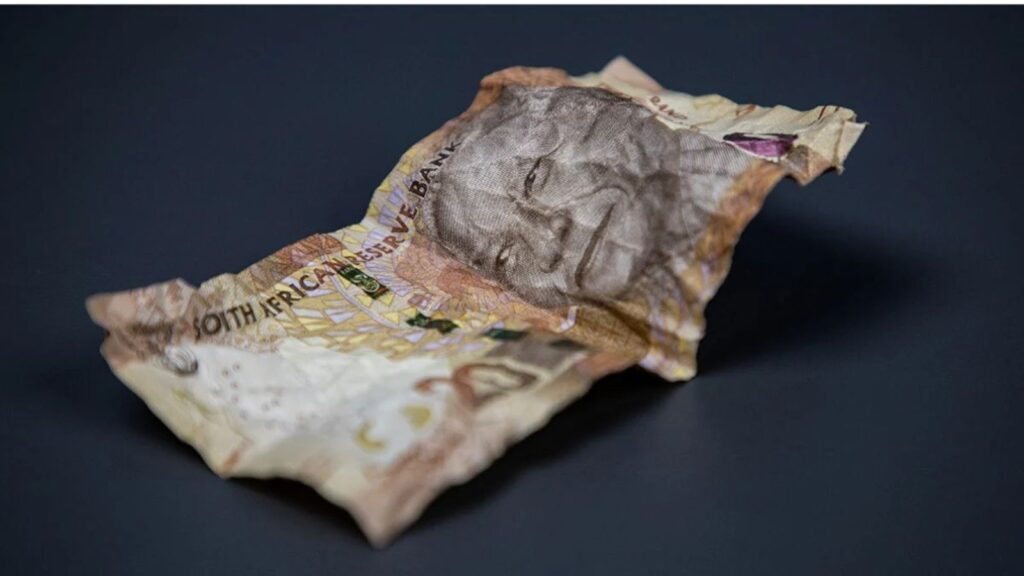
The rand remained steady in early trading on Wednesday as traders assessed geopolitical developments carefully.
This came after Iran accused the United States of violating a fragile ceasefire by launching attacks near the Strait of Hormuz.
The rand traded at 16.3650 against the dollar, little changed from its previous close of 16.3750. The dollar was flat against a basket of currencies.
“We are caught in a narrow range until we receive more significant data from the US tomorrow and the South African Reserve Bank decides on interest rates,” said Adam Phillips, a treasury specialist at Umkhulu Treasury.
“Even then, I don’t anticipate much movement. As usual, everything revolves around the Gulf.”
Today, domestic investors will mainly focus on the South African Reserve Bank’s interest rate decision.
Economists polled by Reuters expect the bank to raise the rate by 25 basis points, to 7% from 6.75%. South Africa’s benchmark 2035 government bond also remained flat in early trading, with the yield at 8.54%.
On Thursday, 28 May, the rand was trading at R16.47 to the dollar, R22.02 to the pound, and R19.09 to the euro. Gold is trading lower at $4,372.40 an ounce, while oil prices were at $98.20 a barrel.
5 important things happening in South Africa today

R6.5 billion stolen from South Africans: Over 9,000 people have said they lost a combined R6.5 billion when Mirror Trading International (MTI) collapsed in 2020, and after more than five years, not one of the kingpins has been prosecuted. Law enforcement said the lack of an outcome was due to the Hawks and the National Prosecuting Authority (NPA) being woefully under-resourced. [MyBroadband]
Big changes for speeding fines: Right now, speeding tickets in South Africa can vary greatly depending on where they were issued, but this will change under the incoming Administrative Adjudication of Road Traffic Offences Act (AARTO). [TopAuto]
South African universities in trouble: South Africa’s universities face financial risks as R24 billion in student debt remains unpaid, with 64% classified as impaired. In 2022, bad debt reached R11.3 billion, comprising 60% of the total owed. [Business Day]
New laws for workers: The Department of Employment and Labour (DEL) plans to introduce the Employment Services Amendment Bill in the National Assembly soon. Approved by the Cabinet a year ago, the Bill aims to modernise South Africa’s labour market regulation, focusing on the employment of foreign nationals and enhancing job opportunities for South African citizens. [BusinessTech]
Top banking CEO says no to the ANC: Absa chief executive Kenny Fihla has told the ANC that he is not interested in serving as the party’s mayoral candidate in Johannesburg. [Daily Investor]













 Loading ...