

No talent shortage in SA


While a large portion of global employers indicate having trouble finding the right talent for the job, a new report by ManpowerGroup finds that South Africa doesn’t have that problem.
In its annual talent shortage survey, MPG found that South Africa was one of the countries that has the least difficulty in placing workers into necessary positions.
In the survey, MPG interviewed over 37,000 employers in 42 countries, investigating how difficult it was to fill positions, and which positions proved most difficult to fill.
As was the case in 2013, the findings showed that almost four in ten global employers were still having difficulties finding the right talent for positions – 36%, the highest percentage in 7 years.
For the third year in a row, Japanese employers reported the greatest talent shortage (81%), followed by Peru (67%), India (64%), Argentina and Brazil (63% each).
On the opposite side of the scale, however, Irish employers are better equipped in worker talent, with only 2% of employers indicating difficulty in placing workers.
Spain (3%), the Netherlands (5%) and South Africa (8%) are also well-provisioned with suitably talented workers.
South Africa’s position has worsened since 2013, however, raising from 6% of employers noting a shortage in that year.
According to MPG’s Contingent Workforce Index – which measures and tracks the relative ease of sourcing, hiring and retaining contingent (freelance) workers – South Africa ranks 11th out of 75 nations, indicating a relatively strong and flexible freelance market.
The index tracks more than 50 unique market conditions and statistics that influence contingent workforce conditions.
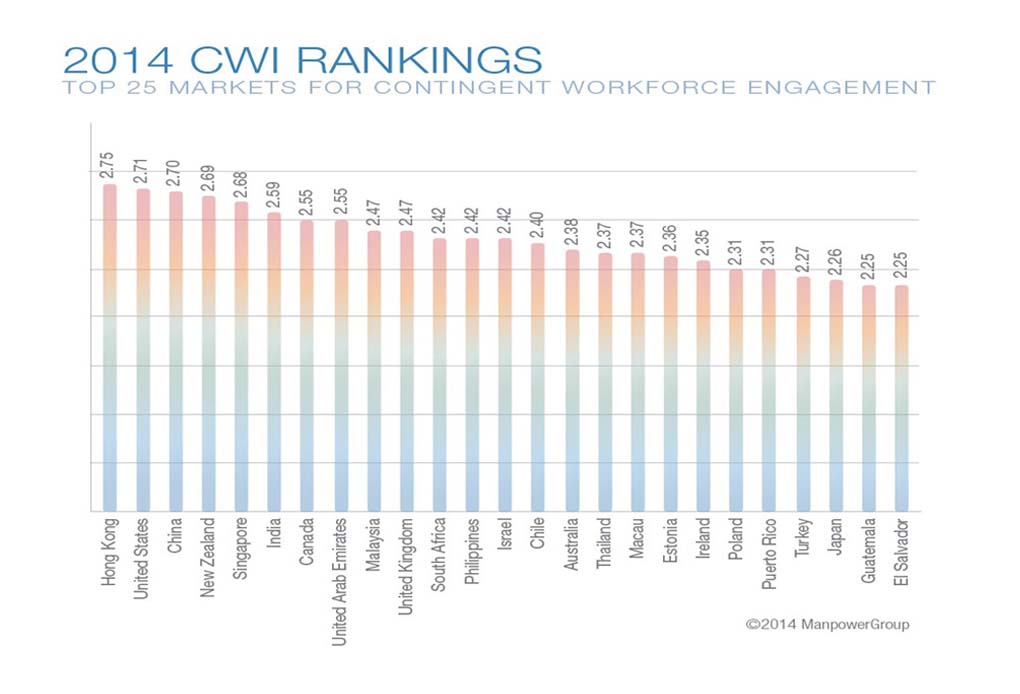
Contingent Workforce Index
Labour surplus
However, the findings from MPG are unsurprising, considering the high levels of unemployment in South Africa – a rate which has climbed higher than 25% this year.
A separate report by The Boston Consulting Group (BCG) found that South Africa is expected to have the highest labour surplus in the world by 2030, with the surplus reaching as high as 39%.
A high labour surplus speaks to high levels of unemployment, which subsequently cuts the tax base and raises the cost of social services while raising the risk of social instability.
“In the long term, surpluses can lead to the attrition of skills and ultimately reduce an economy’s competitiveness and attractiveness to investors,” BCG said.
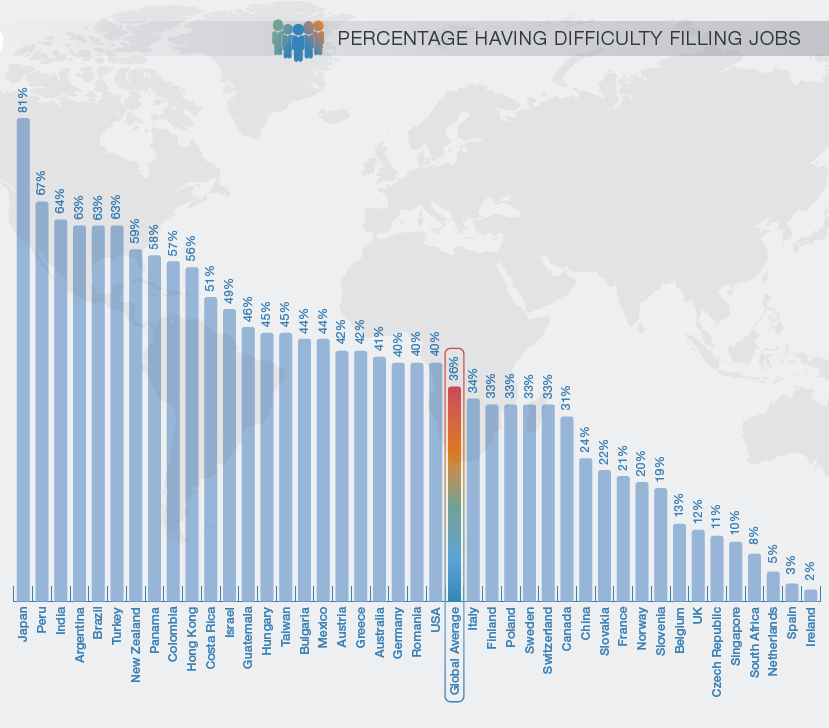
Difficulty filling job positions
Sought-after jobs
According to MPG, across the globe employers indicate that the number one reasons for having difficulty filling jobs is due a lack of technical skill. 35% of employers cited this as a reason.
The second biggest challenge is the lack of available applicants (31%), followed by a lack of experience in the fields (25%).
Only 1% of employers encountered the problem of applicants being over-qualified for the job.
According to MPG’s report, skilled trade workers are the most sought-after talents, followed by engineers, technicians and sales people.
Other sought-after talents are in the fields of management, IT, accounting and drivers.
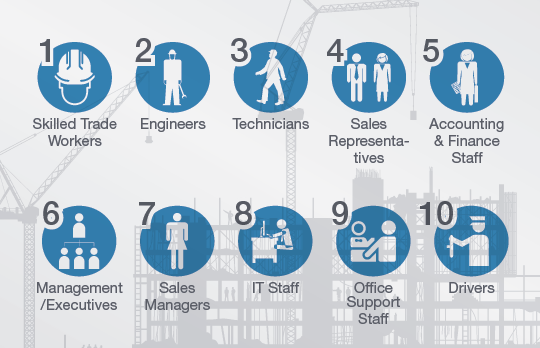
Sought after talents
“Over half of employers reporting a talent shortage say it is having a significant impact on their ability to meet client needs,” the group said.
“This is consistent with 2013’s findings, demonstrating that companies continue to see talent as a key driver to meet business objectives.”
The most common impact companies reported is a reduced ability to serve clients, closely followed by reduced competitiveness and productivity.


















 Loading ...