

More rate hikes could be coming, economists warn


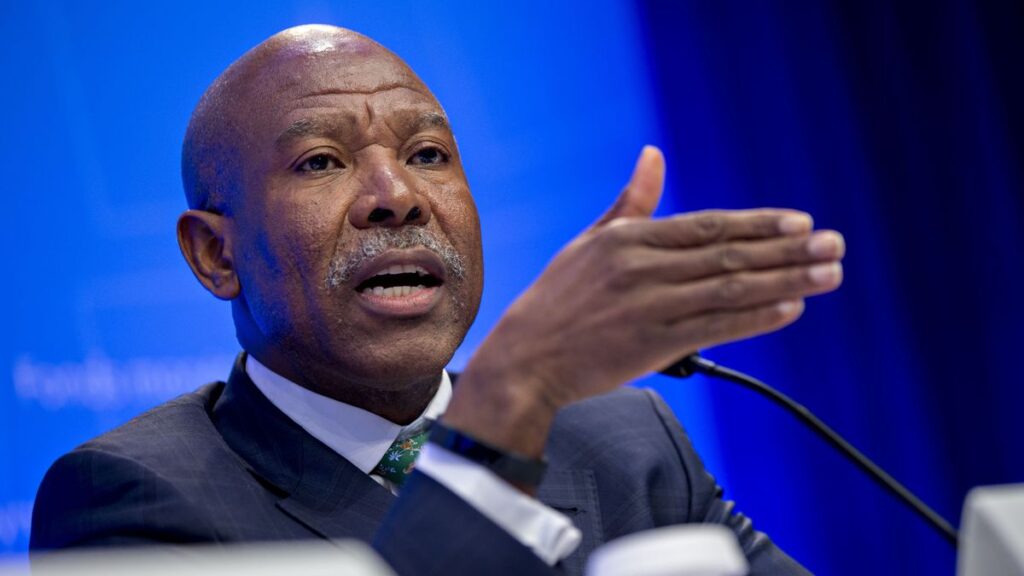
Reserve Bank governor Lesetja Kganyago says that he doesn’t know where the top of the current rate hike cycle is, but economists and analysts believe that it’s close.
The South African Reserve Bank’s (SARB’s) Monetary Policy Committee (MPC) voted hike interest rates in the country by 50 basis points on Thursday (30 March), surprising on the upside versus market consensus.
Most economists and analysts expected the central bank to hike rates by 25 basis points and for the bank to signal that the hiking cycle was over.
However, given the surprise spike in headline inflation for February, as well as worries over rising core inflation, the central bank took a much stronger stab at trying to bring prices under control and has adopted a decidedly hawkish stance on rates going forward.
“We have been taking stabs at tackling inflation, and today we took another stab to do it,” Kganyago said. “If we only knew the top, we would be able to tell you how far we are from the top.”
The governor noted that determining rates isn’t an easy task and that the committee considers many moving parts that are all happening at once. Adding to its woes, load shedding in South Africa is having a significant impact, and it is proving to be a “nightmare” to try and predict the extent and intensity of its effects.
As such, the SARB cannot say when it will stop hiking interest rates.
“Economic and financial conditions are expected to remain more volatile for the foreseeable future. In this uncertain environment, monetary policy decisions will continue to be data-dependent and sensitive to the balance of risks to the outlook,” Kganyago said.
Expect more rate hikes to come
The SARB’s wording, and its hawkish stance, have been interpreted by some economists and analysts to signal more rate hikes to come.
Sanisha Packirisamy, Economist at Momentum Investments, said that South Africa could see the end of the interest rate hike cycle this year, but only if disinflation continues in upcoming quarters to sustainably revert to the midpoint of the target by the fourth quarter of next year, as predicted by the central bank.
“However, if the SARB sees inflation risks as having intensified, we could well see another 25-basis point hike in May,” she said.
“Beyond this, we would see further hikes as being less effective in bringing down inflation and more harmful to growth, given the positive real interest rate trajectory, particularly using the forward-looking view on inflation.”
Angelika Goliger, EY Africa Chief Economist, said that the MPC has turned back towards hawkishness – the concern of the Committee being the performance of the rand going forward, given higher risk premia, load shedding and stubborn food and fuel inflation.
“This may be ‘it’ and South Africans will be in a holding pattern for the rest of the year, but there is a lot of uncertainty at the moment, so I would not rule out another 25bps hike this year,” she said.
Prof Andre Roux, Economist at Stellenbosch Business School, said that things could go either way at the Reserve Bank’s next meeting in May, with arguments both for another hike or for a hold.
“With the South Africa economy being on the verge of a technical recession, along with double-digit food inflation, inordinately high levels of unemployment, high personal debt burdens, and persistent load-shedding, some leniency is easy to justify,” he said. “Moreover, there is evidence emerging – globally and locally – that inflationary pressures might be softening.”
Added to this, many of the inflation-inducing forces at play are largely out of the Reserve Bank’s control. This puts into question the continued usefulness – in the current context – of interest rates as a rather blunt anti-inflationary policy instrument, he said.
Despite this, based on current knowledge and conjecture, there may be one more rate increase in May, he said.
This would be followed by a sideways movement until the latter part of this year or early next year, when rates could start moving downwards, he said.
When will rates go down?
According to Momentum Investments, interest rate cuts are likely some way off given persistent upside risks to the inflation trajectory, continued interest rate normalisation, globally, and longer-dated local inflation expectations, which remain 1% higher than the midpoint of the 3% to 6% target.
Carmen Nel, Economist and Macro Strategist, Matrix Fund Managers said the SARB will likely remain orthodox and risk-averse heading into the rest of the year.
“As such, we think the MPC will be reluctant to cut rates early or aggressively in the absence of a major growth destructive non-inflationary crisis. In the pre-Covid interest rate cycle, the SARB lagged the rate cuts that came through from other emerging market central banks, despite weak growth and falling inflation.
“We think the more challenging global funding backdrop combined with SA’s current account deficit and less positive fiscal outlook could again lead to a reluctant and delayed easing cycle this time round,” she said.
Adriaan Pask, CIO at PSG Wealth, said that markets will continue to be sensitive to any developments relating to interest rates, inflation, unemployment, and wages – therefore, investors should also expect heightened volatility over the next few months.
The MPC’s next meeting is scheduled to take place on 25 May 2023.











 Loading ...