

Europeans are flocking to this South African city


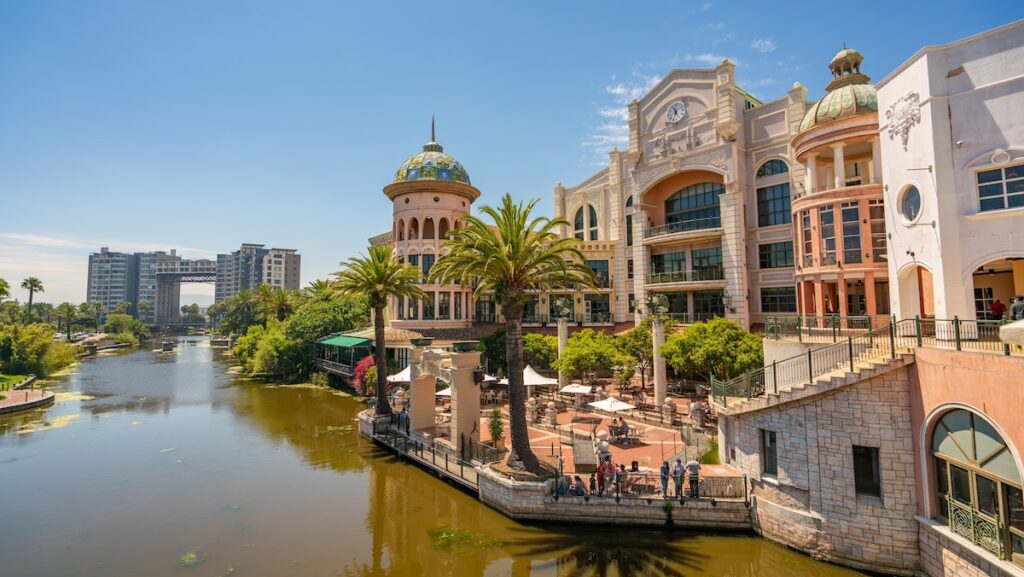
Cape Town has one of the best-performing luxury property markets in the world, with Europeans and South Africans from other provinces making the city their home.
According to Knight Frank’s latest 2025 The Wealth Report, prime residential property prices continued their upward trajectory in 2024, increasing by 3.6% in 2024, slightly up from 3.3% seen in 2023.
Of the 100 markets tracked in Knight Frank’s Prime International Residential Index (PIRI), 77 recorded positive annual price growth. Asian markets dominate the first six spots, with Seoul, South Korea (18.4%) on top.
It was followed in the top five by Manilla, Philippines (17.9%); Dubai, UAE (16.9%); Riyadh, Saudi Arabia (16.0%); and Tokyo, Japan (12.1%).
Cape Town made the top 50 list, coming in 32nd place, seeing a 5.1% increase in prime residential prices in 2024.
“It is no surprise that Cape Town has continued to show a steady growth of 5.1%,” said Nick Gaertner, Director and COO of Knight Frank South Africa.
“Lifestyle offerings and affordability has proved a constant attraction to foreigners looking for second homes and is high on the list for many holiday makers across Europe.”
“We have also seen a surge in demand from the local South African market since the elections in June last year, with many families looking to move to the Mother City from other provinces within the country.”
“In the coming 12 months it is expected that prices will continue to rise as demand is significantly outstripping supply.”
This is not the first time Cape Town has been deemed a hotspot for international and semigrant buyers.
Areas such as the Atlantic Seaboard, Clifton, Camps Bay, and Constantia are the primary hubs for international buyers.
Foreign nationals make up about 32% of high-end sales in some areas, with international demand surging.
International demand has surged in the luxury property market, with foreign nationals making up around 32% of high-end sales in some areas.
Recent transactions have seen Germans purchasing homes between R20 million and R24.5 million, while buyers from Switzerland, UK and the Netherlands pay over R25 million.
| Rank | Market | % Change |
| 1 | Seoul, South Korea | 18.4 |
| 2 | Manila, Philippines | 17.9 |
| 3 | Dubai, UAE | 16.9 |
| 4 | Riyadh, Saudi Arabia | 16.0 |
| 5 | Tokyo, Japan | 12.1 |
| – | – | – |
| 31 | Bahamas | 5.1 |
| 32 | Cape Town, South Africa | 5.1 |
| 33 | British Virgin Islands | 5.0 |
Wine and art boom
Knight Franks also reveals other changes affecting the luxury market in South Africa and across the world.
The report showed that five of the 10 collectibles sectors tracked recorded growth in 2024, even if the uptick was modest.
Notably, the art market saw an 18.3% drop year-on-year, while the wine industry saw a 9.1% drop. However, South Africa is benefiting from both sets of collectibles.
South Africa has massively benefitted from the rise in online sales. While traditional live sales are regional in London, New York, and Hong Kong, online has no borders.
Online is particularly important for new audiences in emerging markets, but opportunities also exist the other way around.
“In South Africa, for example, the art market is growing, but from the outside it looks like it’s falling because the rand is so weak against the dollar,” said Lindsay Dewar, COO of ArtTactic, in the report.
“So you can buy an artwork from Strauss [a respected local auction house] and have it shipped for a much better price than buying the same kind of thing in New York.”
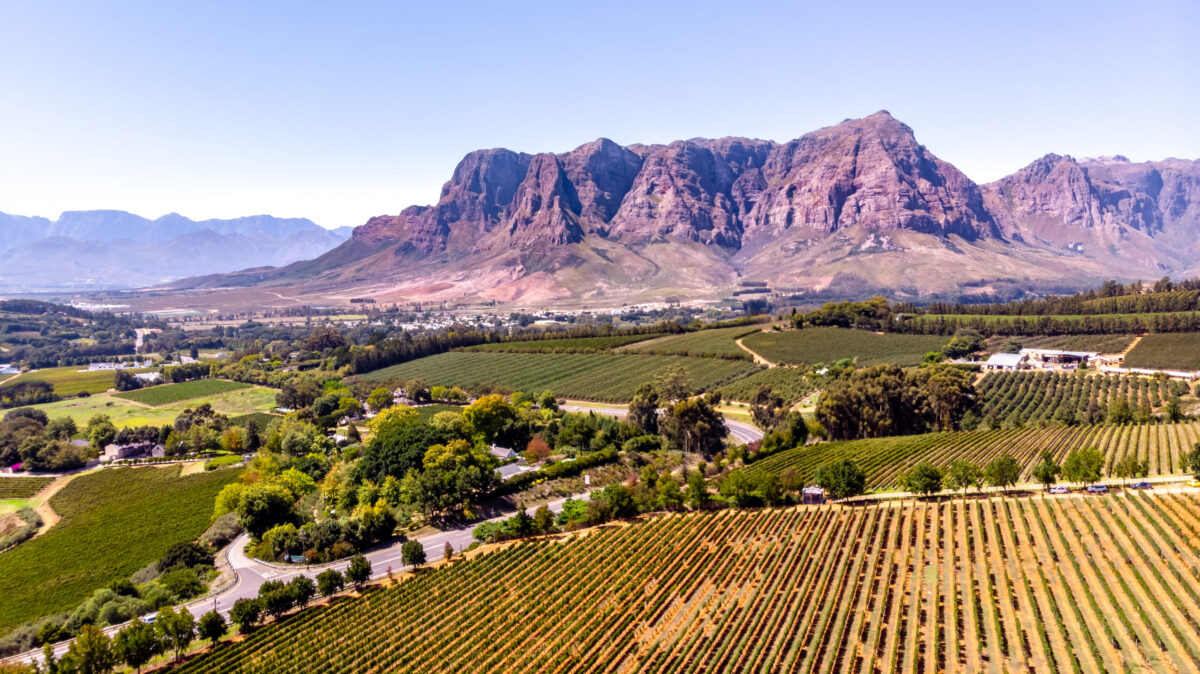
Moreover, while the global wine market struggles, the Stellenbosch area just outside of Cape Town is performing well.
Knight Frank said that global wine consumption is down 12% from its 2007 peak. Production has also fallen by 20% over the last 20 years, with few of the world’s key vineyard regions unscathed.
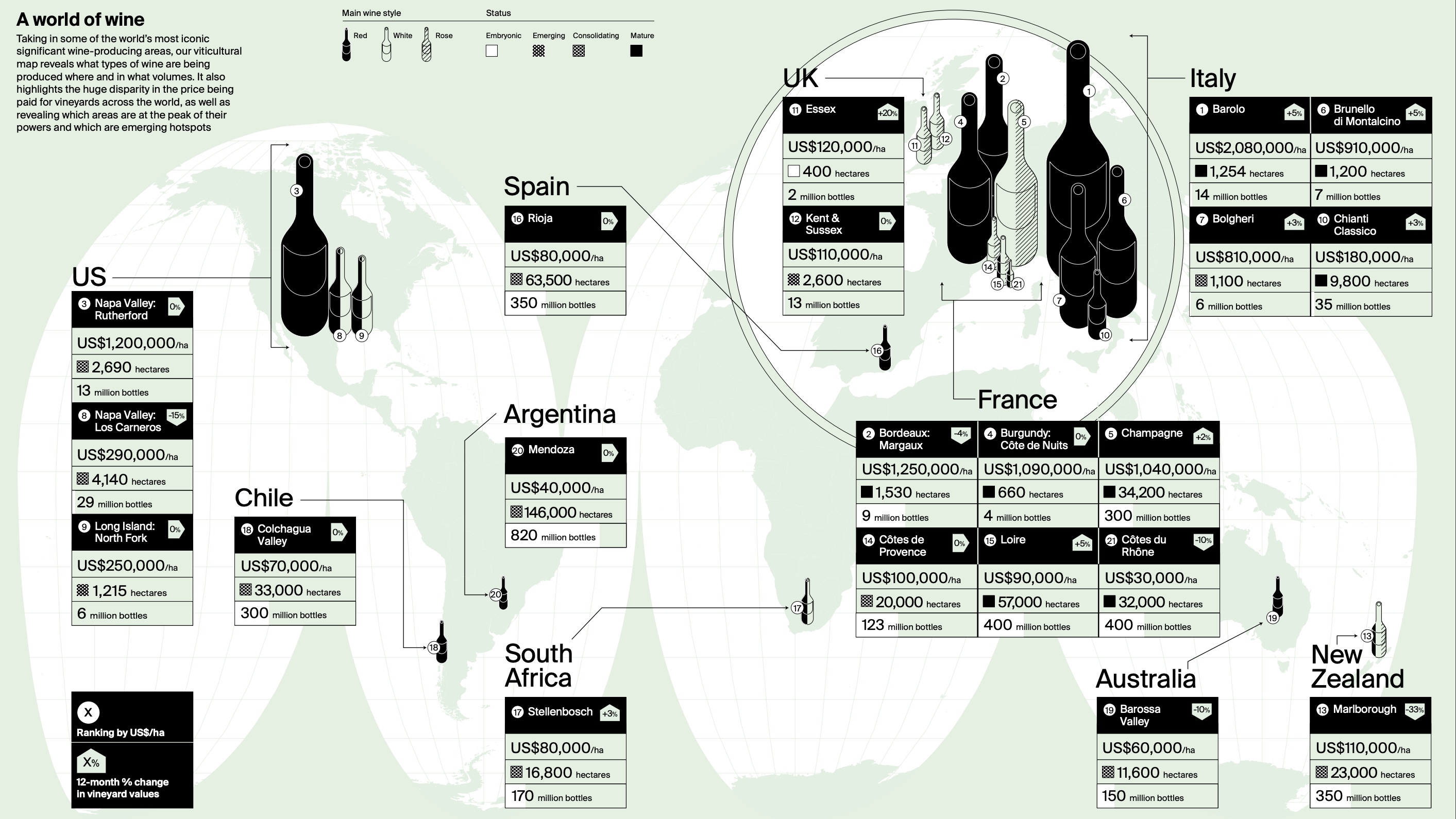
The report showed that the 12-month percentage change in vineyard values in the Stellenbosch stood at 3% in 2024.
This is one of the best performances for vineyard values in the world. After hitting a peak in 2023, prices in the Marlborough region in New Zealand dropped by 33%.
Essex in the UK was the best-performing area. However, its 2 million bottles per year pale compared to Stellenbosch’s 170 million bottles.
With a hectare of land costing US$80,000 (R1.4 million), Stellenbosch is also one of the more affordable wine-growing regions in the world.
This is far cheaper than the $2 million (R36 million) per hectare needed in Barolo, Italy, the most valuable vineyard land in the world.


















 Loading ...