

Three new food retailers up to 65% cheaper than SPAR, Checkers, and Pick n Pay in South Africa


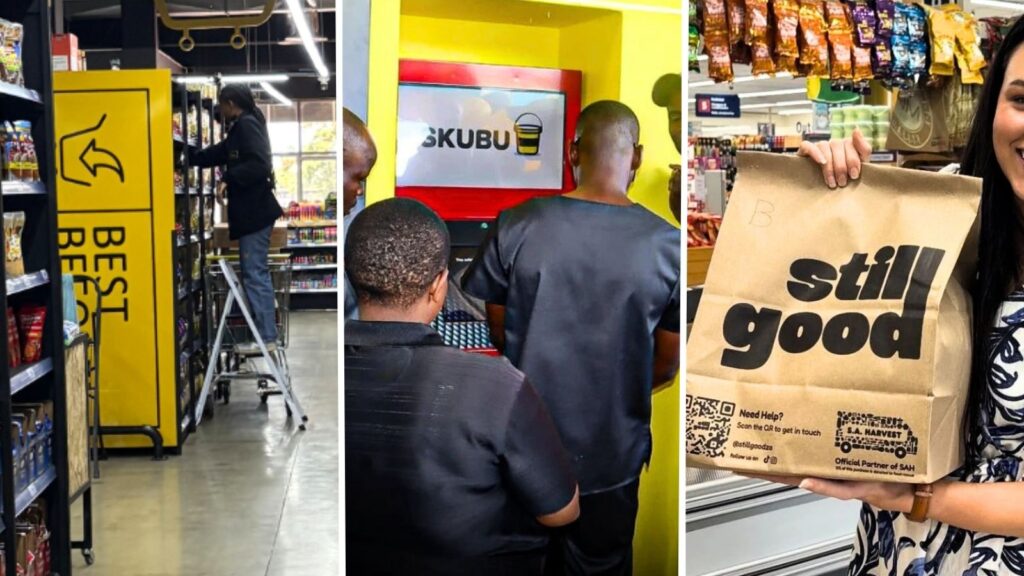
Three retailers have capitalised on South Africa’s affordability crisis, with dispensary store SKUBU, non-perishable goods retailer Best Before, and online discounted grocery store Still Good seeing a notable rise in demand for their products.
Cost-of-living pressures are forcing many households to cut back on discretionary spending, cancel subscriptions, reduce medical spending, and even move into smaller homes to better manage their finances.
According to TransUnion’s Consumer Pulse Study for the second quarter of 2026, households remain under significant financial strain, with little evidence of recovery over the past year.
The report found that only 43% of consumers said their finances were better than planned, while 40% reported being worse off than expected, reflecting what it described as “persistent strain rather than deterioration.”
According to Raksha Darji, a senior economist at the Competition Commission, the cost-of-living crisis has been building for several years and continues to intensify as international and domestic pressures combine.
She said the crisis began following Russia’s invasion of Ukraine almost four years ago and has since been compounded by local structural challenges.
The burden is particularly heavy for lower-income households and younger South Africans trying to establish themselves financially or enter the property market.
“Low-income households spend about 66.81% of their income on food and housing utilities, leaving almost no room to absorb any shocks that may come their way,” Darji said.
She noted that electricity prices have increased by roughly 85% over the past six years, while water prices have risen by nearly 70%.
Additionally, a new analysis by data specialists at SEO Backlinks showed that a standard 700g loaf of white bread in South Africa could cost around R45 by 2036 if current upper-end price trends continue.
These increases are substantially higher than overall inflation, which has risen by just over 30% during the same period.
As household budgets become increasingly stretched, many South Africans are also rethinking how they live, which includes how they source and buy their groceries.
SKUBU
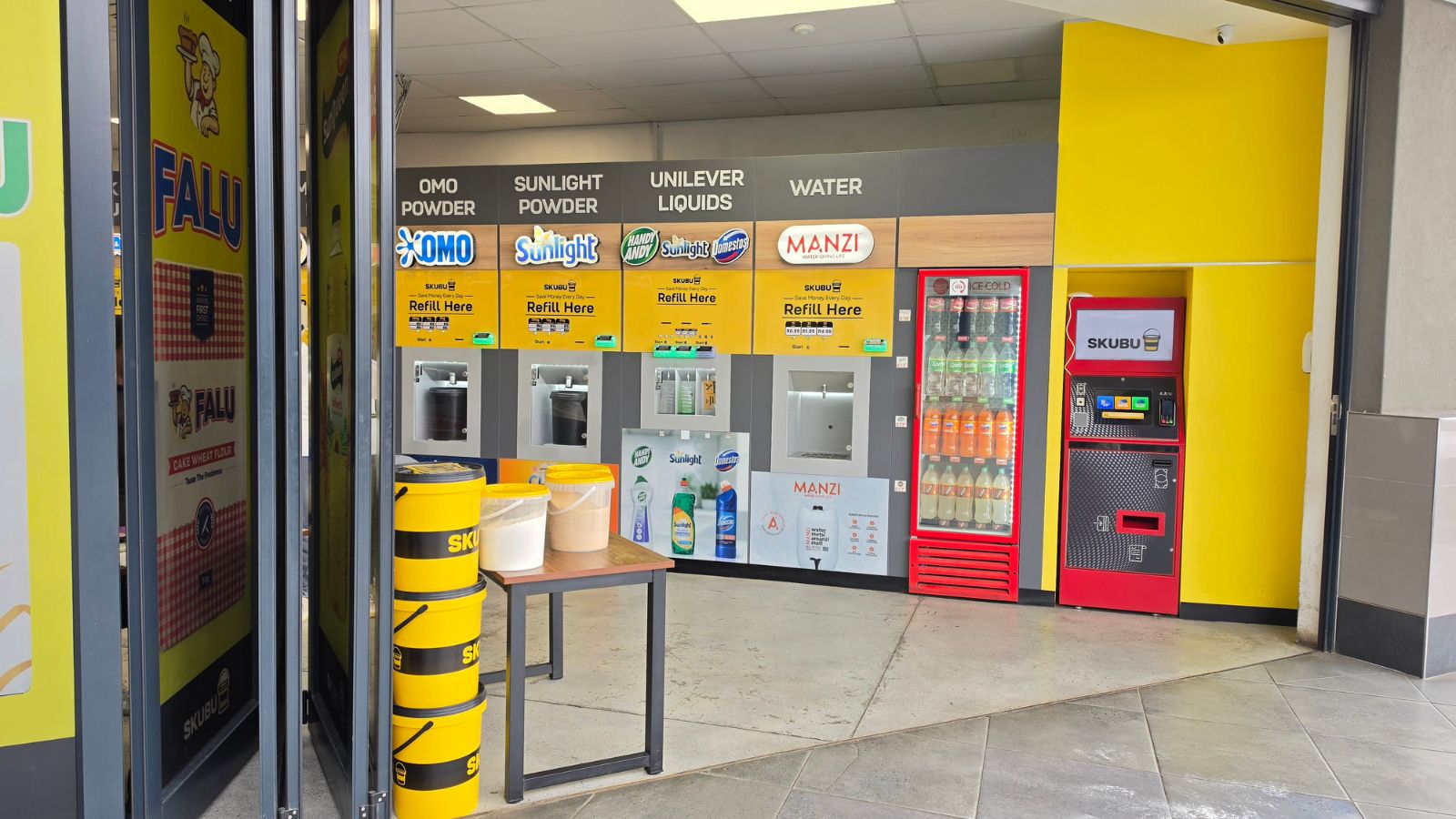
A key solution for South African households, especially in the lower-income bracket, has been Skubu in Gauteng.
SKUBU is a dispensary retail model launched in Diepsloot, Johannesburg, in 2025 by founder Eben de Jongh.
Designed as a direct response to South Africa’s escalating cost-of-living pressures and the disproportionate unit costs often associated with smaller pre-packaged goods.
The store allows consumers to purchase essential household goods at prices up to 60% cheaper than conventional retail outlets.
The store’s success relies on a bulk refill model using internet-connected technology developed by Sonke.
Rather than purchasing traditional packaged products, shoppers bring their own containers to buy exact quantities of staples—such as maize meal, rice, sugar, cooking oil, and detergents—priced strictly per kilogram or litre.
By removing packaging expenses and using automated dispensing for precise measurement and inventory tracking, SKUBU significantly lowers overhead costs while offering flexible cost options for lower-income households.
Since opening locations in Johannesburg hubs like Chuma Mall and Bambanani Mall, SKUBU has seen high customer traffic and strong community resonance.
Because of this, the company is developing a modular container format called SKUBU Nyana, aimed at extending its zero-packaging, budget-friendly retail model into deeper, underserved rural communities.
Best Before

Best Before is a South African discount grocery retailer founded in 2017 by Mark Gordon and Alain Soriano to address food waste and provide affordable everyday items.
The business operates by selling short-dated and past-best-before products that remain safe for consumption, while strictly avoiding items past their use-by date.
Every product is vetted for quality and sourced from reputable suppliers. The model relies on selling goods at significantly lower prices than traditional supermarkets.
Roughly 70% of Best Before’s stock consists of regular merchandise priced around 25% lower than mainstream competitors, while the remaining 30% is discounted excess inventory from various suppliers.
The retailer’s initial success in Gauteng led to the establishment of multiple physical stores across the province.
Best Before has also recently launched nationwide online courier delivery, allowing customers outside Gauteng to access products with delivery fees of R80 to R100.
Additionally, the company is trialling rapid delivery via Uber Eats in select areas. Under this partnership, in-store pricing remains unchanged on the delivery platform, with standard Uber Eats fees applying.
Still Good

Still Good is a South African online grocery platform launched in May 2025 by CEO Steffen Burrows to reduce food waste and help consumers navigate rising living costs.
The platform offers near-expiry, short-dated, and surplus non-perishable groceries, household goods, cosmetics, and electronics at discounts of up to 65% compared to standard retail prices.
It gained traction by partnering with major retailers—including Pick n Pay, Spar, and Food Lovers Market across seven provinces—to sell “mystery bags” of unsold produce and bakery items for in-store pickup.
Still Good then scaled its operations by launching an online marketplace that sources excess inventory directly from wholesalers and suppliers, preventing edible food and usable goods from going to waste.
To expand accessibility, the business partnered with The Courier Guy to use its nationwide locker system to offer cost-effective 48-hour pickup options for customers.
In just six months, the company noted that it had saved shoppers nearly R4 million. It now operates in more than 174 Pick n Pay, Spar, and Food Lovers Market stores, as well as several independent retailers.
Still Good is available in Gauteng, KwaZulu-Natal, the Northern Cape, the Eastern Cape, the Western Cape, the Free State, and the North West—with the exception being Limpopo.














 Loading ...