

New countdown to disaster for South Africa


Industry bodies and business representatives have urged the South African government to continue negotiating with the Trump administration to cut down the 30% tariff that will take effect in seven days.
The White House published an executive order signed by US President Donald Trump on Thursday (31 July), assigning various trade tariffs to countries the United States trades with.
This included a 30% tariff on South African imports to the US, which is the same rate that was announced in April and that the Government of National Unity failed to negotiate lower.
According to Business Unity South Africa (BUSA), the state’s failure to negotiate better terms for South Africa at a time when many other countries managed to do so was deeply troubling.
However, the fact that so many countries successfully negotiated a better position, and continue to do so, means that South Africa still has time to bring the rate lower, it said.
“There is an opportunity for a successful agreement to be reached even after 1 August 2025,” it said.
This would provide welcome relief for South African exporters, provided the country adopts a coordinated approach and prepares a solid offer based on what it can realistically deliver in response to US expectations, BUSA said.
The tariff order from Washington stated that the new rates would kick in seven days after the signing of the order.
This has placed a new countdown over South Africa’s head, with the tariffs now set to take effect from 7 August.
The order also provides a small window for exporters to avoid the tariff, with any exports loaded before the new deadline, and stored or withdrawn from warehouses before 5 October, will be taxed at the previous rate.
Washington also acknowledged that negotiations were ongoing and that some extensions were granted to countries, despite Trump’s prior statements saying the 1 August deadline was set and unmovable.
This has given at least some hope that the door is still open for South Africa to cut the 30% down to at least the 15% rate the rest of Africa has been hit with.
Trade and Industry minister Parks Tau acknowledged that the South African government was still fine tuning its trade offer to the US until the 11th hour on Thursday, and would continue to do so.
He also stated that the government would implement its mitigation and contingency plans to help support industries and businesses that will be hit by the tariff when it comes into effect.
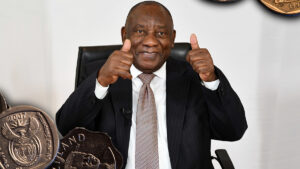
This was repeated by President Cyril Ramaphosa in his response to the signing of the executive order, where he said that negotiation channels with US remain open.
However, BUSA noted that more is at stake than the immediate tariff, with the African Growth and Opportunity Act (AGOA) also hanging in the balance.
It said that the United States and AGOA are critical for South African trade, boosting exports in critical sectors such as agriculture, automotive manufacturing, and mining.
How South Africa will be hit

BUSA said that the 30% tariff and loss of AGOA would have a substantial impact on South African industries.
“In the automotive sector, where exports to the US total approximately R24.1 billion, the exposure to tariffs will be monumental,” it said.
The sector is currently facing 25% Section 232 tariffs, and the proposed 30% increase could raise total duties to 55%, rendering exports uncompetitive.
Approximately 20,000 jobs are at risk in this sector, affecting both OEMs and component manufacturers due to the new tariffs.
In agriculture and agro-processing, about 15,000 to 20,000 jobs are also at risk.
The 30% tariff would simultaneously lead to price hikes for produce such as citrus and nuts, which account for R4.2 billion in exports and currently benefit from duty-free entry into the US market under AGOA, making these exports less competitive.
There is a significant risk of trade being diverted to other regions, such as South America and the European Union, BUSA said.
In the mining sector, 5,000 jobs are at risk, and the tariffs will adversely affect diamond beneficiation and iron ore mining.
The business lobby said that measures to mitigate the impact of the impending tariffs on affected sectors of the economy need to be included in the government’s overall response.
“In addition to ongoing lobbying for the renewal of AGOA, sector-specific proposals should be part of the current proposed framework deal,” it said.
“BUSA encourages the South African government to enhance its engagement with sectors most affected by the new trade tariff regime introduced by the US.”















 Loading ...